Home minister Gurung resigns, after scrutiny over financial dealings
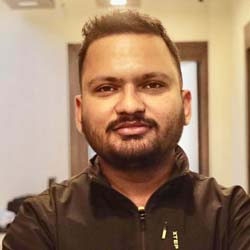
A source at PM’s secretariat says a parliamentary committee will be formed to probe him. Home Minister Sudan Gurung gestures to the media following his resignation, at Singha Durbar in Kathmandu on Wednesday. Deepak KC/TKP
Sudan Gurung, who gained national limelight following the Gen Z movement last September and repeatedly pledged uncompromising action against corruption, resigned as home minister on Wednesday amid mounting controversy over his share investments and alleged links to a businessman under investigation for money laundering.
“I will pull out every rupee from the houses of the corrupt,” Gurung had said after becoming minister. “I will bring them [the corrupt] forward and show the world how Nepal changes.”
During his first interaction with journalists last week, the home minister reiterated that he would spare no one. “I will not spare even my own father,” he said. “I swear by my country.”
But less than a month after taking charge, Gurung stepped down amid allegations related to controversial share investments. He now faces the possibility of a formal investigation. The controversy centres on his alleged business links with Deepak Bhatta, who is under investigation for money laundering.
Gurung submitted his resignation to Prime Minister Balendra Shah on Wednesday and later announced the decision through social media. “To ensure an impartial investigation into matters concerning me and to avoid any conflict of interest while in office, I have resigned the post of home minister with immediate effect,” he said.
Referring to the Gen Z movement, he said any questions directed at a government formed on the “sacrifice of 46 youths” should be answered with moral accountability.
“I have fulfilled my moral responsibility,” Gurung said. “If we truly seek change, we must all stand for truth, honesty and self-purification.”
He also suggested that scrutiny should extend beyond politics, hinting at undisclosed financial interests among sections of the media.
According to a source at the Prime Minister’s Office, preparations are underway to form a parliamentary committee to investigate Gurung.
“Until the investigation is over, Prime Minister Shah himself will take charge of the home ministry,” a member of the prime minister’s secretariat said. “If Gurung is found innocent, he may be reappointed home minister. If found guilty, action will be taken against him. This investigation will be done by a parliamentary probe committee.”
Calls for investigation
Former secretary Sharada Prasad Trital said the resignation alone is insufficient and called for a thorough investigation. “If he has done no wrong, he should be given a clean chit,” he said. “If wrongdoing is established, the case must be forwarded to the relevant authorities.”
Trital added, “The prime minister should first initiate a political or parliamentary probe.”
Before stepping down, Gurung had attended a meeting of the National Disaster Risk Reduction and Management Authority to discuss preparedness for monsoon-related disasters.
Gurung left the meeting before its conclusion and proceeded to the Office of the Prime Minister and Council of Ministers to meet Shah. About an hour later, he made his resignation public.
Share controversy and disclosures
On Monday, Gurung had said there was no conflict of interest, noting that the Department of Money Laundering Investigation, which falls under the Ministry of Finance, was handling the case involving Bhatta.
However, documents made public through media reports showed Gurung had investments in Star Micro Insurance Company and Liberty Micro Life Insurance, where Bhatta and the Shanker Group are also said to have stakes. A photograph also surfaced showing Bhatta being honoured as a donor by ‘Hami Nepal’, an organisation chaired by Gurung, on December 21, 2021.
Gurung’s asset declaration, made public on April 12, did not mention investments in the two micro-insurance firms. The disclosure listed 30,000 shares worth Rs3 million in Hope Holdings Pvt Ltd, 57,000 shares worth Rs5.7 million in Lagom Premium Apartments Pvt Ltd, and Rs7 million in Adventure Villa Pvt Ltd. It also mentioned shares worth over Rs27.4 million traded on the secondary market.
Responding to the allegations, Gurung said being a shareholder in the same company as others does not constitute a business partnership. “A company can have hundreds or thousands of shareholders,” he said. “Buying shares does not mean partnership with them all.”
Critics, however, pointed out that the micro-insurance companies in question have not issued initial public offerings, raising questions about his claim that the investments fell under publicly traded shares. Additional scrutiny followed a report highlighting opaque financial dealings linked to his organisation Hami Nepal.
Appointed home minister on March 27, Gurung sought to project himself as an active and reform-oriented minister. He conducted frequent inspections, issued directives for immediate action and, at times, worked overnight at the ministry, earning public attention.
At the same time, several of his actions drew criticism. He visited the Narayanghat–Butwal road section to direct contractors, a move seen as a breach of his jurisdiction. Lawmakers from Bagmati Province also complained to the prime minister that he had undertaken district visits without coordinating with them. Questions were also raised within his party over his involvement in areas handled by other ministries.
Gurung’s appointment itself had come amid internal differences in the ruling Rastriya Swatantra Party. Party chair Rabi Lamichhane had reportedly favoured DP Aryal for the home ministry, while Prime Minister Shah was for Sunil Lamsal. Gurung had emerged as a compromise candidate.
Controversial decisions and arrests
From the outset, Gurung emphasised an “action-oriented” approach. One of the Cabinet’s early decisions was to implement the report of a high-level committee formed to investigate the September 8–9 Gen Z protests.
He initiated discussions to arrest CPN-UML chair and former prime minister KP Sharma Oli and former home minister Ramesh Lekhak. Police officials initially advised caution, saying arrests should follow legal procedures, including court-issued warrants.
Officials said Gurung pressed for immediate action. He later visited the Police Headquarters and insisted on swift implementation of the high level panel’s recommendations. Oli and Lekhak were subsequently arrested under emergency warrants but were released by court order 13 days later. Investigations into the cases are ongoing.
Gurung also faced criticism for publicising details of arrests, including posting copies of arrest warrants on his personal social media accounts. He had made public, through a social media post, the arrest warrant against former minister Deepak Khadka. After several high-profile detainees were released by court orders, he publicly expressed frustration at the judiciary. “I used to think the minister was the most powerful,” he told the media, “but now it seems the judge holds greater authority.”
Public image and fallout
Gurung drew both praise and criticism for his style. He often drove himself to places of inspections and visited public spaces without a large security entourage. He was also noted for eating at the Singha Durbar canteen, moves seen by some as an attempt to break from the established “VIP culture”.
During an address at the Police Headquarters, he stood up and applauded Inspector General Dan Bahadur Karki while the latter was speaking about the challenges faced by police personnel, an act that drew public attention.
Gurung also visited the residence of an elderly man who had reportedly been mistreated during a protest, which was widely appreciated.
However, his frequent use of social media, including posting of symbolic messages ahead of arrests, led to accusations that he was seeking publicity.
Gurung’s resignation marks a setback for a government that has sought to project a reformist image. The leader who pledged to act against corruption now finds himself under scrutiny, with calls growing for a transparent investigation into his financial dealings.




 14.2°C Kathmandu