Recent elections in West Bengal and Tamil Nadu have sparked greater interest in India’s neighbourhood. Many articles have speculated about their impact on bilateral relations between India and its neighbouring countries, Bangladesh and Sri Lanka. Elections in West Bengal generate interest in Bangladesh, given that memories of the 1947 Partition continue to shape much of the state’s politics. A new regional political party, the Tamilaga Vettri Kazhagam (TVK), was elected in Tamil Nadu, and its manifesto outlined the party’s approach to Tamils in Sri Lanka.
In West Bengal, the BJP, which won the election stated in its election manifesto a zero tolerance towards infiltration and ‘detect, delete and deport’ those who have illegally entered India. Illegal immigration from Bangladesh is a constant theme in the border states of Assam and West Bengal. Even though the BJP won a thumping majority in both Assam and West Bengal, the discussion on the impact of the West Bengal election on Bangladesh dominated the mediascape in both India and Bangladesh. Assam, which has been vocal about immigration from Bangladesh, appeared to have become irrelevant in the relations between the two Bengals.
West Bengal and Bangladesh
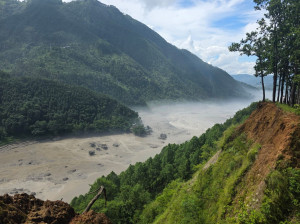
The question is to what extent the states in India influence the foreign policy. Foreign policy is indeed crafted by the central government in New Delhi. States’ views are expressed by regional political parties within each state, whose views are a reflection of the people of that state. Major national parties with a pan-India presence, are also mindful of the political sentiments that shape electoral politics. During coalition governments at the centre in India, regional political parties have exerted disproportionate influence on foreign policy. For example, a deal on Teesta River fell through because the then Chief Minister Mamta Banerjee was not on board. Moreover, Banerjee’s party supported the United Progressive Alliance coalition government led by Manmohan Singh. In 2024, she also wrote a letter to the Prime Minister, cautioning against any agreement with Bangladesh on the Teesta and Ganges rivers.
Tamil Nadu and Sri Lanka
In Tamil Nadu, both the DMK and the AIADMK have exerted immense influence on India’s policy towards Sri Lanka and have threatened to withdraw support from the coalition governments at the centre. Both these parties have competed to champion the cause of the Tamils in Sri Lanka. DMK and AIADMK also, from time to time, raised the issue of Sri Lankan Tamils, the return of Katchatheevu island and issues of Indian fishermen. In the past, the then Chief Minister Karunanidhi did not comply with the central government’s instructions on curbing LTTE activities in the state. In 2014, the leader of the Marumalarchi Dravida Munnetra Kazhagam (MDMK), Vaiko, declared that he was withdrawing support to the National Democratic Alliance led by Prime Minister Narendra Modi for not supporting the Tamil cause in Sri Lanka.
The coalition compulsion
During the era of coalition government supported by regional parties, the central government was cautious to keep the demands of Tamil political parties in India in mind. India’s policy towards Sri Lanka during the last phase of the Eelam War was shaped by Tamil Nadu. India did not sign a defence cooperation agreement with Sri Lanka, though it provided non-lethal support to Sri Lanka’s military, which was vital in the war’s last phase. Sri Lanka also deputed three close confidants of the then President Mahinda Rajapakse, along with three members from the Indian side, known as the ‘troika’, to discuss with India. Under such state pressure, in 2009, a delegation of Tamil Members of the Indian Parliament visited the camps of internally displaced persons in Sri Lanka to appraise themselves of the situation there, post-war.
Unlike earlier times, when Tamil Nadu put pressure to vote against Sri Lanka in the UNHCR, India later abstained. In these episodes, the central government was unhappy because Rajapakse reneged on his promise to find a solution to Sri Lanka’s ethnic problem and was reluctant to hold elections to the Northern Provincial Council. Yet, the Sri Lankan Tamils have looked forward to Tamil Nadu for political support. For example, the newly elected Chief Minister of Tamil Nadu, Vijay, while being congratulated on his victory by the Sri Lankan Tamil parties, also raised hopes for his support to their cause.
Centre prevails, but not at the cost of states
In foreign policy, New Delhi’s wishes prevail. This is not to say that the interests of the states are ignored. There are instances when the centre and the states disagree over issues. For example, the centre did not cave in to Tamil Nadu’s demand to declare civilian deaths in Sri Lanka as genocide and to place economic sanctions on Sri Lanka. It differed on the Kachateevu issue, saying the island was never part of India’s sovereign territory. Slowly and steadily, India forged a development partnership with Sri Lanka, investing in infrastructure and shifting its foreign policy away from a sole focus on the Tamil issue. With the NDA led by Prime Minister Modi and a majority in Parliament, Tamil Nadu’s political salience in foreign policy has decreased.
Unlike Tamil Nadu, West Bengal and other border states that share borders with Bangladesh, three are ruled by the BJP, which is in power at the centre. Is it possible for these states to deviate from the larger foreign policy initiative taken by the centre? While some issues are raised by both the centre and the state, especially regarding illegal migration and border transgressions, there appears to be a consensus. On the issue of water sharing, West Bengal will continue to exert pressure on the centre, irrespective of the party in power. North Bengal, which faces a drought and is irrigated by the Teesta River, is also a strong base of the ruling BJP government. Equally challenging would be renewing the Ganges Water Treaty, given climate change and water availability, even though Bangladesh has linked its bilateral ties to a new treaty on the Ganges.
States will be a significant factor in India’s neighbourhood policy. New Delhi determines the contours of bilateral relations and ignores the emotional volatility that the state introduces into India’s relations with its neighbours, especially in the context of Tamil Nadu. The interests of states, which are constituent units of the country, cannot be compromised in any bilateral negotiation, irrespective of which party is in power in New Delhi and in the state.




 13.46°C Kathmandu