



 16.49°C Kathmandu
Mon, Oct 12, 2026
Columns
Prospects of Nepal-Azerbaijan partnership
Kathmandu’s political neutrality can position it as a crucial point of communication for Baku’s engagement in South Asia.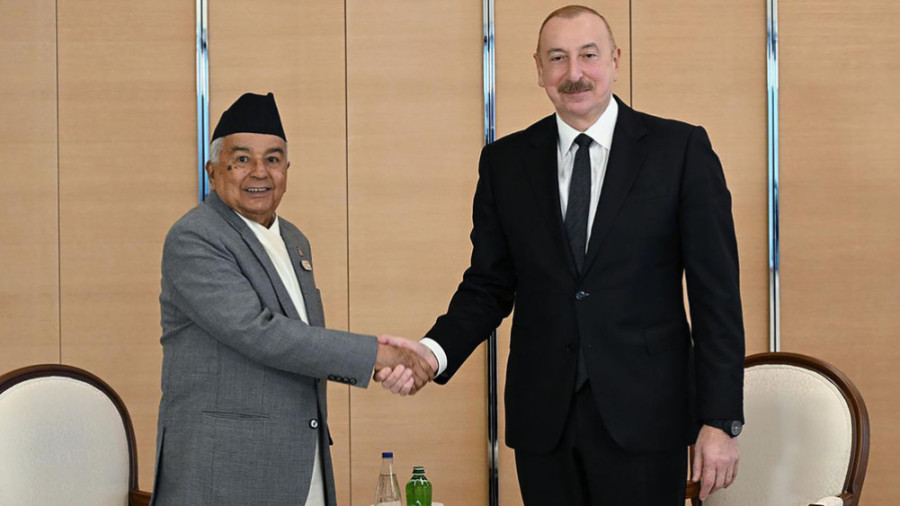
bookmark
Sunil KC
Published at : February 24, 2026
Updated at : February 24, 2026 07:20
Over the course of three decades, Nepal-Azerbaijan bilateral relations have evolved significantly, becoming more structured, dynamic, and enterprising. The first-ever bilateral political consultations in 2025 underscored the scope and importance of strengthening cross-sectoral ties in trade, investment, tourism, culture, education, climate change and multilateral platforms. The consultations facilitated reciprocal dialogue and established a regular bilateral consultation mechanism. This development was preceded by Nepal’s successive and high-level participation in multilateral platforms such as the Non-Aligned Movement (NAM) ministerial meet (2023) and the United Nations Climate Change conference—COP 29 (2024) in Baku that marked an early boost in bilateral engagement.
Elchin Huseynli, the Non-Resident Ambassador of Azerbaijan to Nepal, in a recent article, indicated Azerbaijan's willingness to expand pragmatic cooperation with Nepal in governance, infrastructure development, institutional modernisation, digital innovation, energy transition, education and other areas.
Scope of cross-sectoral engagement
At present, Nepal and Azerbaijan are exploring bilateral energy cooperation, focusing on Baku’s investment opportunities in Nepal’s hydropower sector. Historically reliant on oil and gas, Azerbaijan aims to achieve 30 percent of its electricity generation from renewable sources (solar, wind, and hydropower) by 2030. To achieve its national target of green energy transition, Nepal can be the best hands-on example. Most importantly, Nepal’s long experience in mobilising private investment for hydropower, working with international financing institutions, and managing environmental impact studies, can support Azerbaijan in streamlining its own regulatory framework. Additionally, given Nepal’s extensive expertise in hydropower development, Azerbaijan can develop medium and large-scale hydropower projects. It can also replicate Nepal’s experience in developing hydropower projects, as both countries share similar geographical features.
Nepal has officially transitioned into a net exporter of electricity, generating surplus hydropower to supply up to 1,000 MW to India and has initiated a 40 MW export to Bangladesh, marking its first, landmark trilateral energy trade. The Government of Nepal has also finalised and approved the ambitious "Energy Development Roadmap and Working Guideline" (2024–2035), which aims to increase total installed electricity capacity to 28,500 MW by 2035 and position itself as a key contributor to South Asian energy security. In May 2025, Mukhtar Babayev, COP29 President and Azerbaijan's representative on climate issues, held discussions with the Asian Institute of Diplomacy and International Affairs (AIDIA), regarding investment opportunities in Nepal's hydropower sector. During the meeting, AIDIA requested Azerbaijani investment in Nepal's hydropower sector, proposing technical knowledge exchanges and green energy cooperation.
The discussions broadly highlighted cooperation on energy infrastructure, renewable energy, tourism, and potential fertiliser imports from Azerbaijan, as Nepal relies heavily on imported fertiliser to support its agrarian economy. Both countries could consider joint investment in developing fertiliser plants in Azerbaijan to meet Nepal’s requirement of approximately 700,000 metric tons.
During the discussion, Mukhtar Babayev stressed that strong business and economic ties are central to strengthening bilateral ties between Baku and Kathmandu.
On the connectivity front, Azerbaijani infrastructure companies such as Azenco Outdoor, AzVirt LLC, North West Construction, and EVRASCON can actively participate in bidding for large-scale projects—funded by the Government of Nepal and multilateral development agencies such as the Asian Development Bank and the World Bank.. The infrastructure sector in Azerbaijan is characterised by trade-driven capital-intensive projects, especially in energy, transport logistics and reconstruction of the Karabakh region. Other major players such as the State Oil Company of Azerbaijan (SOCAR), and PASHA Construction are actively involved in both local and international projects. By sharing technical expertise and implementation experience, Azerbaijani firms can contribute to roads and highways, urban development projects, energy and logistics infrastructure in Nepal.
Azerbaijan's e-governance ecosystem, anchored by the "ASAN service" centres, is recognised globally. Its advanced e-services system enables approval of a 30-day stay visa within an hour of online application. Even a driving license can be replaced within five minutes, and company registration work can be completed within two days of formal application. Nepal, ranked 119 in the 2024 E-Government Development Index (EGDI) is developing its e-governance framework through initiatives like the National Single Window and the Digital Nepal Framework to enhance service delivery.
In alignment with Nepal’s vision of advancing its 'IT Decade' goals, both countries can collaborate in advanced digital public infrastructure under a formal technical cooperation framework. . Additionally, Azerbaijan can support Nepal in developing service centres or digital platforms, training Nepali IT personnel, and sharing software solutions. With both nations focusing on digital transformation, there are opportunities for sharing best practices in fintech and digital banking to boost financial inclusion, particularly for small firms (MSMEs).
Drawing on the political consultations held in 2025, business conglomerates like PASHA Construction from Azerbaijan can invest in Nepal’s highly profiteering tourism infrastructure and hospitality sector that generates more than Rs326 billion annually. While there is an increase in the influx of international tourists, a limited number of hotels offer 5-star services with no official ‘7-star’ designation in Nepal yet. Hence, besides investing in the construction of top-rated high-star hotels, Azerbaijan can focus on other aspects of tourism infrastructure, including the development of wellness and retreat centres in the Himalayan republic. Further, both sides should continue to enhance the bilateral partnership in mountain tourism, leveraging Nepal’s expertise in high-altitude training and adventure.
In the agricultural sector, Nepali tea and coffee have a significant presence in the domestic consumption and export trade market, because of their outstanding quality. Azerbaijan is heavily focused on rehabilitating its domestic tea industry to meet rising local and regional demand. Nepal’s quality tea can meet the growing demand for tea in the Caucasus and Central Asia region through Azerbaijan’s trade networks. Likewise, both countries— recognised for their distinct, high-quality handmade carpet industries—can jointly work on expanding their market access through knowledge and technology transfer.
Human capital development remains another important priority sector for Nepal. Azerbaijan and Nepal can collaborate in education and research to establish international standard educational institutions in Nepal that serve domestic and international students. Azerbaijan’s educational institutions, including ADA University, have prominent international exposure and tailored partnerships. AIDIA, as a long-standing partner of Azerbaijani institutions, could work together in launching joint academic programs. Currently, Azerbaijan provides scholarships to three Nepali students annually under the NAM scholarship framework. This cooperation can be expanded into broader institutional partnerships, faculty exchanges, and research collaboration.
Way Forward
Nepal—Azerbaijan bilateral partnership is growing across diplomatic, parliamentary, and Track II platforms, irrespective of physical distance, differing geographies and diplomatic priorities. Kathmandu’s politically neutral and cordial ties with counterpart countries can position it as a crucial nodal point of communication for Baku’s trade and economic engagement in the broader South Asian region. In order to facilitate consistent and regular communication, Azerbaijan can establish a permanent consulate in Nepal and vice versa.
Deeper cross-sectoral engagement can be facilitated through formal agreements on double taxation avoidance (DTA), direct air services, and commercial code-sharing. As formal dialogues and interaction expand, visa waiver facilities on arrival for diplomats and government officials of both countries will be helpful.
The political willingness of nurturing bilateral ties is reflected in both sides’ relentless pursuit of shaping the relationship through high level visits, political consultations and established platforms like Parliamentary Friendship Group for supporting people to people contact. Nepal-Azerbaijan joint participation in multilateral forums like COP 29 and NAM ministerial meetings offer more opportunities to broaden diplomatic engagement and jointly voice problems and aspirations of small nation states across the world.
The absence of any diplomatic dispute is an added advantage for both countries to build a seamless bilateral partnership founded on political trust and enhanced intellectual partnership.
Sunil KC
KC is the founder of the Asian Institute of Diplomacy and International Affairs (AIDIA).



Most Read from Columns
Before you take credit for Khula Manch, read its history
Shah went to the UN to speak for Nepal, then left before he could make the most of it
Why Nepal’s latest disaster needs a local name—not just a scientific label

Lesson learned after the death of Ronaldo
What Lubra can teach Nepal about climate-induced migration and resettlement
Editor's Picks

Constitutional Bench caught in seniority, ‘pick and choose’ dispute

A Dom boy’s long road to becoming a doctor

From blankets to handmade dolls, two foreign women bring comfort to flood survivors

News Analysis: When institutional defence exposes institutional fault lines

It’s a bird … it’s a plane … it’s the Indian ambassador’s farewell tweets
E-PAPER | October 12, 2026

×