Nepal is caught in the frenzy of the March 5 elections for the Federal Parliament. The composition of the new parliament and the government it chooses will determine the country’s future for decades. In the absence of scientific public opinion polling, it is impossible to forecast the composition with any numerical accuracy. The problem is compounded by a deluge of partisan influencers and sensationalists on social media. However, some qualitative predictions can be made based on reports from reliable print media, on-the-ground anecdotal evidence, and the contesting parties' campaign strategies.
Composition of the new parliament
An overwhelming majority of the people consider the older political parties—the Nepali Congress (NC), the CPN-UML and the Nepali Communist Party (NCP), an alliance of old communists splintered from their mother parties—and their septuagenarian leaders self-serving, corrupt and incapable. They do not believe the country will move forward under these parties’ stewardship unless their leadership and their modus operandi change. The public seeks generational change in these parties’ leaders and a new vision for governing the parties and the government. They want transparency and accountability in leadership and internal party democracy. The Gen Z rebellion of September 2025, which led to the fall of the UML Chairman and then Prime Minister, K P Oli-led UML-NC coalition and precipitated this election, was an expression of people’s frustration with the dysfunctional status quo.
The NC demonstrated, through its special general convention and the election of Gagan Thapa, 50, as its president, that it is cognisant of public sentiments and the demands of Gen Z rebellion. Thapa has said that he understands public frustration and apologised for the party’s past mistakes. He has promised a new beginning. The Convention adopted a policy agenda that largely aligns with the demands of the Gen Z rebellion and broader public expectations. Whether this will be sufficient to regain public trust and votes depends on how effectively the message of change is communicated to the public. Successful messaging is likely to return the NC to a decent position in parliament.
The UML has refused to recognise public anger and the spirit of the Gen Z rebellion. It shows no intent to change. Its 74-year-old chair is promoting the narrative that the Gen Z rebellion was a foreign design, orchestrated by foreign elements. He has even refused to apologise for the killings of Gen Z protestors under his watch as Prime Minister. He is perhaps the most unpopular living politician in the country. Based on the foregoing, it would appear the UML will be the biggest loser in the coming election. However, the extent of the loss is difficult to predict. The party is cadre-based and has a long history. Party cadres are like cult members. They consider voting outside the party sacrilegious. On this basis, it would be reasonable to assume that the UML will return to Parliament diminished, but still remain one of the larger parties.
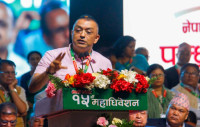
The Rastriya Swatantra Party (RSP) leadership team includes young, highly educated individuals who understand how the modern world functions and represent the aspirations of the younger generation. They are sympathetic to the Gen Z rebellion. They have pledged accountability, transparency and internal democracy. As a relatively new organisation and having not held significant government positions for any substantive time, it is not burdened by allegations of corruption or decay within its leadership. It’s chair, Rabi Lammichanne, possesses a fiery, rallying communication style unlike any other party leader. Despite his several legal entanglements, he has a large following. RSP’s senior leader, Balen Shah, stands on his accomplishments as one of the most successful mayors of Kathmandu, despite Oli and his cronies’ unrelenting effort to undercut him. Shah is nationally recognised and is widely popular. The RSP is likely to perform better in this election than in the previous one.
Apart from the three major parties, the new parliament is likely to include representatives from the Nepali Communist Party, Rastriya Prajatantra Party, other fringe parties, and some independents. No party is likely to secure the absolute majority required to form a one-party government. The list of candidates contesting the election suggests that the share of younger members and ethnic representation in the new parliament will be higher than in the previous parliament.
The first significant task of the new parliament will be to choose a new government. What will this government be like? What needs to change for this government to be successful?
Post-election government
In the absence of a parliamentary party holding an absolute majority, the new government will either be a coalition of two or more parties or a single-party minority government. All past coalition governments in Nepal have failed badly, but they need not have. There are several examples of successful coalition governments. The current government in India is a multi-party coalition. Its predecessor, which lasted for 10 years, was also a coalition government and is credited with initiating India’s economic renaissance. Most governments in Europe are multi-party coalitions. Canada had several single-party minority governments in the last two decades.
Coalitions in Nepal fail because party leaders secretly stitch them together, even without the knowledge of the party’s senior officials. It is widely believed that the reason for the secrecy and the primary purpose of the coalition is to protect the private and partisan interests of the leaders. Once the leaders reach an agreement, the party’s rank and file is compelled to endorse it without ever knowing what the leaders agreed behind closed doors. In Europe, before a coalition is formed, prospective coalition partners agree on a time-bound policy and parliamentary agenda and work on the agenda. The agenda is public knowledge. If a coalition is to succeed, Europe provides a model to follow.
The NC and the RSP have both acknowledged the need for a new vision for governance. They publicly embraced the sentiments of Gen Z and the wider populace; rejected the status quo; and promised change. If they remain true to their words, they would be a natural ally to form a government. They should publicly commit to a common, time-bound policy and parliamentary timetable in collaboration with other supporting parties, and form a government, whether a coalition or led by the largest party, with support from the others. The choice of the Prime Minister must be based on the candidate’s character, leadership skills, experience in governing, and exposure to and understanding of international politics. Candidate’s personal egos and ambitions must not be considered in making the choice.
A coalition formed in accordance with the above terms is Nepal's only path to economic progress and democratic bolstering. Secret coalitions lacking a clear, time-bound agenda will be a return to the past. The repercussions will not be pleasant. It will mark a descent into another period of darkness.




 16.07°C Kathmandu


.PNG&w=200&height=120)