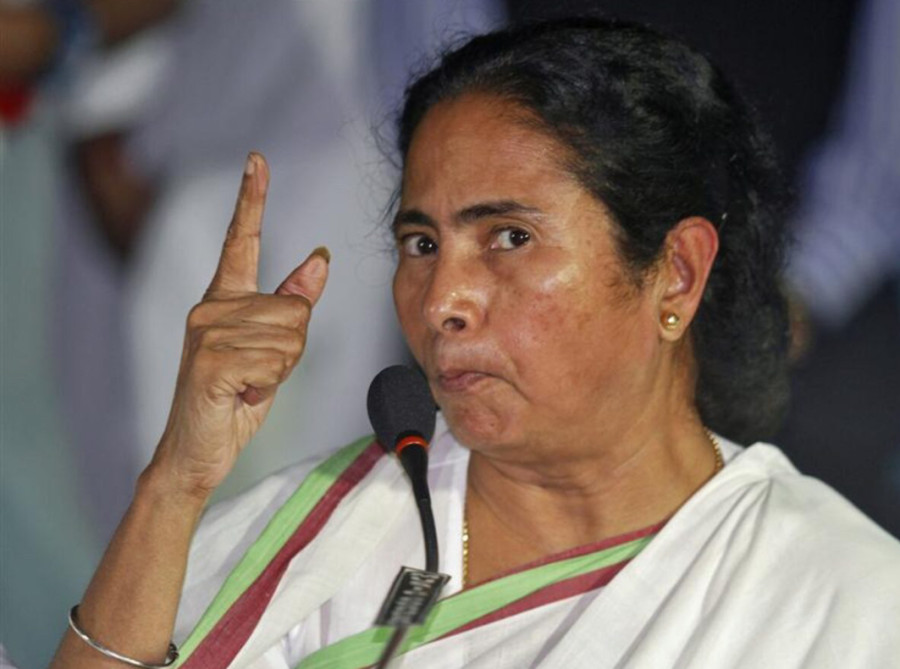
West Bengal Chief Minister Mamata Banerjee’s extraordinary move of becoming the first ever serving chief minister to argue her own petition before the Supreme Court hits a note that goes beyond just challenging one’s political rival and strikes at the very heart of gender messaging in a male-dominated political milieu.
The feisty chief minister appeared before the SC last week after she moved the top court, urging it to intervene in the ongoing Special Intensive Revision of electoral rolls to ‘save democracy’, and alleged the poll-bound West Bengal was being targeted.
Banerjee’s state heads to polls very soon, and the politician—known for her street-fighter style of politics—will be careful to ensure she leaves no gap unplugged in taking on her main rival, the Bharatiya Janata Party (BJP), which under Prime Minister Narendra Modi has set its eyes on snatching away her bastion.
Her appearance in the apex court, therefore, is an unapologetic war cry ahead of a crucial election, a head-on challenge to a mighty rival. However, ensconced within this political and electoral statement is a larger and far more meaningful, albeit not obvious, message—of a woman political leader taking on the male-dominated leadership of a powerful party in a gender-skewed and often misogynistic political culture where the female perspective has always been contained to the fringes.
The gender messaging
The SIR exercise—essentially a massive revision of the electoral rolls in the country being conducted by the Election Commission of India—has become a prickly point of contention between the government and the opposition, with the latter alleging this is a move by the government to disempower minorities and target anti-BJP constituencies. Given the rock-bottom credibility and extremely questionable conduct of the Election Commission that has made it seem like an extension of the ruling dispensation, the opposition is right in feeling jittery about the intent and execution of this exercise.
Mamata Banerjee is naturally even more unsettled. One, her state votes soon. Two, the BJP that has steadily expanded its wings in her home turf but has never been able to wrestle it away from her, will use every trick up its sleeve to attempt to dislodge her. And three, if the SIR does indeed aim to disenfranchise or even inconvenience minority communities, it threatens to shake her loyal constituencies.
With her unprecedented presence and arguments in the SC, the chief minister has sent out an unequivocal message—that she will not be cowed down by the powerful and often vengeful ruling party, that she will take on the Narendra Modi leadership head-on and that she is an opposition leader with the courage and conviction to lead the battle against the BJP.
Through this move, Banerjee has further reinforced her image as a firebrand and maverick politician, marching to her own tune and unapologetically a street fighter.
However, what the image of Mamata Banerjee in the Supreme Court conveys goes much, much beyond the usual political rhetoric. It is a message of female power in the still largely male-dominated political sphere.
Consider these numbers.
Only 74 Members of Parliament, a mere 14 percent, in the current Lok Sabha are women. This is marginally lower than in the last Lok Sabha, when 78 women were elected in the 2019 elections. The number is hardly a significant rise from the 5 percent in the first Lok Sabha over seven decades ago. The figures in the Rajya Sabha tell a similar story. Women constitute approximately only 17 percent of the total members.
Only two states out of 29 have women chief ministers. Besides Banerjee, Delhi’s Rekha Gupta is the only other woman chief minister in the country.
At a time when every political party is bending over backwards to woo the woman vote, and when the female electorate is finally beginning to get its due, the abysmal political representation of women at the highest echelons is a story of the glass still being dismally half-empty.
In this backdrop of an embarrassingly lopsided and patriarchal political culture, Mamata Banerjee is a mascot of gender assertion. This isn’t a conclusion born out of hollow feminist rancour. The gritty fight Mamata is leading has implications for how women are viewed and treated in politics. The optics of her unusual act narrate a story of women unafraid to take on the powerful in a man’s world. And this kind of posturing ahead of elections signals a woman politician’s conviction to fight for her turf.
The blot
However, it isn’t entirely a rosy picture of feminist power when it comes to Mamata Banerjee. The chief minister, lovingly referred to as didi in her state, has had many lapses in protecting the women of her state. The infamous Sandeshkhali controversy, wherein the women of the region alleged atrocities by local leaders of Banerjee’s Trinamool Congress party, became a point of turmoil ahead of the 2024 Lok Sabha elections, and severely dented the party’s pro-women image. The rape and murder of a female doctor at the state-run RG Kar Medical College and Hospital in Kolkata raised some serious questions about women’s safety and the law and order situation in the state that Banerjee has now ruled for over 14 years.
And the worst—Banerjee’s shocking statement following the gang rape of a female medical student in Durgapur, questioning why she was out so late at night, takes the sheen away from a strong, woman chief minister to reveal a regressive side.
Thus, even while she remains an icon of gender assertion in Indian politics, Mamata needs to reflect on whether she has done enough justice to the cause of women in her state. By all means, Banerjee does have several fairly meaningful women-centric schemes and is known to encourage women’s political and electoral participation. However, these serious failings and her own retrograde statements do her no favours. Even if these incidents do not impact her electoral prospects, just as Sandeshkhali did not dampen her fortunes in the 2024 Lok Sabha polls, history will remember these failings.
As a politician, Bengal’s beloved didi has sent out a powerful message of female assertion and a woman’s appetite to fight in a man’s world. Now it is time for her record as chief minister to reflect a similar commitment to female empowerment and dignity.




 19.89°C Kathmandu
.PNG&w=200&height=120)