South Asia is too often described in the language of crisis—of conflict, poverty, migration, or political instability. Yet beneath this noise lies an extraordinary democratic vitality. Nowhere else in the world do nearly two billion people, almost 40 percent of humanity living under elected governments, persist so stubbornly with the project of self-rule. It is a region of constitutional invention, of resilience and renewal, and, as I argue in my new book Democracy’s Heartland: Inside the Battle for Power in South Asia, of learning. Each of the eight countries of South Asia—Afghanistan, Bangladesh, Bhutan, India, Maldives, Nepal, Pakistan and Sri Lanka—has something distinctive to teach the others.
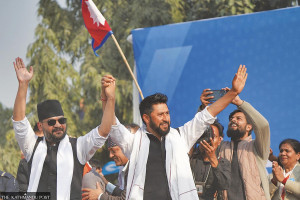
Among them, Nepal’s story is perhaps the most dramatic. Few nations have transformed their political system so completely within a generation. From absolute monarchy to a federal democratic republic, from civil war to inclusive peace, Nepal has travelled a long road in a remarkably short time. And it has done so not through external imposition but through its own political will, with citizens on the streets demanding that sovereignty return to them.
Nepal is a nation that has achieved in two decades what took others half a century: The construction of a democratic state from the ashes of conflict and hierarchy. Nepal’s transformation is neither accidental nor imported; it is a product of popular movements, political negotiation, and a willingness to rewrite the rules of power. The Comprehensive Peace Accord of 2006 ended a violent insurgency and initiated a new social contract based on inclusion, secularism and federalism. When the 2015 Constitution was promulgated, after long and often acrimonious debate, it stood as one of the most progressive founding documents in the region. It declared Nepal secular, federal and republican, explicitly committed to equality, justice and representation of historically excluded groups.
Nepal’s mixed electoral system is a central pillar of this design. The House of Representatives combines 60 percent of seats elected by first-past-the-post with 40 percent allocated through proportional representation lists. The proportional lists compel political parties to correct the distortions of constituency-based politics by nominating women, Dalits, Janajatis, Madhesis and other minorities who might otherwise be locked out of power. The result has been one of the most inclusive parliaments in South Asia.
The impact is visible at every level. About one-third of the federal Parliament today consists of women. One of the two top offices, President and Vice-President, must be held by a woman. In local governments, gender representation is even more striking: Roughly 75 percent of deputy mayors are women, and by constitutional mandate. This is not token inclusion but structural reform. Few democracies in the region can claim a comparable record of women’s participation.
Nepal’s embrace of federalism is equally significant. The seven-province model created by the 2015 Constitution replaced the old centralised order with a new architecture of devolved authority. Provincial assemblies and local councils now legislate and manage budgets for education, health, infrastructure and culture. This devolution has brought political life closer to the people and created new opportunities for leadership in communities long excluded from Kathmandu-centric governance. Other South Asian states, where federalism is often reduced to a slogan, could learn much from this experiment in grassroots democracy.
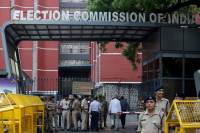
Most noteworthy is Nepal’s approach to independent institutions. The Election Commission of Nepal, constitutionally established as a multi-member body, is appointed not unilaterally but through a Constitutional Council comprising the Prime Minister, Chief Justice, Speaker, Chair of the National Assembly, Leader of the Opposition and Deputy Speaker. As a double safeguard, even this high body’s decision has to be vetted and accepted by a Joint Parliamentary Committee of 15 members, drawn from across parties from both Houses of Parliament. In a region where such appointments are frequently partisan, Nepal’s model of consultative consensus is a democratic innovation worth emulating.
Nepal has also demonstrated an admirable commitment to peaceful political contestation. Despite years of turbulence—frequent government changes, coalition rifts and corruption scandals—the political class continues to operate within constitutional boundaries. Parties that once confronted each other in armed conflict now compete at the ballot box. The successful conduct of local, provincial and federal elections under the new constitution, even amid the disruptions of the pandemic and economic strain, reflects a durable faith in democratic procedure.
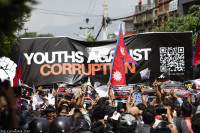
Of course, Nepal’s democracy remains a work in progress. The challenges are real: fragile coalitions, slow policy delivery, public frustration with corruption, and contested citizenship provisions. The protests that erupted in the Madhesh region, and more recently over issues of digital freedoms, show that inclusion on paper must translate into fairness in practice. Yet compared with the scale of its transition, from monarchy and insurgency to a functioning federal democracy, Nepal’s achievements are remarkable. The democratic habit has taken root.
For its neighbours, Nepal offers at least three lessons. First, that federalism can be built from below, through negotiation and mobilisation, rather than imposed from above. Second, that inclusion can be institutionalised not as charity but as justice—through electoral design and constitutional guarantees. And third, that democratic institutions can be collectively owned across political divides. These are not minor achievements in a region often characterised by centralised authority and polarised politics.
At the same time, Nepal too can learn from its neighbours. From India, it might take the value of uninterrupted constitutional continuity; from Sri Lanka, the cautionary tale of over-centralised executive power and from Bhutan, the virtue of gradual transition. The conversation must be two-way.
Nepal’s political journey is among the most inspiring in the developing world, and an encouragement to guard its gains. It’s democratic transformation—achieved without foreign occupation, sustained through negotiation, and anchored in inclusion—is a story South Asia should celebrate and study.




 19.73°C Kathmandu