



 14.69°C Kathmandu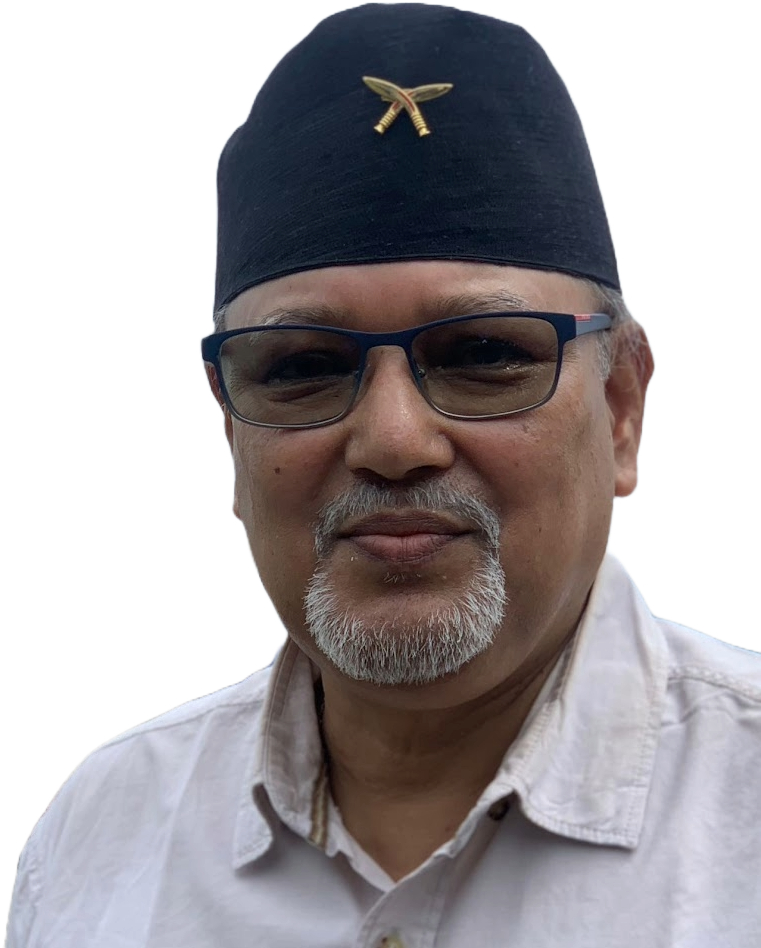

Sat, Oct 24, 2026
Columns
Nepal’s ‘hung transition’
The Gen Z-led protests’ message is clear: The existing social contract is broken.
bookmark
Santosh Bisht
Published at : January 8, 2026
Updated at : January 9, 2026 07:20
As Nepal gears up for yet another round of elections this March, the condition is fluid, not with the promise of renewal, but with a sense of political fatigue and national ambiguity. The democratic journey that began with great hope in 1990 has evolved into a protracted, often chaotic and fractured transition.
Today, Nepal finds itself in a state of ‘hung transition’, a political stalemate where the old order has broken down, but a new, stable and socially accepted democratic order remains frustratingly out of reach. The 1990 Constitution established a constitutional monarchy and a parliamentary democratic system, igniting political energy and establishing much-needed institutions for better governance. Yet, the early symptoms of what can be called democratic dementia began to set in swiftly.
The 1990s-era politics of Nepal became a game of elite manoeuvring, shaped by rampant corruption, factionalism and an agonising gap between the promises made in Kathmandu and the realities in the rural areas. The Local Self-Governance Act, 1996, was designed to decentralise power and resources, a fundamental pillar of vibrant democracy, but the legislation was paradoxically met with uproar in Parliament. This incident was symbolic. Even as democratic structures were being built, the desire to centralise power undermined their very purpose.
While political elites squabbled over power, a far graver crisis was unfolding. In February 1996, the Communist Party of Nepal (Maoist) launched a ‘People’s War’, violently rejecting the 1990 settlement. As conflict ravaged the countryside, Kathmandu’s politics descended into darkness; governments rose and fell with alarming frequency, based not on policy or public mandate but on the shifting alliances of a fragmented polity.
This dual crisis led to state neglect, and the Maoist rebellion became the people’s local democracy itself, which prevailed ferociously. Justice often depended on vendetta rather than the law in rural areas. The terms of the locally elected bodies expired in July 2002. Despite a provision of extension, they were dissolved in the hope of holding fresh elections. With parties absent from local bodies, the Maoists roamed freely. This vacuum invited authoritarian regression. On 4 October 2002, King Gyanendra dismissed the elected government, citing political failure. By February 1, 2005, he had assumed full executive powers. His royal takeover, however, forced an unimaginable realignment. The parliamentary rivals, the Nepali Congress and the CPN-UML, forged a strategic pact with their erstwhile enemy, the Maoists. The Seven Party Alliance and the 12-point Understanding with the Maoists in November 2005 united them against the monarchy.
This coalition ignited the Second People’s Movement (Jana Andolan II) of April 2006. Faced with massive street protests, the king capitulated, restoring Parliament. A landmark Comprehensive Peace Agreement was signed in November 2006, ending a decade of war. The monarchy was abolished in 2008, and a Constituent Assembly (CA) was elected to draft a new social contract. A transformative settlement seemed within reach. The first CA failed, dissolving in 2012 without a constitution. A second CA, elected in 2013, became mired in agonising debates over federalism, identity and the form of government. For years, the nation’s political energy was consumed by a foundational debate that should have preceded the peace. The transition lingered. For 25 years, since 1990, Nepal’s transition dragged on, a permanent state culminating in anger among the citizens.
As the political leaders squabbled to find common ground, tragedy struck. On April 25, 2015, a massive earthquake devastated Nepal. The nation’s fragile capacity was stretched to its limit. Then, in a move that brought the country to its knees, an unofficial but total economic blockade in Madhesh was imposed in late 2015, protesting provisions in the newly promulgated constitution, which exposed Nepal’s extreme vulnerability.
A constitution was finally promulgated on September 20, 2015, but it was born in trauma. Rather than a unifying covenant, it became another front of contention, with significant communities, particularly in the Madhesh, rejecting it as exclusionary. These sequential shocks, overarching democratic transition, royal takeover, conflict to peace process, constitutional deadlock, earthquake, unitary to federalism, secular to non-secular state, monarchy to republican and economic blockade—all compressed into a short span—have created the state of hung transition. The system is perpetually in flux, consuming all political energy and precluding long-term planning. Public trust has evaporated, replaced by disillusionment with a ‘political circus’ that fails to deliver basic services or accountability.
A new political dimension has entered this fragile equation: The Gen Z-led movement of September 2024. Sparked by extreme corruption, this leaderless, digital native movement is a frustration against the entire political class that has overseen this ineffective hung transition. It rejects not just one party but the perceived failings of the entire post-1990 and post-2006 new political order. Its message is clear: The existing social contract is broken. Even after the 2026 elections, satisfying this young, disillusioned populace will be an extraordinary challenge. The daily experience for citizens is one of instability, poor service delivery and a political circus. This disillusionment has, paradoxically, fuelled murmurs for kingship, not necessarily for the person, but for the establishment of a strong, stable and non-partisan executive that the current system has failed to provide.
Nepal’s hung transition needs a decisive end. The constant state of flux consumes all political energy, blocks long-term planning, and erodes the legitimacy of the state itself. Steady democratic progression requires a period of predictable and accountable government, where elections are about choosing between visions for development, not renegotiating the fundamental rules of the game for personal power.
The task for Nepal’s political forces, old and new, is monumental: To move from a politics of endless transition to one of democratic consolidation. This requires delivering on the long-deferred promises of prosperity, inclusion, federalism and justice that were the promises of the movements of 1990, 2006 and 2025. Until that happens, Nepal’s democracy will remain hung between its turbulent past and an uncertain future, its potential unfulfilled, and its people waiting for an anchor that has yet to be found.
Santosh Bisht
The author is a development worker with a governance background.




Most Read from Columns



Editor's Picks





E-PAPER | October 24, 2026

×