



 22.29°C Kathmandu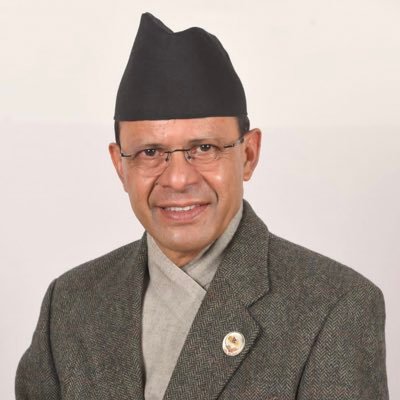

Sat, Oct 17, 2026
Columns
On national reconciliation
Across seven decades, reconciliation has emerged as Nepal’s deepest democratic constant.
bookmark
Minendra Rijal
Published at : January 6, 2026
Updated at : January 6, 2026 07:03
December carries a distinctive weight in Nepal’s democratic history, marking two decisive constitutional turns—first towards authoritarian rupture, and later towards ethical renewal. On December 15, 1960, Nepal’s first experiment with parliamentary democracy was abruptly terminated through a royal coup that dissolved the elected government and inaugurated three decades of partyless rule. Sixteen years later, on December 30, 1976, Bishweshwar Prasad (BP) Koirala returned to Nepal from exile, fully aware that imprisonment awaited him, carrying not a call for insurrection but a doctrine of national unity and reconciliation.
These two December moments represent opposing constitutional logics. The former signified the suspension of constitutional democracy through coercive centralisation; the latter marked a moral reorientation of democratic struggle itself. If December 1960 closed democratic space by force, December 1976 sought to reopen it through ethical restraint, public accountability and constitutional aspiration. BP’s return—alongside Ganesh Man Singh (GMS) and other senior leaders of the Nepali Congress (NC)—was therefore not a tactical manoeuvre aimed at short-term concessions, but a deliberate reconstitution of democratic politics under conditions of authoritarian constraint.
By historical symmetry, this article should have been written on the 50th anniversary of BP’s return—a delay I readily acknowledge. Yet reconciliation was a method intended to endure across political cycles. Writing during reconciliation week affirms the idea’s continuing relevance rather than evading history.
BP’s policy of national unity and reconciliation constituted not merely political moderation or strategic conciliation, but as constitutional morality and ethical statecraft—a normative framework governing political conduct when constitutional democracy is suspended or distorted. BP’s enduring contribution lies in conceptualising democracy as a moral discipline that precedes institutions, constrains political methods, and sustains legitimacy even when formal constitutional mechanisms are absent. Situated within Nepal’s longer democratic arc—from the NC’s founding struggles in the late 1940s, through the authoritarian interregnum after 1960, to the post-2006 federal republican order—reconciliation emerges as a continuous democratic method rather than an episodic tactic.
Constitutional morality
The concept of constitutional morality, most explicitly associated with BR Ambedkar of India, refers to fidelity to constitutional values—liberty, equality, restraint and accountability—beyond their formal legal codification. Where constitutional democracy is suspended or incomplete, constitutional morality functions as an ethical guide.
BP’s reconciliation policy belongs squarely within this tradition. Under the partyless Panchayat system, the constitutional form existed without democratic substance. Reconciliation thus operated as a pre-constitutional ethic, binding democratic actors to nonviolence, unity and constitutional aspiration despite institutional hollowing. It disciplined both ends and means, insisting that democracy must be pursued democratically, even under non-democratic conditions.
This stance also aligns with Max Weber’s ethic of responsibility, which emphasises attentiveness to political consequences in fragile polities. BP did not abandon moral ideals; he embedded them within geopolitical and institutional realities, recognising that reckless resistance could imperil democratic legitimacy and sovereignty.
Ethical statecraft
BP’s return from exile exemplifies reconciliation as ethical statecraft. Upon his return, he was immediately detained at Sundarijal, where he, Ganesh Man Singh, and other NC leaders had already spent eight years. This act marked a decisive departure from armed and clandestine struggle.
By choosing public vulnerability over covert confrontation, BP signalled to both the regime and society that democratic politics would be conducted openly, peacefully, and with moral accountability. Political courage was redefined—not as inflicting harm, but as enduring repression without abandoning democratic ethics. Reconciliation sought to preserve three interlinked constitutional goods: national sovereignty, social cohesion and political continuity.
Humanism, nationhood and democratic responsibility
In Atmabritanta, BP wrote: “The nation is not mere geography but the people.” This humanist assertion displaced territory, monarchy and state apparatus from the centre of political legitimacy and replaced them with human dignity. Democracy, in this view, was an ethical relationship among citizens, rather than merely an institutional design.
Reconciliation, therefore, functioned as a normative restraint. It rejected violence, exclusion and polarisation, even when such methods promised faster regime change. When BP warned in 1976 that the lack of national unity was enabling foreign intrigue, he articulated unity not as enforced uniformity but as a constitutional value grounded in consent and dignity.
Regional upheavals, including the 1971 Bangladesh war, demonstrated how internal polarisation could invite external intervention and threaten sovereignty. These events reinforced BP’s conviction that democratic struggle divorced from national unity could endanger the state itself. Nonviolence and reconciliation thus emerged not as moral idealism, but as strategic constitutionalism—a way to reform the state while safeguarding the polity.
Enlarging democratic space
BP’s return altered political dynamics. By signalling engagement rather than overthrow, the democratic opposition reduced regime insecurity and moderated repression. This created a limited but meaningful space for civic associations, student movements, professional groups and informal political networks to reorganise. Reconciliation functioned as constitutional pedagogy—helping democracy reenter public discourse as a moral aspiration rather than an insurgent threat.
Student movements to mass politics
This ethical opening was most visible in student politics. Reconciliation legitimised nonviolent dissent, allowing students to frame protest as a constitutional demand rather than a revolutionary rupture. Tribhuvan University campuses became key sites of ethical mobilisation. The 1979 student movement, despite repression and loss of life, demonstrated that sustained, principled protest could compel institutional response. Crucially, reconciliation constrained escalation, preserving protest as morally intelligible and socially inclusive.
The 1979–80 referendum further tested reconciliation. BP rejected the boycott, treating participation as a civic obligation and democratic learning. His characterisation of the result as ‘unexpected and inexplicable’ acknowledged distortion without delegitimising popular participation. By accepting the outcome procedurally while contesting it normatively, BP practised constitutional morality under authoritarian constraint.
Democratic breakthrough
By the late 1980s, reconciliation had preserved democratic infrastructure—networks, norms and leadership credibility. The 1990 People’s Movement, led by GMS in alliance with leftist forces, overwhelmingly nonviolent and national in scope, was therefore cumulative rather than abrupt, reflecting political habits cultivated over decades. While the restoration of multiparty democracy reopened constitutional space, it did not exhaust the democratic project; instead, it exposed deeper questions of inclusion, representation, and power distribution that reconciliation had long anticipated but could not institutionally resolve.
Reconciliation after violence
The continuity of reconciliation as constitutional morality became most evident after 2006. The NC-led peace process with the Maoists reaffirmed reconciliation under conditions of armed conflict. Negotiation replaced annihilation; insurgency was transformed into constitutional politics. The declaration of a republic in 2008 and the promulgation of the 2015 Constitution through an elected Constituent Assembly extended this ethical trajectory into institutional form. Abolition of monarchy, federalism, secularism and inclusion were achieved not through revolutionary purge but through negotiation and democratic procedure. Federalism institutionalised what reconciliation had long affirmed morally: unity without uniformity, democracy without domination. What began as ethical restraint matured into constitutional architecture.
Nepal’s democratic constant
Seen across seven decades, reconciliation emerges as Nepal’s deepest democratic constant. It enabled the country to move from anti-autocratic struggle to democratic experimentation, from authoritarianism to mass democracy, from civil war to negotiated peace, and from centralised monarchy to federal republicanism without succumbing to irreversible fragmentation. Nepal’s contemporary political order, with all its tensions and unfinished tasks, is not a betrayal of BP’s legacy but its historical realisation: A nation held together not by fear or enforced uniformity, but by constitutional commitment, ethical discipline and the shared dignity of its people.
Minendra Rijal
Rijal is a Nepali Congress leader and former minister.





Most Read from Columns

Before you take credit for Khula Manch, read its history

Shah went to the UN to speak for Nepal, then left before he could make the most of it

Bhotekoshi flood wasn’t a freak event. It’s the Himalaya doing what it does

Lesson learned after the death of Ronaldo
Why passive neutrality won’t take Nepal anywhere
Editor's Picks

Constitutional Bench caught in seniority, ‘pick and choose’ dispute

A Dom boy’s long road to becoming a doctor

From blankets to handmade dolls, two foreign women bring comfort to flood survivors

News Analysis: When institutional defence exposes institutional fault lines

It’s a bird … it’s a plane … it’s the Indian ambassador’s farewell tweets
E-PAPER | October 17, 2026

×