



 25.92°C Kathmandu

Tue, Oct 27, 2026
Columns
Realising bamboo’s potential
It is still treated as a minor non-timber forest product rather than a forest crop with measurable carbon value.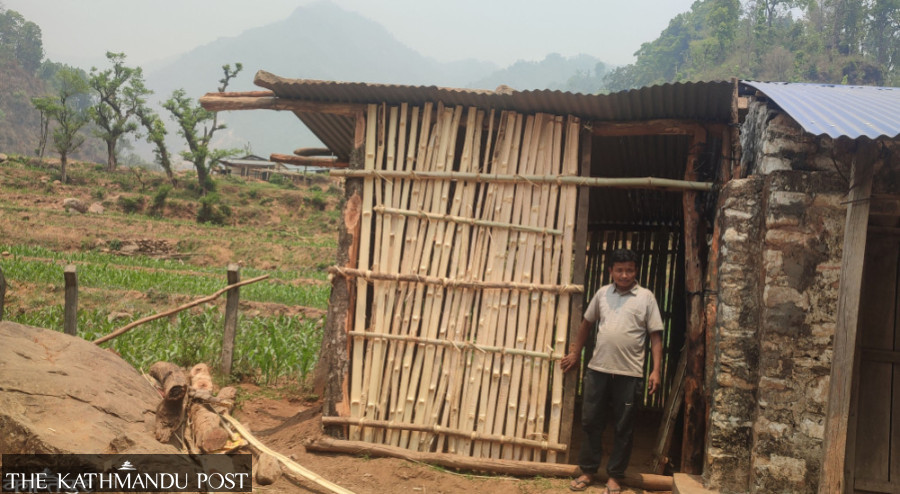
bookmark
Ujjwal R Pokhrel
Published at : December 23, 2025
Updated at : December 23, 2025 07:04
Despite contributing nearly 1 percent to Nepal’s GDP, the bamboo sector remains largely informal and under-commercialised. Traditional uses, including scaffolding, weaving, handicrafts and household items, dominate the current market, while its potential for value-added products, women’s economic empowerment and climate change mitigation remains largely untapped.
In Nepal, bamboo falls under the broader non-timber forest products (NTFP) sub-sector. The Forest Law provides the legal framework for managing NTFPs, recognising their importance for rural livelihoods and emphasising sustainable management and utilisation. However, no rules directly govern bamboo production or trade. The Department of Forests, through its district offices, remains the primary regulatory authority overseeing bamboo farming, especially in forest and community forest areas. Policy coordination is led by the Herbs and NTFP Coordination Committee (HNCC), chaired by the minister of the Ministry of Forests, Agriculture, and Environment (MFAE). Bamboo is rarely prioritised within research or farming initiatives. This highlights the need for ongoing dialogue and practical demonstrations to advocate for a dedicated bamboo policy.
Structural and market challenges
Bamboo’s optimal use depends on species and maturity, where shoots under three weeks are best for consumption, three weeks to one year for weaving, one to three years for small sticks and laminates and four to five years for construction and furniture. Beyond five years, structural strength declines, making timely harvesting critical. Proper clump management, pruning and barrier installation are essential to maintain quality and productivity.
Treatment is crucial to prevent borers and termite damage. Traditional methods include water leaching, smoking and saltwater immersion, while modern methods rely on chemical preservatives such as borax and boric acid. However, awareness among bamboo-based enterprises, product makers, builders, architects and consumers is limited.
The sector operates largely informally and under unregulated markets, with no reliable central database for production, trade or consumption. Without reliable information, growers, suppliers, treatment centres and processors/product makers struggle to forecast demand or plan supply, while the absence of standardised manuals limits integration into mainstream construction. Conducting a national bamboo sub-sector resource mapping, in collaboration with international development partners, is essential to address these gaps.
Weak market systems and supply challenges
Premature harvesting reduces quality, while price fluctuations and dependency on middlemen limit farmers’ profits. Treatment centres struggle to secure timely, mature bamboo, and the absence of grading and value addition hampers fair pricing and market growth. Integrating bamboo into disaster prevention and management, agroforestry, tourism, housing, renewable energy and green enterprise sectors can boost its application and utilisation and, in turn, stimulate market development.
The government has recently introduced the National Building Guidelines for Bamboo-Based House Construction, but its practical enforcement on the ground remains limited. Provincial and municipal governments have not yet developed uniform codes, standards or procedural guidelines for approving bamboo structures. As a result, bamboo houses often fail to receive formal recognition as ‘permanent structures’, making it difficult for households and entrepreneurs to obtain building permits, insurance coverage, or banking credit for bamboo-based housing and enterprises.
This gap is further compounded by widespread misconceptions about bamboo’s lifespan, with many communities still believing that bamboo houses last only three to five years. Due to these outdated beliefs, potential investors, homeowners and even local governments remain hesitant to promote bamboo as a mainstream construction material.
Bamboo and climate resilience
Nepal has yet to recognise bamboo as a significant carbon asset within its Nationally Determined Contribution (NDC), greenhouse gas inventories, or national climate mechanisms. The country also lacks standardised growth data, carbon sequestration measurements and long-term monitoring systems needed for formal carbon accounting. Without clear monitoring, reporting and verification (MRV) guidelines or national methodologies, bamboo remains outside Nepal’s carbon reporting frameworks.
In contrast, several African countries have already integrated bamboo into their carbon credit systems, showing what is possible with proper policy support. Ethiopia, Kenya, Ghana and Uganda have developed bamboo plantations specifically designed for carbon sequestration and land restoration, many of which are registered under voluntary market standards. These countries have recognised bamboo’s rapid growth, its ability to rehabilitate degraded land and its potential to replace carbon-intensive materials.
With similar rural landscapes and community-based forestry systems, Nepal is equally capable of piloting bamboo carbon projects and incorporating bamboo into formal climate reporting. By strengthening data systems, adopting proven MRV methodologies and acknowledging bamboo’s mitigation potential, Nepal could unlock new carbon finance opportunities for rural communities, green builders and the private sector.
Industry bottlenecks
Bamboo trading and industrial processing remain fragmented and underdeveloped. Limited processing facilities, commercial farming, lack of collective marketing, inconsistent quality and high transport costs constrain economies of scale to compete with bamboo products from the neighbouring countries. Incentivising graded bamboo supply, establishing plantation hubs, creating collective marketing platforms and promoting value-added products like high-end household products, engineered bamboo and laminated materials can drive the sector formalisation and commercialisation.
Financial and economic opportunities
Sustainably managed bamboo cultivation offers substantial returns from the fourth year of operation. Treatment and seasoning units provide the highest profitability, while demand grows in construction, interior design and disaster response. Financial barriers, including limited loans for bamboo-based industries, especially small and medium enterprises and housing, can be addressed through subsidies, green funds and tailored loan products.
Integrating bamboo into mainstream housing, agroforestry and infrastructure projects not only strengthens rural livelihoods but also supports gender inclusion by creating income opportunities for women in plantation, handicrafts making, household goods production and treatment centre operations.
Conclusion and recommendations
To truly unlock the potential of Nepal’s bamboo sector, a set of priority actions must be rolled out without delay. The first step is strengthening the policy and legal environment by integrating financing, insurance and credit facilities for bamboo housing into the recently introduced National Building Guidelines, alongside establishing a dedicated national bamboo board to promote and champion bamboo development across the country. The market system needs to be incentivised for graded bamboo plantations, expanding treatment centres and supporting collective marketing initiatives and industries so producers can access bigger and more reliable markets.
On the climate side, Nepal should begin developing bamboo-based carbon credit projects and formally recognise bamboo within its NDCs and national climate policies, ensuring its contribution to mitigation is properly accounted for. Strengthening local regulatory frameworks, creating awareness about durability standards and integrating bamboo construction into banking and insurance systems are essential for scaling bamboo’s use in Nepal’s green and affordable housing sector.
Similarly, high-quality bamboo products, high-end model houses, media campaigns and urban pilot projects can help change public perception of bamboo as ‘poor man’s timber’ and demonstrate that treated bamboo is both durable and modern. Finally, financial mechanisms such as green financing windows, subsidies and customised loan products will be essential to reduce upfront costs and encourage wider adoption of bamboo across construction, industry and community enterprises. Following these simple measures can help Nepal greatly benefit from this green gold.
Ujjwal R Pokhrel
Pokhrel is a development practitioner with an interest in the bamboo sector.



Most Read from Columns




Editor's Picks

What to know about the US trial over Mamta Kafle’s disappearance

NPL returns with bigger ambitions and global recognition
What’s new in the Nepal Premier League’s third season?

After Nepal’s recent disaster, it wants to test whether COP31 can deliver climate justice

Why does an hour long flight to Dhangadhi cost more than a flight to New Delhi?
E-PAPER | October 27, 2026

×