



 23.24°C Kathmandu
.jpg&w=200&height=120)
Tue, Sep 29, 2026
Columns
An unfortunate truth
Storming the parliament can never be justified. Neither can be the massacre of September 8.bookmark
Abhigya Dahal
Published at : December 17, 2025
Updated at : December 17, 2025 07:37
Democracy is not perfect. However imperfect it may be, the hallowed halls where elected members meet should not be a place for confrontation. Sadly, when dissatisfactions are not resolved by dialogues, they manifest physically, like they did at the protest of September 8. It should be noted that this is not an isolated occasion; such protests have manifested before across the globe.
In 1960, the Anpo protests shook Japan. The issue in hand was the United States–Japan Security Treaty. The treaty would allow American troops to be stationed in Japan. In its initial drafts, the treaty ominously even allowed American troops to assist in putting down ‘domestic disturbances’. Student protestors rallied across the country to protest alleged encroachment on Japan’s sovereignty and national interests. On June 15, students stormed the National Diet (Japan’s legislature) while the elected officials were still inside. A young student was trampled to death during the storming.
Likewise, in 2021, the American presidential elections polarised the electorate. Post elections, on January 6, a dissatisfied mob stormed the US Capitol and paraded inside with the separatist Confederate banner—the same banner under which slave states fought the American Civil War to uphold slavery. Elected officials were inside the Capitol during the storming. When the mob almost got into the vice-president’s chamber, a shot was fired, killing a woman.
In both cases, the protestors were deemed wrong in retrospect. Japan signed the treaty, and it has remained sovereign, unlike what the student protestors predicted. The treaty cemented the partnership between Japan and the US, which in many ways led to the Japanese economic miracle. In America, Donald Trump was forced out of office, and Joe Biden took his place, much to the displeasure of the protestors. Yet, in both countries, the events are not commemorated as a triumph of a state but as a failure—failure to maintain dialogue which led to killing inside sacred grounds where dialogue should have thrived.
In Nepal, some voices have started justifying the indiscriminate firing by the police force, which had galvanised the nation. It must be noted that the parliament was not even in session during the protests, unlike the above cases, and the only thing at stake was physical infrastructure. Storming the parliament can still never be justified. However, neither can any democracy ever justify a massacre like the one of September 8. If indiscriminate shooting of citizens, even when the methods of protests are wrong, is justified, or worse, celebrated, a horrific precedent will be set.
Reckoning for the September 8 protests will take a long time, but it must be done just as other countries have done. The rebellion was an unfortunate truth that manifested when democracy broke down, leading to the death of 76 citizens, physical damages estimated at billions and a state in a constitutional crisis. It was an unfortunate truth that manifests itself time and again, in one place and another, and can arise again if democratic institutions are not kept in check.

.jpg&w=200&height=120)

Most Read from Columns
Editor's Picks
What triggered the Rasuwa flood? Scientists piece together a complex chain of events
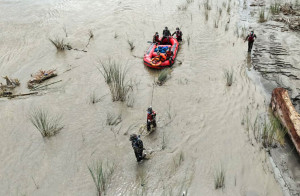
The floods keep coming. Nepal keeps starting over
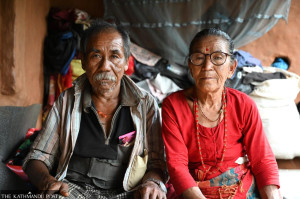
In a settlement destroyed by the Bhotekoshi flood, a disabled couple offer strangers the little they have
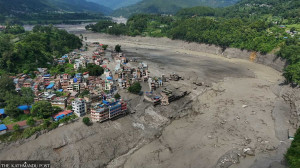
Nepal working on detailed assessment as Bhotekoshi flood reconstruction could cost up to $5 billion

Rabindra Dhant gave Nepal a reason to smile. Now his camp wants real action behind the praise
E-PAPER | September 29, 2026

×