Forty years after its establishment in December 1985, why is the South Asian Association for Regional Cooperation (SAARC) still struggling to become relevant for South Asian countries? One major reason is India’s lingering suspicion that the SAARC platform could be used by its smaller neighbours to join hands and push back or counter-balance India, the largest country in South Asia. That mindset has nearly always influenced India’s approach to regional cooperation under SAARC.
India’s apprehension about smaller states banding together against it does not stand to scrutiny. Had Germany continued with its suspicion of its peers in Europe, like France and the UK, the idea of the European Union would have never materialised. Had Indonesia tried to be hegemonic in East Asia, the ambition to make ASEAN the leading regional actor would have remained a pipe dream. The day the US loses complete faith in the United Nations, an organisation it had helped create as an essential element of the post-1945 world order, the UN could totally lose its relevance, as is beginning to happen now. In world politics, great power status comes with prodigious responsibilities. India can either lead SAARC, and with that the entire South Asia, to the next level of prosperity or relegate the organisation to the rubble of irrelevance, as is the case now.
Another reason why SAARC could not emerge as a force for the economic integration of South Asia is related to the lingering conflicts between India and other SAARC members, particularly Pakistan. In 2016, when it was Pakistan’s turn to host the SAARC summit in Islamabad, India not only boycotted the summit but also pressured other countries to stay away, citing its concerns about terrorism. Ever since, India has sought to create new regional alignments minus Pakistan, such as Bimstec, BBIN, and IOR. However, these forums have also failed to deliver the expected levels of regional integration. India’s concern that its South Asian neighbours might bring up their respective bilateral disputes with India on the SAARC platform is exaggerated because the SAARC Charter prevents the raising of contentious political issues at SAARC meetings, and all member states have strictly followed this Charter requirement.
For their part, SAARC members, too, have an apprehension that India could use the forum to promote its hegemonic ambitions. The rhetoric in India of the creation of an ‘Akhand Bharat’ comprising the territories of nearly all SAARC members is an affront to the idea of regional cooperation based on the sovereign equality of all members. The mural map of a united India in its new parliament building evoked formal protest notes from Pakistan and Bangladesh. Importantly, the SAARC Charter calls upon member states to promote economic growth and collective self-reliance, while adhering to “principles of equality and non-interference”.
The only time India felt at ease with the idea of regional integration was in early 2007 when the India-Pakistan peace process was in full swing, and India’s then prime minister, Dr Manmohan Singh, extended his full support to the SAARC process. The 14th summit held in New Delhi in April 2007 took ground-breaking decisions, such as creating a food bank to address regional food emergencies, a regional university, promotion of multimodal transport connectivity, the rationalisation of tariffs, and visa liberalisation for students, journalists, and those seeking medical treatment in India.
Afghanistan was admitted as a member, and observer status was granted to China, Japan, the EU, South Korea, and the US. However, as soon as the peace process with Pakistan ran into trouble in 2008, India lost its interest in regional economic integration and also blocked any meaningful cooperation with observer states, particularly China.
Since 2014, when the last SAARC summit was held in Nepal, the organisation has not held any notable activity. Recently, some voices have arisen from Dhaka to activate SAARC. There is also growing talk of South Asian countries boosting their cooperation with China, even if India is not ready to join in. On the sidelines of the UN General Assembly this year, the leadership of Pakistan and Bangladesh explored the possibility of reviving SAARC to help achieve shared development goals and overcome regional hurdles. The idea of activating regional cooperation under the ambit of SAARC remains as sound today as it was in 1985.
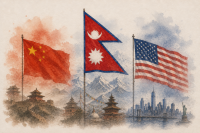
In a world that is increasingly becoming disorderly and anti-globalist, most countries are falling back on their respective regions for closer economic cooperation pegged to intra-regional connectivity. China has taken a lead through its Belt and Road Initiative, which has now connected over 150 countries of the world for mutual prosperity and development. In an article published recently in the edited book titled Rethinking India, the learned scholar Kishore Mahbubani of Singapore has urged India to learn from China to not shun regional connectivity and leverage adverse relationships to mutual advantage. If India were to heed this advice, it could leverage the SAARC process for not only its own economic growth but also that of all countries of South Asia.
Encouragingly, Pakistan’s president and prime minister have both affirmed Pakistan’s commitment to the principles and objectives of the SAARC Charter and expressed Pakistan’s readiness to work with all willing states in our region to promote trade and energy linkages. This is a prudent approach. Together with Bangladesh, Pakistan must continue its efforts for a cooperative and inclusive regional order that can help unlock the true potential of South Asia as a region. Over the decades, substantial good work has been done under the ambit of SAARC, which must not be squandered. SAARC member states owe as much to their region, which is home to over two billion people, a quarter of the world’s population.




 20.85°C Kathmandu