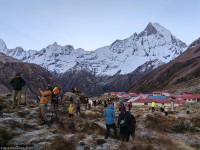
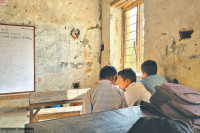
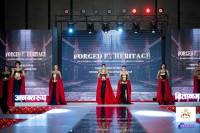
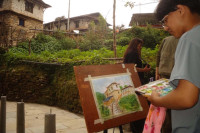
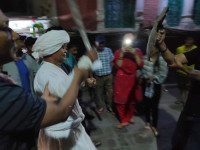
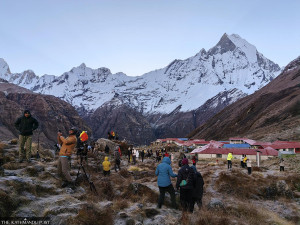
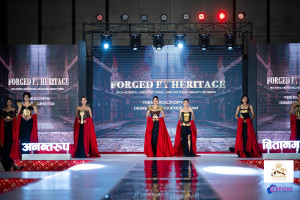
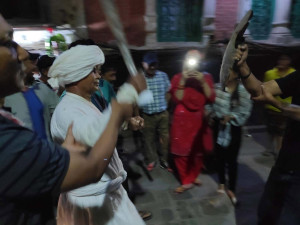
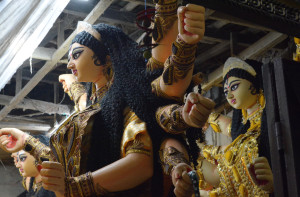
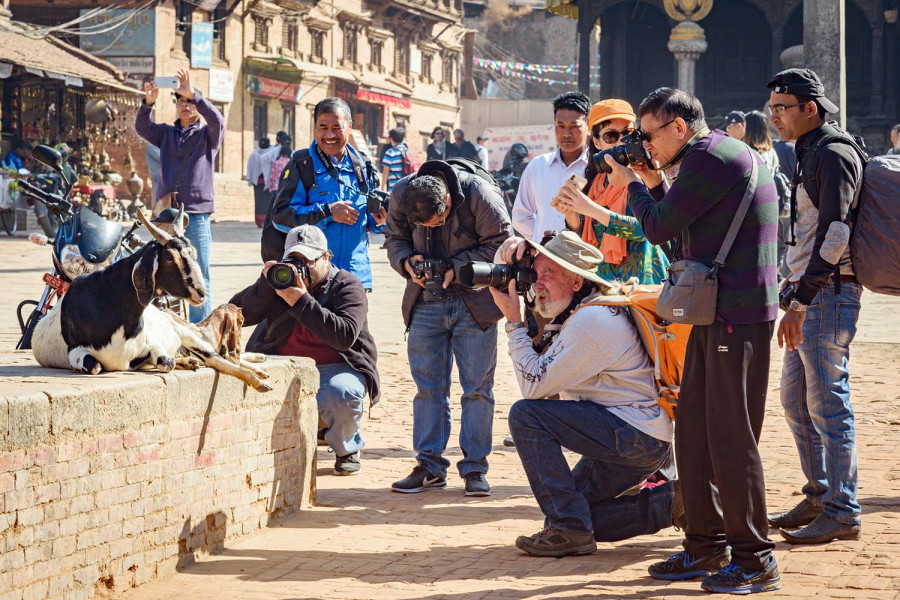
From a small gathering of colleagues to a growing community of photographers, photowalks have created spaces to learn, explore and see Nepal differently.In the act of noticing, participants learn photography from one another. Courtesy of Om Prakash Yadav
Nineteen years ago, a group of colleagues traded a Saturday morning for photography lessons from the wildlife and travel photographer, Om Prakash Yadav, who was then a graphic designer and programmer. At the time, as digital cameras were entering the market, Yadav, driven by his passion for knowledge sharing and photography, agreed to teach them.
Pashupatinath was the chosen spot. They gathered with their lenses, simply to take pictures, rejoicing in the walk which soon became one of the longest continuous photography traditions of Nepal.
It required neither a committee nor a registration fee. “Fun, food and photography,” Yadav says, “in that order.”
Photowalks, in this sense, have long invited people, particularly photography enthusiasts, to gather and exchange experiences, with a collective aim of moving and taking pictures.
In 2007, with his colleagues’ growing interests in these walks, Yadav organised his first formal photowalk in Khokana. From monthly to weekly, to monthly again, the tradition continued, and does still.
He recalls how the lack of advice and guidance early in his photography career made his journey a difficult one. Making sure the emerging photographers do not have to encounter similar experiences, his passion for photowalks has only grown over the years.
“At the time, we used to converse through emails for information,” he says. “Now, with the overwhelming participation, the methods and mediums have changed.”
Photowalks help document everyday lifestyles.
Eventually, ‘PhotoWalk Nepal’ got its name, and with his team, Yadav travelled across the Kathmandu valley, Chitwan, Nawalparasi, Lumbini, Bardiya, Nepalthok, Nuwakot, Palung, Chitlang, capturing nature, wildlife and culture.
“Moving beyond Kathmandu valley, we notice stark differences in lifestyles,” he says. “Bonding between the participants, too, becomes stronger.”
In recent months, he has also published the magazine ‘Frame’ documenting the captures of each walk. Yadav collaborated with Nikon Nepal to provide cameras to the participants.
Abiding by the main priority of photographic knowledge sharing, these Photowalks also help preserve and document the everyday lifestyle, festivities, culture, historical sites and monuments.
“In this sense, we can provide the archives that we have collected since 2007,” Yadav says. “We notice the differences, exchange personal memories and make the gatherings more than mere photo walks.”
As these initiatives have grown, several youth photographers across Nepal have found the opportunities to build a community of like-minded people, and for many others, it became a starting point for their careers.
“If it was not for these photowalks, I would not be a street photographer now,” says Sukarya Lal Shrestha, who began as a participant exploring street photography before eventually organising one himself.
During one of the early walks he had attended in Basantapur, photographer Bhisma Thapa told him, “You have an eye for the streets.” It was a comment that stayed with Shrestha, guiding the direction his photography would further take.
Having witnessed the rise of photowalks since 2018, Shrestha explains how it addresses the need to meet professionals, ask questions and exchange ideas. “We will not learn otherwise,” he says.
In Shrestha’s photowalks, rather than walking together and collectively finding their subjects, participants disperse on their own terms. An hour or two later, they gather to share their pictures, memories and experiences. “In the photowalks that I used to participate in, we would be provided with specific themes to capture,” he recalls. “I personally would try to explore beyond what was provided, and in my photowalks, I encourage people to do the same.”
Shrestha believes this freedom to look beyond what is immediately prescribed is important. As photographic interests expand, so does the challenge of retaining a sense of individual expression.
“With the rise of AI images, and the irresistible human nature to imitate recklessly, creative uniqueness is strikingly lacking, which I try to prevent during my photowalks.”
However, while these walks have created accessible entry points for young people to explore the medium, women’s participation remains significantly low. Concerns around safety and the lack of women photographers in visible roles can all determine who feels encouraged to participate.
Photo: Courtesy of Rahul Badu and Monika Limbu
“Several times, I have been the only woman in these walks,” says Shushina Maharjan, a beginner photographer who has been regularly participating in photowalks. “More women should know about these gatherings.”
For beginners in particular, photowalks have been a source to understand the technicalities of photography, from lights, composition, and shadows to colours.
Maharjan, too, had newly explored street photography through photowalks. “I would have never imagined myself to be this interested in street photography. But as I continued participating, I found joy in it,” she says.
It is within the spontaneity of these walks where people encounter their creative freedom, allowing themselves to follow their curiosities, to pause at what catches their eye and to discover what kind of photographers they might become.
The same street can produce entirely different photographs. A shadow that one person overlooks may become another's subject, a familiar scene may be transformed by a different perspective. In this exchange of ways of seeing, participants learn from one another.
This act of noticing does not require an expensive camera. A phone would be enough. The device, somehow, becomes secondary to the vision, letting participants experiment through the world immediately around them.
“If photography excites us, then we do not need professional cameras to start,” says Rajendra Malla, an IT manager.
Malla also expresses how, despite photography being separate from his profession, participating in photowalks helps keep his passion alive. “I find a new sense of purpose and community there,” he says.
Over the years, Yadav's solitary interest has grown into a communal tapestry. Looking back, he sees a photography tradition developing from streets to heritage monuments to wildlife. “Personally, I am very proud,” he says.




 21.76°C Kathmandu
.jpg)
.jpg)