



 20.73°C Kathmandu

Mon, Oct 12, 2026
Culture & Lifestyle
Meet the Nepali designer building a career with America’s most iconic brands
From a fashion apprenticeship in Kathmandu to the studios of Ralph Lauren and J Crew, Alina Shrestha has carved out a place in one of the world’s most competitive creative industries.
bookmark![]()
Courtesy of Alina Shrestha ![]()
Baala Shakya
Published at : June 27, 2026
Updated at : June 27, 2026 08:50
Kathmandu
A shopper browsing a Ralph Lauren store in Manhattan might pause over a handbag before glancing over a belt or a wallet, unaware that part of its journey began thousands of miles away in Kathmandu.
The same is true at J Crew and American Eagle. Behind some of the accessories sold by three of America’s most recognisable brands is Alina Shrestha, a 24-year-old Nepali designer who has spent the past few years working her way through one of the world’s most competitive creative industries.
When Shrestha was a teenager in Kathmandu, she discovered Harajuku street fashion online and tried to convince sceptical adults that fashion could be a real career. Today, she is an Accessories Designer at Ralph Lauren in New York, helping develop handbags, small leather goods, and belts that will eventually appear in stores across the United States and beyond.
Her days involve tracking seasonal trends, sketching concepts, developing technical specifications, creating computer-assisted design renderings, building linesheets, and refining details across design teams. Before Ralph Lauren, she worked in accessories at American Eagle and J Crew, with earlier roles at brands including Champion, Juicy Couture, Victoria’s Secret, and Skims.
It’s a long way from Kathmandu, where fashion was not always presented as a practical future.
“Growing up in Nepal, if we tell our parents, ‘I don’t want to do science or management, I want to go for arts,’ they would be dismissive,” Shrestha says. “It took a lot of time convincing them that I wanted to do fashion.”
Fashion became more than just clothing when she discovered Harajuku street fashion online at age 13.
“People would express themselves through different styles,” she says. “In Countries like Japan and Nepal, we are often taught to be reserved, not to stand out. It made me love that people were trying to stand out, even though society tells us not to. It felt very rebellious, and I liked that side of it.”
At first, Shrestha dreamed of attending Bunka Fashion College in Japan, but her parents were uneasy about her moving to a country where the family had no close support network. The United States, where her aunt and uncle lived, became the more realistic option.
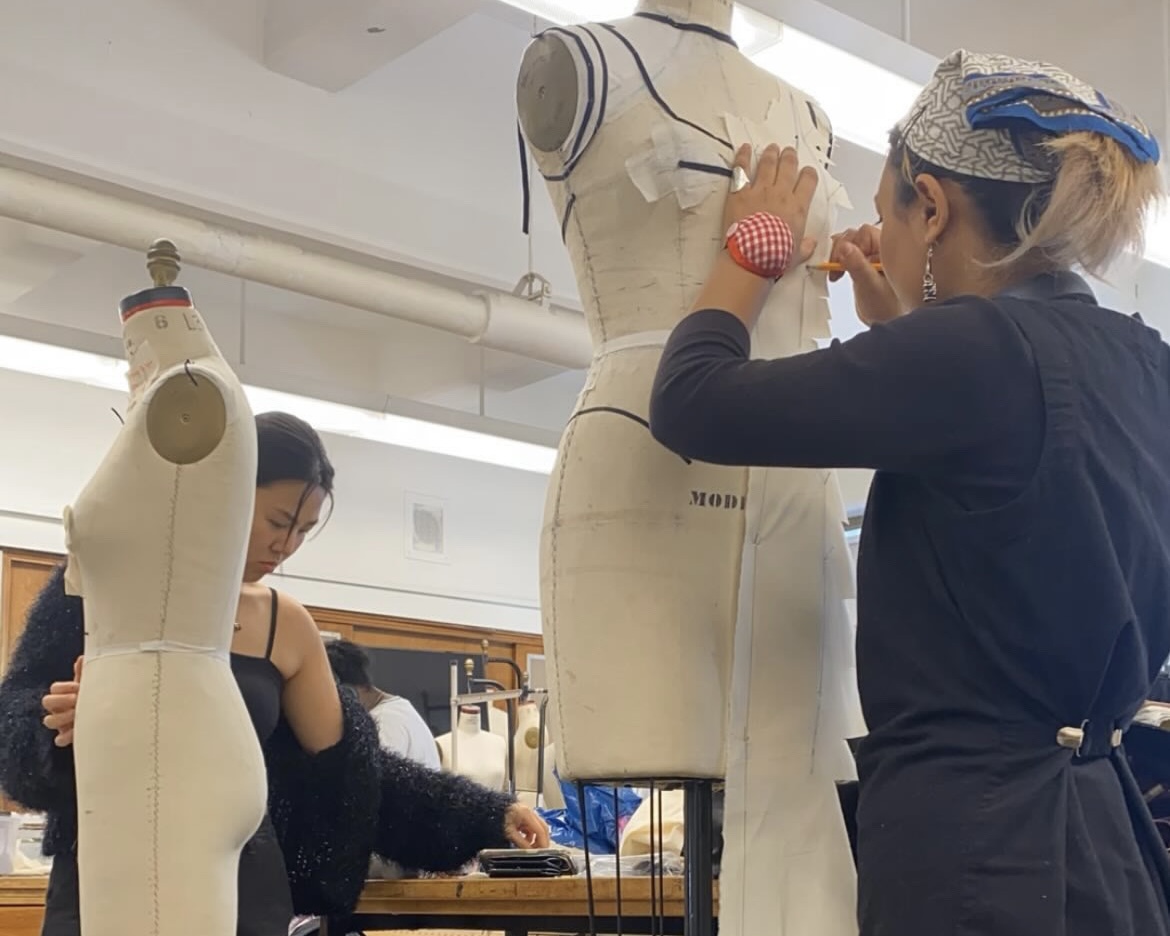
After finishing high school, she took a gap year and completed a fashion course at Chuplag Studio before joining Atelier Lagom Nepal as a Studio Assistant. There, designer Hana Ling Rai encouraged her to pursue design rather than merchandising and helped reinforce her belief that fashion could become a viable career.
“She really pushed me to take it seriously,” Shrestha says. “I needed that push because a lot of elderly people, my parents or other people, would be like, ‘I don’t know if fashion would be a career.’ Realistically, in Nepal, it is really hard to make a living out of fashion, and people don’t really understand what a designer does.”
Shrestha first applied to the Fashion Institute of Technology (FIT) in New York but was rejected. After spending three semesters at Kent State University in Ohio, she applied again with a stronger portfolio and was accepted.
Moving to FIT changed everything. There, she balanced classes with internships that exposed her to sportswear, intimates, knitwear, and accessories. The experience taught her the technical side of modern fashion design, from Adobe Illustrator and Photoshop to the detailed specifications that turn sketches into products.
“CADs and technical design are the key skills,” she says. “That’s about 70 percent of what designers do.”
Her internships also introduced her to the realities of large-scale fashion companies and the collaborative process behind bringing products to market.
After graduating from FIT in 2025, Shrestha faced several challenges as an international student seeking to build a career in a competitive industry where securing full-time sponsorship is difficult.
She briefly worked in children's wear before moving into accessories at J Crew and later American Eagle.
At both brands, she worked on bringing products from concept to production, collaborating with vendors, merchandisers, and production teams. At American Eagle, where she worked on a small accessories team, she was given significant responsibility.
“I learned the most at American Eagle,” she says. “I was handling a lot of responsibilities, and it made me realise I was ready for the next step in my career.”
The next step arrived through LinkedIn when a recruiter contacted her about a handbag design role at Ralph Lauren.
“In my head, it was like sparks flew,” she says. “It was Ralph Lauren!”
The opportunity felt especially meaningful because just after her graduation ceremony, Shrestha and her family had visited the Ralph Lauren store and café on Manhattan’s Upper East Side. A year later, she received an offer from the same company. “It felt magical,” she says. “Like I manifested it.”
At Ralph Lauren, working on handbags has taught her how much thought goes into even the smallest design decision. In corporate fashion, Shrestha says design is never only about aesthetics but also about customers, seasons, price points, production feasibility, and brand identity.
According to Shrestha, American Eagle, J Crew, and Ralph Lauren each interpret American fashion differently. American Eagle is younger, trendier, and aimed at high school and college students. J Crew is more preppy and focused on customers in their 20s through 40s. Ralph Lauren is the most explicitly rooted in sophisticated heritage and the Americana spirit.
“It’s more about the collegiate and elegant vibe,” she says. “Thinking about old America in the ’80s or ’90s, heritage, college, workwear, Fourth of July, all the big American holidays.”
For Shrestha, being Nepali in these spaces comes with both pride and loneliness. Many people she meets know Nepal through tourism, while others do not know where the country is at all. At one job, a designer who had visited Nepal immediately recognised where she was from. “It made me feel represented,” she says.
She rarely meets other Nepalis in the fashion industry, but New York’s immigrant and creative communities have helped her feel at home. Food often serves as a bridge, whether introducing friends to momos in Jackson Heights or sharing Nepali dishes with people from other immigrant backgrounds.
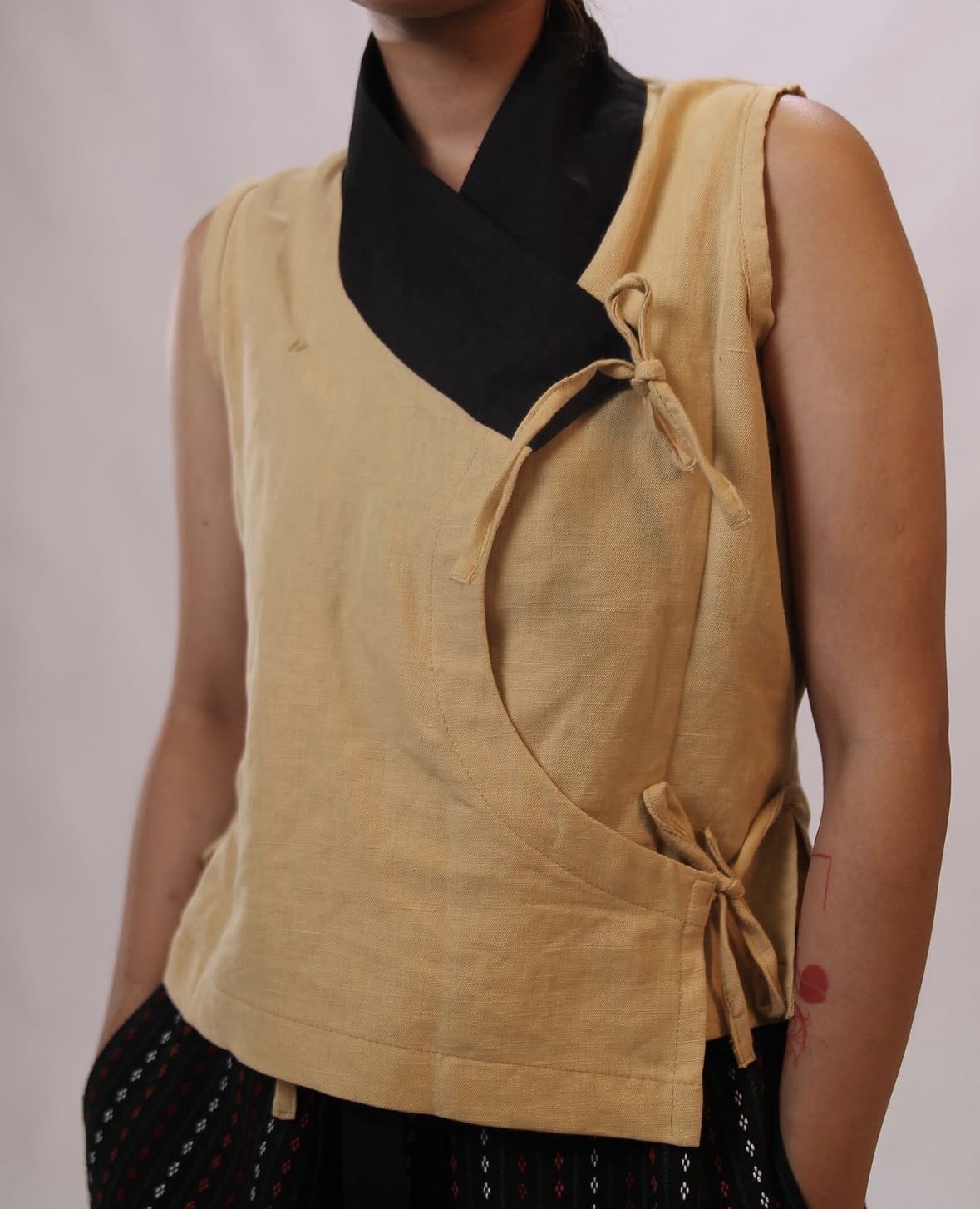
Even as she builds a career in American fashion, Shrestha hopes to one day launch her own label incorporating Nepali craftsmanship, textiles, and design traditions for a global audience. During a recent summer in Kathmandu, she created a 10-piece collection for Gofu Studio using organic materials and locally inspired silhouettes, including dhaka trousers and a cholo-inspired top.
For Nepal to nurture more designers, Shrestha believes schools need to expose students earlier to fashion through sewing, draping, and design classes. The industry also needs more room for original design, though she recognises the economic challenges. Nepali designers often compete against cheaper imported or dropshipped clothing, while sustainable, locally designed and produced garments cost more to make.
“It’s really hard to work as a designer in Nepal unless you’re designing for special occasions like weddings,” she says. “A way for Nepali designers to stand out would be thinking out of the box and thinking about a global consumer space.”
Looking back, Shrestha still finds it hard to believe how far a teenage fascination with fashion has taken her.
“If you told me then, ‘In a few years, you’re going to be working at Ralph Lauren,’ I would be like, ‘No way,’” she says. “But with grit and determination, you can make things happen.”
Baala Shakya
Shakya worked as an intern at the Post.



Most Read from Culture & Lifestyle

It’s a bird … it’s a plane … it’s the Indian ambassador’s farewell tweets

‘Tenzing’ puts the Sherpa at the centre of the Everest story
How should Nepal navigate a world in reorder? Rajib Upadhya on geopolitics and foreign policy

How Anup Poudel took Nepali cinema to Cannes
A Nepali photographer rediscovers Calcutta after decades
Editor's Picks

Constitutional Bench caught in seniority, ‘pick and choose’ dispute

A Dom boy’s long road to becoming a doctor

From blankets to handmade dolls, two foreign women bring comfort to flood survivors

News Analysis: When institutional defence exposes institutional fault lines
It’s a bird … it’s a plane … it’s the Indian ambassador’s farewell tweets
E-PAPER | October 12, 2026

×