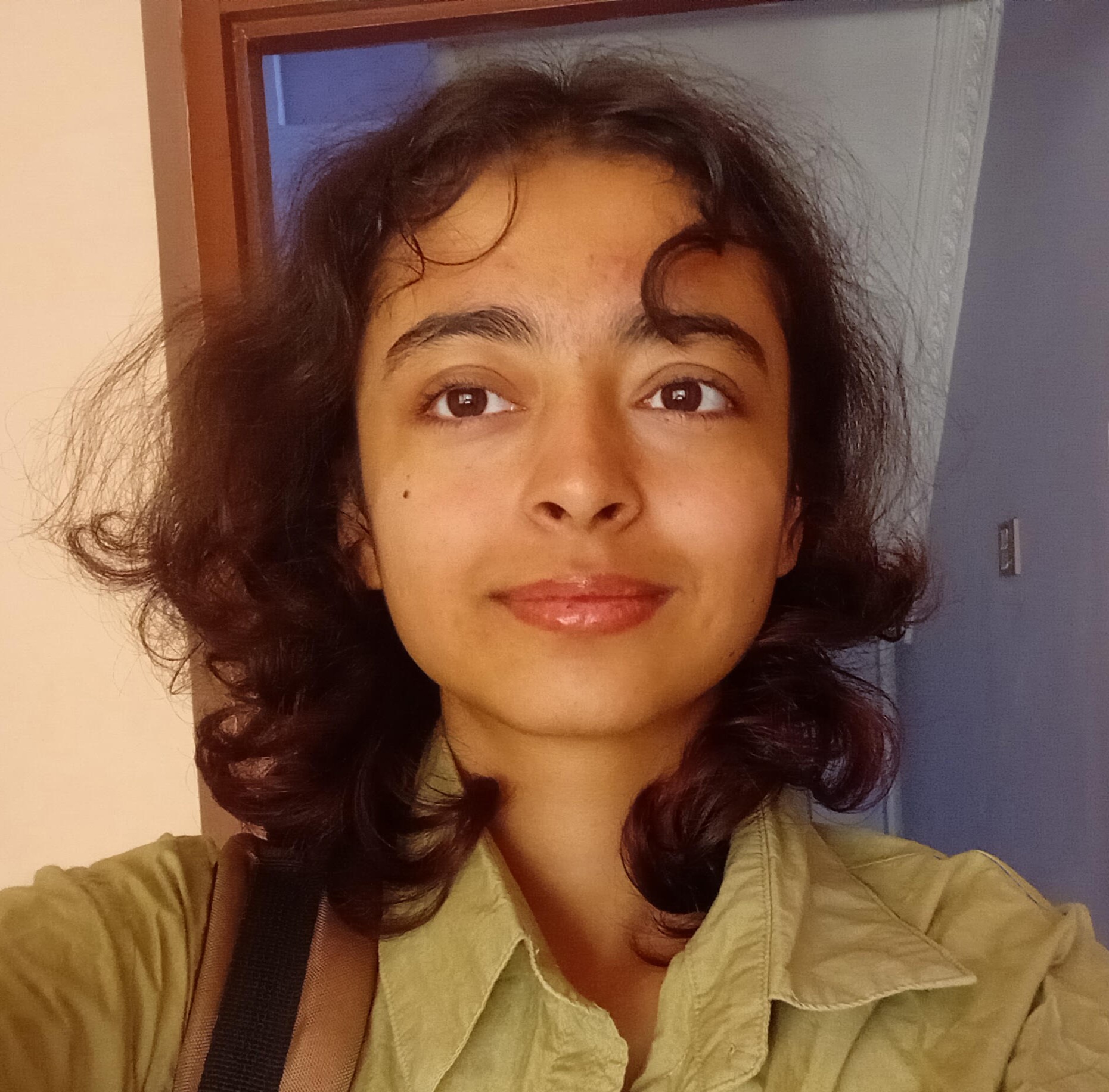
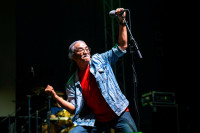
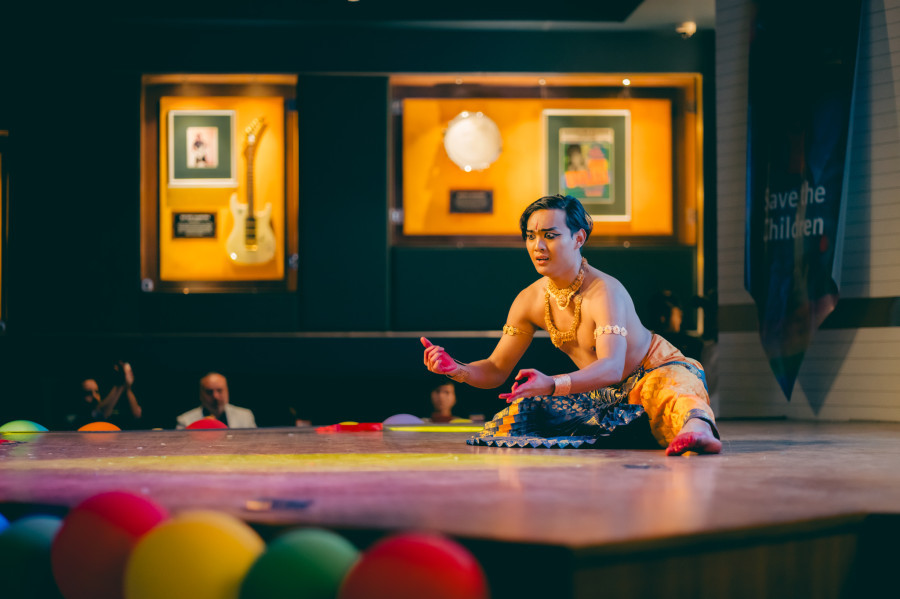
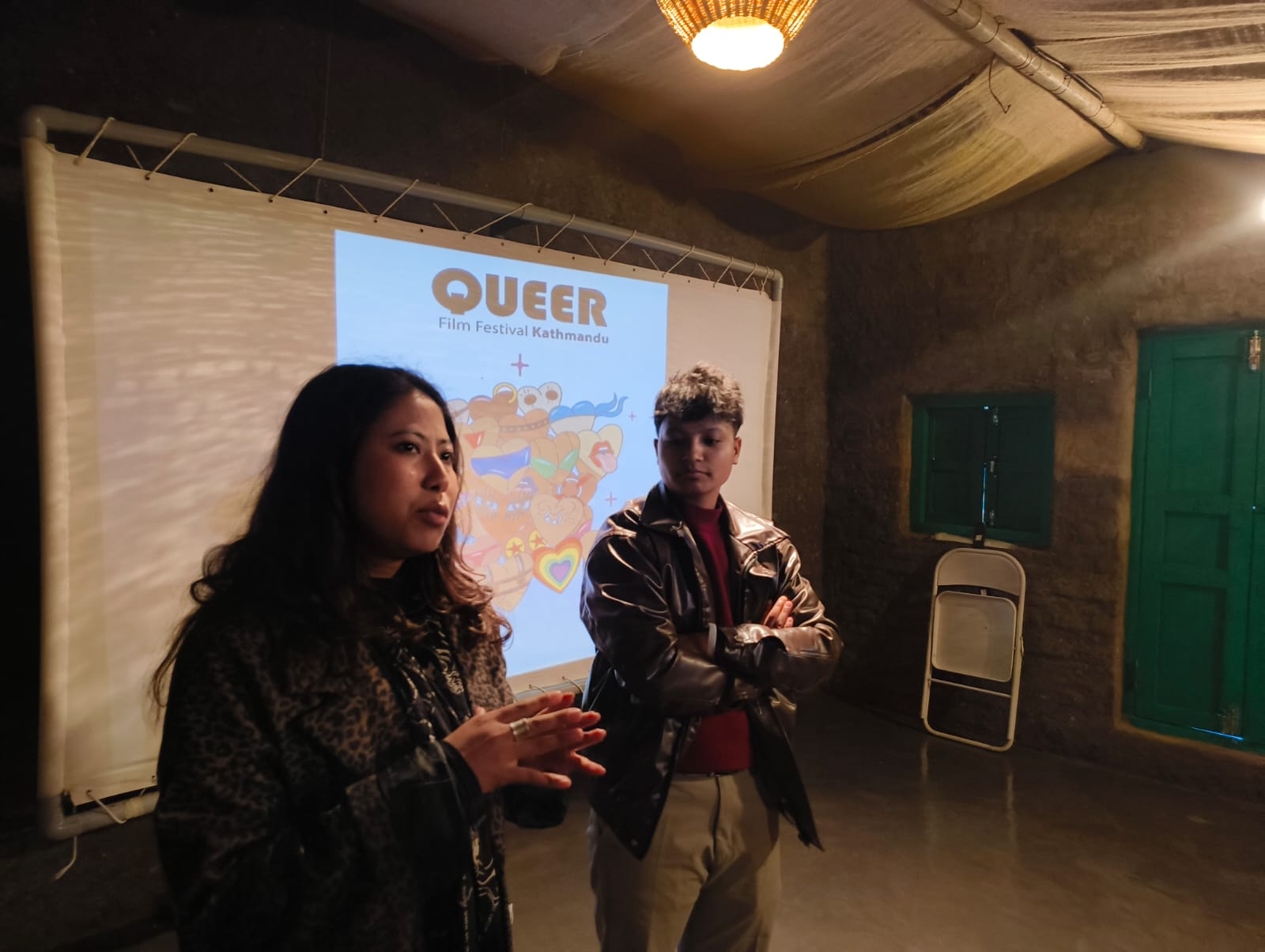
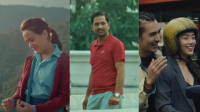
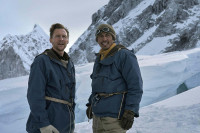
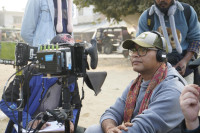
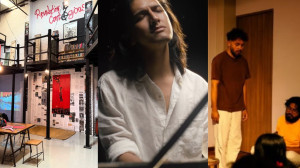
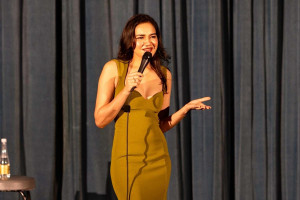
Through art, drag, fashion, filmmaking and community, queer individuals in Nepal are carving out spaces where they can live openly, creatively and on their own terms. Photos: Provided to the Post
When asked about his forms of self-expression, Ugem Manandhar, as a queer artist, listed them with certainty.
“Art, community, music, drag shows, conversations with family, discussions about mental health and queer talks make me feel more queer every day,” he says. “These comfort me a lot.”
As we celebrate Pride Month, we are reminded of the power of self-expression, identity and belonging of the queer community. For many, these are everyday acts of courage. Visibility in this society can bring both affirmation and prejudice, demanding that queer individuals navigate a complex journey of exclusion, visibility and self-discovery.
Nepal, considered one of South Asia’s most progressive countries regarding LGBTQIA+ rights, still falls short in providing an inclusive environment for queer individuals.
Yet, despite the challenges, the fortitude and creativity with which they express themselves and create a communal tapestry of their own present a remarkable, almost iconic commitment to authenticity.
Mandandhar shares how art and sketching encourage him to be himself, especially when he spends time with his community. He further recalls a vivid memory of his first pride parade and feeling a confidence he had rarely experienced before. The crowd made it a space where he could be fully himself.
“It was a day I was truly myself,” Manandhar shares.
Such communal spaces, including community gatherings, events and queer-friendly cafes, provide opportunities for connection, conversations and mutual support. These spaces, for many, become a part of their everyday life.
Dia Magar, a trans woman, advocate and queer youth filmmaker, sees herself as a loyal customer of ‘Inclusive Cafe’, an LGBTQIA+-friendly space in Lazimpat. She says the cafe’s ‘By Queer, For Queer’ notion creates a judgement-free environment for people to gather around.
“In terms of networking and being in proximity to my own community, it is a space where I can be myself,” she says. “Every inclusivity as such is a moment of celebration for us.”
These celebrations of queer identity and self-expression come alive most vividly in queer events, especially drag shows.
“In drag shows, I change myself to a hyperfeminine diva to express the sassiness I feel inside,” says Aayam Poudel, the co-founder of Queermandu, a queer travel tour company, who performs as Momolicca, his drag persona.
Like many queer individuals, Poudel believes self-expression is something inseparable from self-acceptance. “For me, it is the art of owning myself and reclaiming my pride and joy,” says Poudel. “Nowadays, I express myself more creatively and without thinking much about others’ opinions.”
One of his most affirming moments came when he won a drag competition organised by the Blue Diamond Society two years ago. “I felt seen and validated,” he recalls. “It has been only a couple of years since I started doing a feminine persona, and being recognised as a prominent drag artist in Nepal has been glorious.”
But before these moments of affirmation and exploration come the journeys of self-understanding. Many queer individuals navigate through layers of uncertainty and resistance against conventional societal expectations before arriving at clarity.
However, for some, the sense of self emerges early. Rubina Tamang, a trans woman at Blue Diamond Society, recalls how she came to understand her identity in childhood. “In the way I was, my preferences, the way I carved the man of my dreams, I just knew,” she says. “Today, what matters is the thing that gives us joy.”
Tamang expresses how she celebrates her identity through her simple, everyday lifestyle. “I come home to people who treat me like family,” she says. “I wear the clothes that are the most comfortable to me, and that is exactly where I find my authenticity.”
She adds that she would rather have people know her through their interactions with her before focusing on her trans identity. But achieving that can be challenging when societal perceptions adhere to narrow, stereotypical representations.
“There is a distinct notion that overpowers the perception of society when it comes to trans women,” she adds. “My form of self-expression is also to defy them, to make people understand that trans women are so much more than how they are presented in films—as antagonists, with distinct body language and vernacular.”
Likewise, for many individuals of the LGBTIQ+ community, self-expression is also an act of resistance. To challenge authoritative norms and expectations which compel them to look, behave or live a certain way. “I’ve always had a rebellious streak,” says queer activist and content creator Parakram Rana. “So, I wear what makes me feel comfortable, speak about issues I care about, and create content that reflects who I am.”
“As long as I am being true to myself and not harming anyone, I believe I should be able to express myself freely,” he adds.
Rana recalls a moment at the queer party at LOD Club after the annual Pride Parade celebration in Kathmandu that stood out to him. “For the first time, I dressed exactly the way I wanted to—bold, confident, and completely unapologetic,” he says. “At that moment, I felt completely comfortable in my own skin.”
Self-expression can take numerous forms, each unique to the individual. Be it through fashion, art, filmmaking, literature, or simply the way they live every day.
Fashion designer and actor Aliz Ghimire shares how the creative choices that he makes are an extension of himself. “I embody my identity through my work as an artist, through fashion, through the way I speak, and through the stories I choose to tell,” he says. “It is about loving who I am, what I feel, and how I choose to move through the world.”
As an actor in the Cannes-awarded Nepali film ‘Elephants in the Fog’, Ghimire describes the character as something that made him feel most authentically himself. “I was completely immersed in my character Apsara, while still bringing my own truth into the role,” he says. “There was a sense of freedom in not having to hide any part of myself.”
While each individual’s journey is different, the fierce presence of those empowered by their own identity becomes monumental for those still navigating questions about themselves. The message these individuals shared was the same. Self-acceptance, they say, matters more than societal approval. “How we exist is nobody else’s business,” Ghimire says.
They also advised queer individuals to give themselves the time and space to understand who they are and to prioritise their own well-being. “I encourage people to approach their identity with curiosity and an open mind,” Rana says. “Give yourself the space to explore and understand who you are without rushing toward a label or an answer.”
Alongside emotional independence, Poudel reflected on the importance of financial security. “I advise you to study and become financially and emotionally independent first,” he says. “From being confused about my own gender and sexuality to now being openly gay, doing drag and running a queer tour company, I’ve overcome a lot of hurdles, and it was possible through immense self-love and reflection.”
With these spaces and experiences, be it through drag shows, queer-friendly cafes, pride parades or embodiment of identity through artistic creativity, the vitality of self-expression emerges as an example of how oppression can be remarkably and unapologetically resisted.




 21.43°C Kathmandu