Characterisation by Yoon Ga-eun is something to be admired. Examining love, trauma, childhood and youth, Yoon visualises her characters employing contemporary narratives with scrutinised observations and authenticity. And what she does best in this process is avoid clichés.
Moving from ‘The World of Us’ (2016) to ‘The House of Us’ (2019) and to her third feature ‘The World of Love’ (2025), her meditation on what it means to be a child or a youth in intricate surroundings grappling with identity, trauma, belonging and family defines her as a vibrant and celebrated filmmaker. What exceptionally stands out in all these movies is the masterful presence of debut actors.
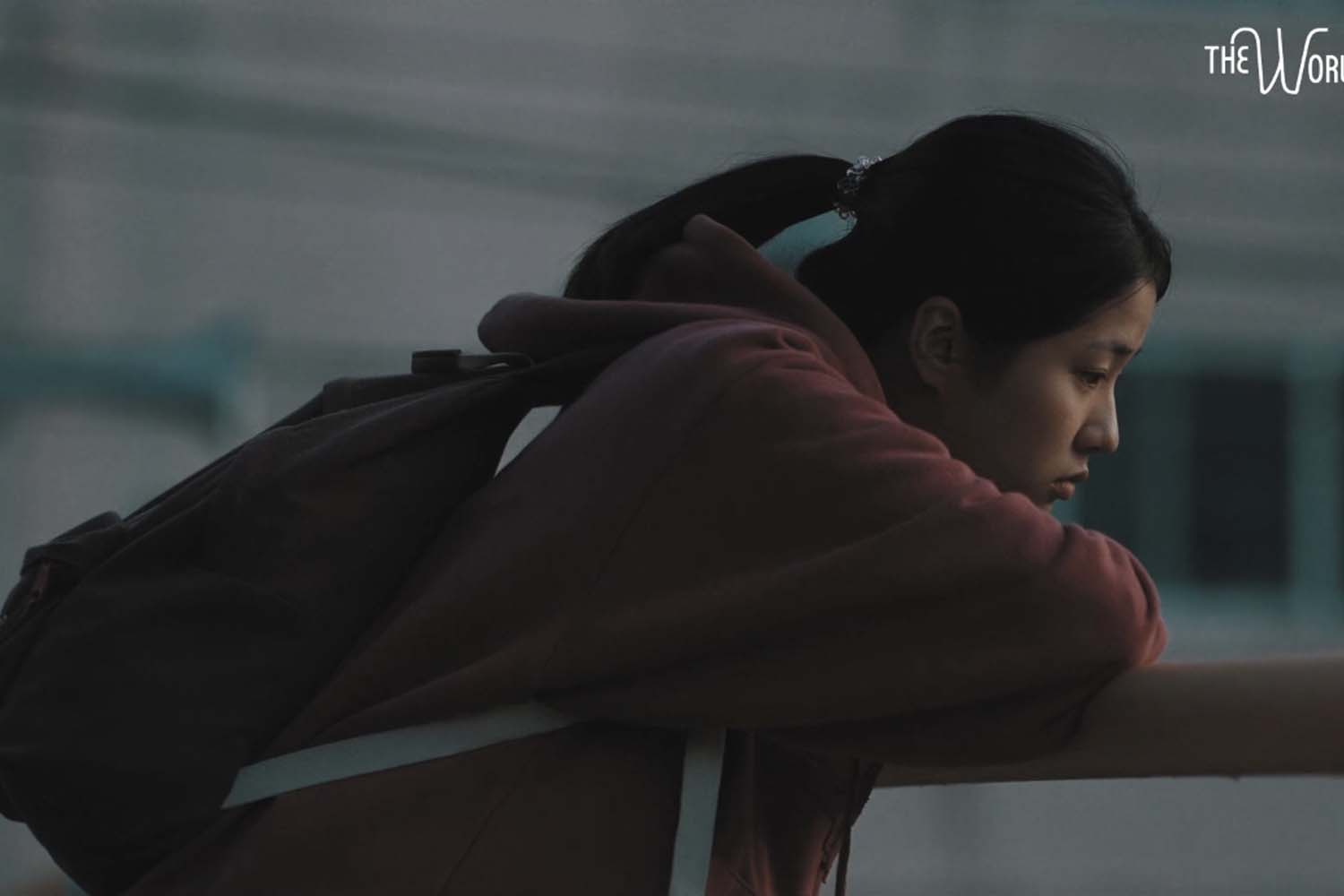
‘The World of Love’ centres Lee Ju-in (played by Seo Su-bin), a 17-year-old, jolly, compassionate, and seemingly outspoken student. Love intrigues her. She wants to experience it fully, without fear or consequences. The audience’s journey of understanding her character is notable. Initially introduced as a cheerful teenager, we are gradually exposed to the tangled undercurrents of her traumatic experiences of sexual assault. And again, we are brought right back to where it was.
“I’m okay. I’m really okay,” she says often.
We are made to question how survivors of sexual assault navigate their lives. In what forms do grief and trauma surround them? And do people truly understand the burden of it?
When her school friend asks her to sign a petition to prevent a sexual offender’s reintegration into their neighbourhood, she disagrees to do so, expressing her resentment in one particular sentence.
Her emotional outburst while declining to sign ultimately compels her to confess her own trauma. This grabs the attention of her friends and teachers. Some empathise, becoming protective of her; others question her honesty. What follows is a series of mysterious letters on her desk now and then, judging her actions and asking for credibility.
She tries to learn about herself, her life, her circumstances, anger and trauma. Perhaps, she already has. What becomes more difficult is making others understand.
A visual metaphor of an apple persistently recurs in the film. Despised greatly by Ju-in, these apples, however, are not far away from her. Why would anyone hate something as ordinary as an apple, right? Perhaps it symbolises love. Something Joon-in believes others can easily achieve but not her.
Another intriguing character is Ju-in’s mother, Kang Tae-sun (played by Jang Hye-jin). Tae-sun runs a day-care for nursery students. As a compassionate and empathetic woman with responsibilities at work and home, she lives a life without a dependable husband, becoming the only guardian for her children.
The mother-daughter relationship is compelling. Both characters carry guilt and frustration. Yet, beneath it lies a delicate affection that neither of them knows how to fully express.
Jang Hye-jin, who also appeared in ‘Parasite’, an Oscar-winning South Korean movie, has been featured in several of Ga-eun’s works. Her performance as Tae-sun captures the complexities of a mother who is trying to care for everyone around her while facing her own physical and psychological sufferings.
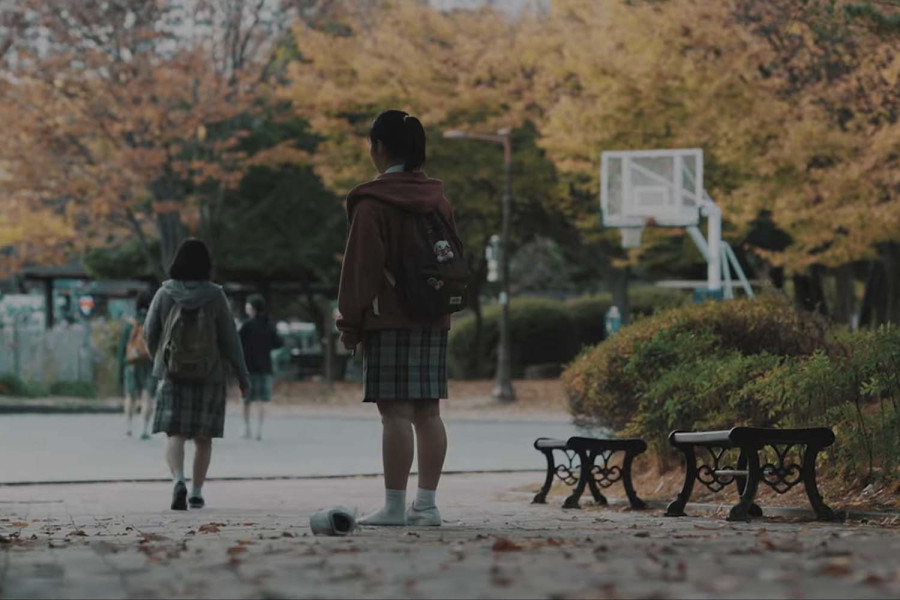
Keeping the main characters in focus, despite a crowd in frame, visually shows Ga-eun’s directorial mastery. In one scene, the camera is positioned behind students playing basketball on the ground, yet Ju-in and the characters carrying on the conversation persistently remain in the focal point. This composition precisely guides the audience within movements and visual distractions.
One of the film’s most memorable sequences takes place inside a car as it enters a tunnel for a wash. As streams of water and the violent hum of machinery engulf the vehicle, Ju-in’s buried trauma erupts. She lashes out at Tae-sun, expressing her resentment toward a mother who devoted herself to caring for other children while failing to recognise her daughter’s pain.
The sequence depicts Ga-eun’s command of sound and space, placing the camera in the backseat and making this moment of catharsis truly theirs. It makes the claustrophobic setting a safe space for emotional release. The noise of the car wash further amplifies the intensity of Ju-in’s anguish.
With this, Seo Su-bin delivers a remarkable performance, allowing the character’s vulnerability and resilience to rest naturally in her embodiment.
Examining friendships and community, the film presents trauma as something that ebbs and flows rather than a firm, singular occurrence. It also explores how young people find ways to simply live, responding, or perhaps coping with this trauma.
With ‘The World of Love’, Ga-eun expands the concerns that have defined her filmography while venturing into a complex emotional territory. The result is her most mature exploration of adolescence, vulnerability and identity.
Characters drive the plot, making it the film’s most notable strength. Refusing easy resolutions or sentimental cliches, the film brings a compassionate portrayal of survival, showing how healing and peace manifest differently for each individual. Ju-in refuses to let her past define her. Instead, she allows herself to be as carefree, resilient and open to love, reclaiming a sense of agency that trauma once threatened to take away.
Therefore, the film, rather than being about enduring pain, is about reclaiming the possibilities of joy on one’s own terms.




 20.62°C Kathmandu