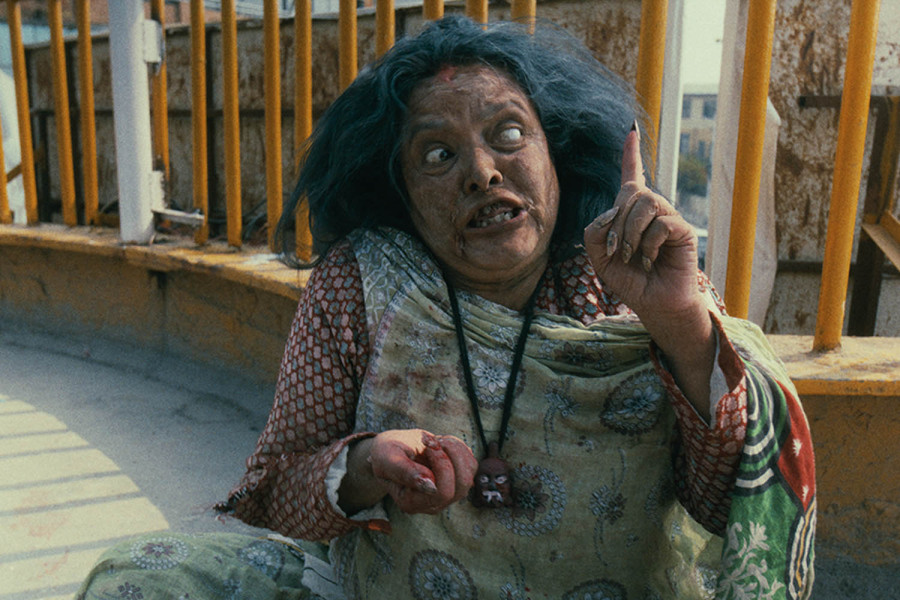
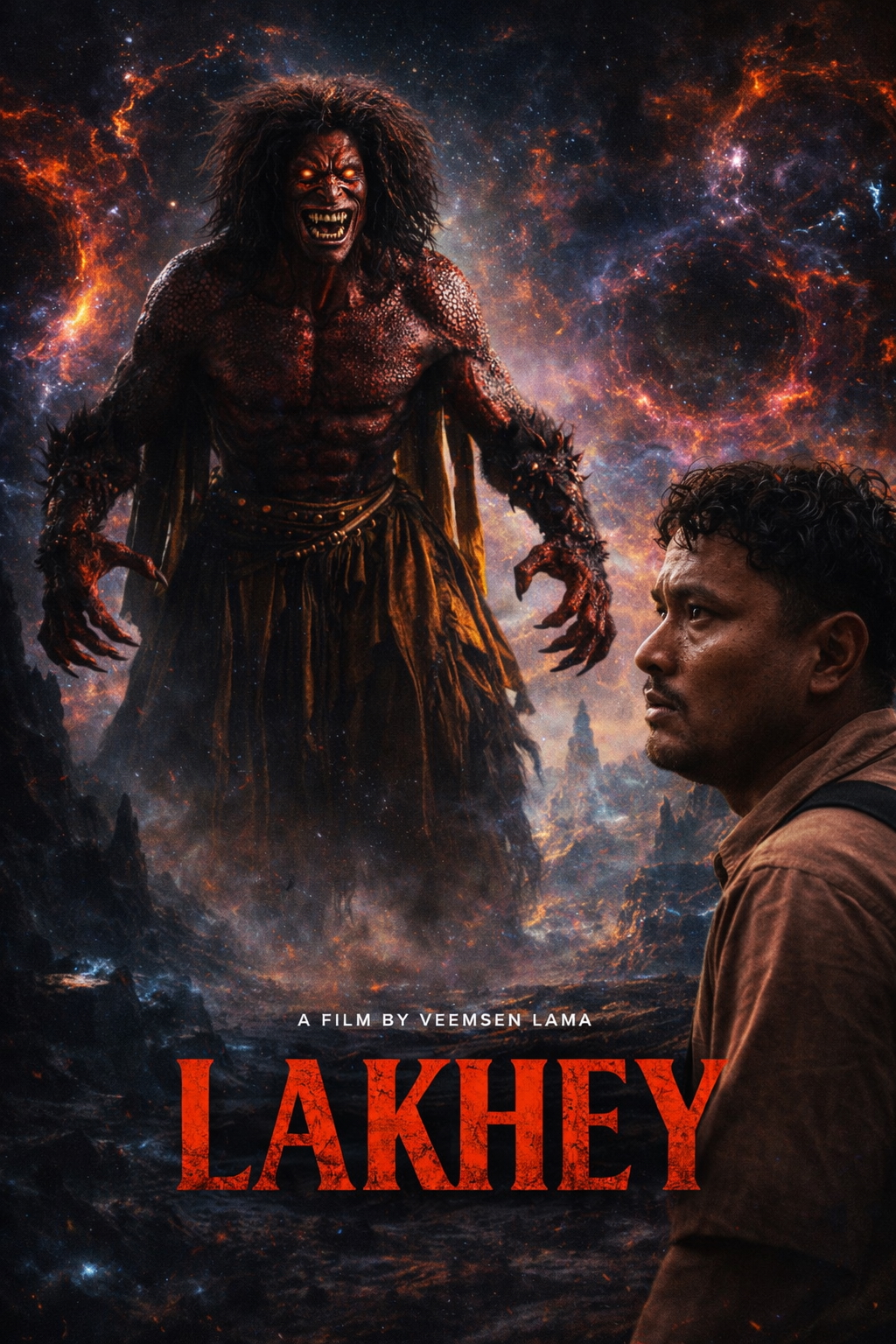
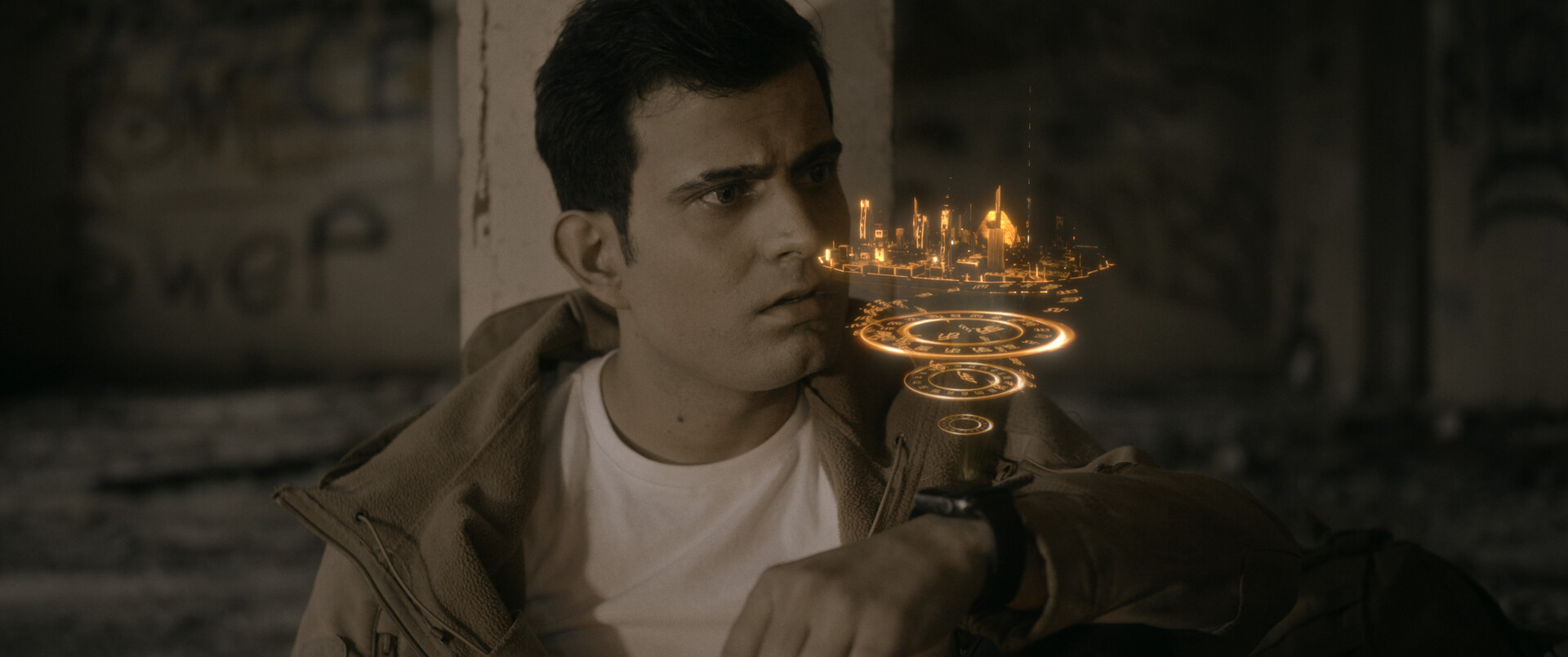
Ram, a gambler who is trying to become a ‘good father’ to compensate for the lack of a maternal figure in his daughter’s life, sets off for Kathmandu to hunt for a job. While on his search, he must not forget that it is his beloved daughter’s birthday; buying her a cake comes at a high cost. After his purchase, when he turns to return home, an old beggar crosses his path, requesting food. His denial of that ask alone curses him to a continuous loop, one where he must survive the demon ‘Lakhey’.
Veemsen Lama’s ‘Lakhey’ thoroughly stages time loops down to a notch. When Ram survives his first outrun from the Lakhey, every decision he takes is the same, yet you can sense the distress he goes through each time.
The symbolism of offering food to the dishevelled woman who summons the demon can be attributed to the folklore that has it that Lakhey must be greeted with offerings, in this case with the cake.
Following the character of a gambler, the fiction presents itself as a story about overcoming greed. Although his encounter with the demon pushes him into a fearful cycle, it can be seen more like a long-awaited awakening of Ram’s conscience.
This 15-minute short fiction, rather than a folklore story about the demon itself, explores dilemmas, greed, and fatherhood, all while maintaining the thrill of recursive horror.
Shot in Kathmandu, the fiction leans toward narrowing the frame, focusing on the characters rather than the surroundings. This emphasis on humans and their emotions intensifies the psychological terror in it. With soft, warm highlights and a muted palette, the film’s colour grading leans toward a portrayal of quiet realism, embracing an unexpected contrast with the anticipated fiction.
Lakhey
Direction: Veemsen Lama
Duration: 15 min
Language: Nepali
Luis’ Letzte Reise
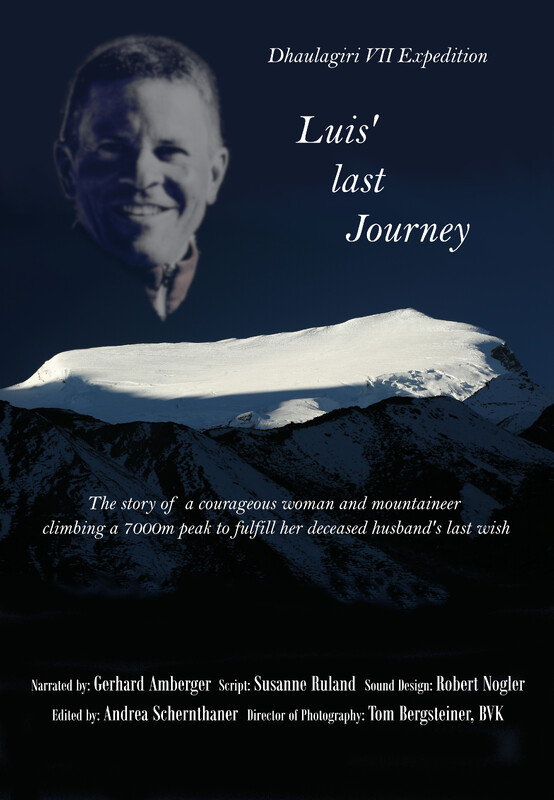
Alex von Melle does something worthwhile for her late husband, Luis Stitzinger.
Having climbed some of the world’s highest mountains together, both of them being lovers of adventure, they wanted to reside on the peaks in case any misfortune happened.
On May 25, 2023, Luis reached the summit of Mt Kangchenjunga, his tenth eight-thousander. Unfortunately, due to altitude sickness and exhaustion, he was found dead at 8,400 metres on May 30, five days after his summit.
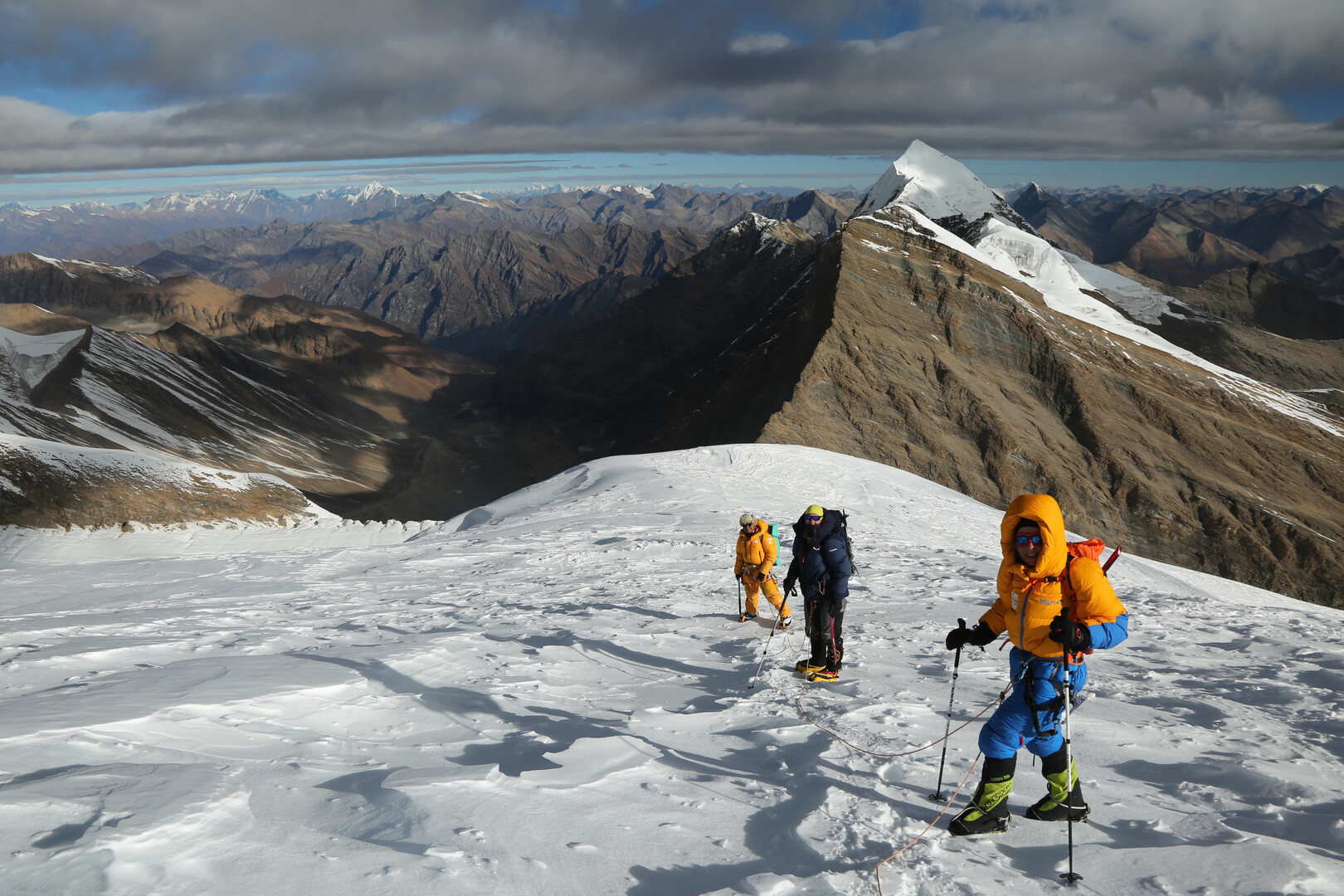
Nearly a year later, Alex returns to Nepal to fulfil her husband’s wish—to scatter his ashes on one of the highest peaks of Nepal, Putha Hiunchuli, also known as Dhaulagiri VII.
This documentary follows Alex and her team’s journey for the ‘Ash Mission’, as she called it.
In most frames, Alex sits, focused, in front of a softly blurred couch with a mountain pillow on top, describing her memories of Luis and this very expedition. While narrating, her eyes are consistently directed towards the frame’s left edge (for the viewers), as she follows the ‘Off-camera documentary setup’, making her emotional intensity personal to the audience.
An alternative to Alex’s narration is the framing of eccentric landscapes surrounding Dhaulagiri VII. A scene that masterfully grabs the viewer’s attention features a waxing gibbous moon floating right above the mountain's peak, with the vibrant blue sky contrasted against the pristine white snow cap.
With just the “right people and right time”, as Alex describes it, they successfully execute the mission, which was entirely driven by grief, memories and the courage to do something ‘worthwhile’.
“Have a good journey, Lu!” Alex whispers, releasing Luis’ ashes into the mountain wind.
Luis’ Letzte Reise (Luis’ Last Journey)
Direction: Alix von Melle/ Tom Bergsteiner
Duration: 29 min
Language: German
Mokshya
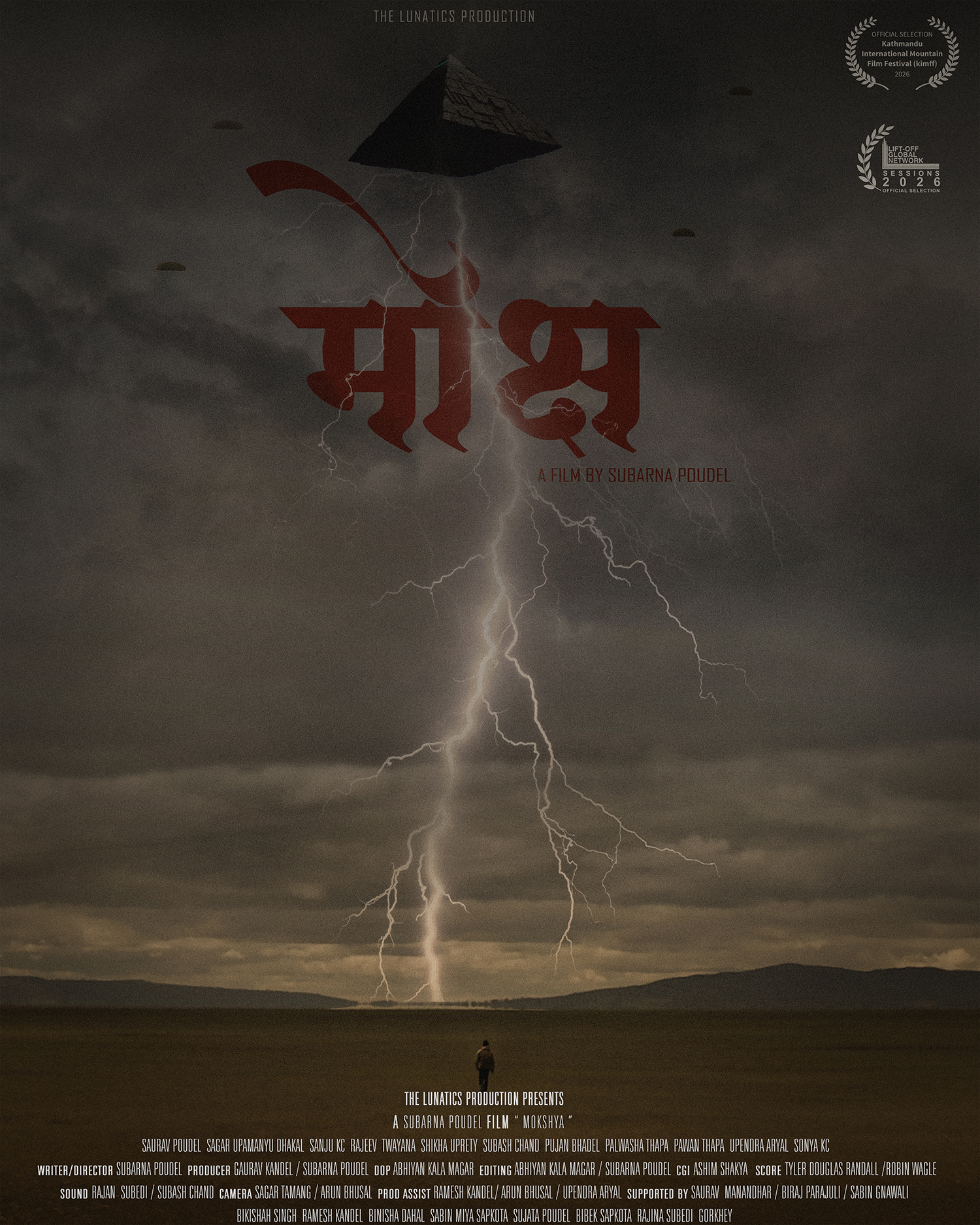
The cinematic nuance of visual effects is traversing across the Nepali film industry. Filmmakers are moving beyond the conventionalities of storytelling with a growing inclination towards visual experimentation. ‘Mokshya’ carries this verdict. It breaks the formula with plot and effects that are simply new and captivating.
The film presents a striking timeline of Yugas, set in New South Wales, Australia. High colour contrast, low saturation, and the static shots of the ocean and forest give the atmosphere a dense, physical weight.
Visual and oral narratives of Syamantaka Mani recur persistently in the film. A gemstone, as powerful as the sun, is symbolised as the determiner of humanity’s fate. However, Karna, who is on a voyage to acquire this gemstone, soon realises the moral weight of his mission. His journey, rather than a deliberate search for the stone, becomes an epiphany of humanistic realisation. Emotions that felt foreign to him initially become as close to him as he gets the Mani. Mechanical loyalty juxtaposes emotional and ethical awareness, culminating in the climax.
Several frames and scenes define the film’s aesthetics. One features Goddess Earth standing on the edge of an ocean with Surya Dev’s sphere floating in the sky right above the seawater. In the frame, waves depict uncertainty, yet the structure’s distinct, bold presence symbolises agency, power and balance.
Another shot in which Karna walks amid the striking red hues of a post-apocalyptic landscape further enhances the film’s captivating details.
With commendable experimentation, ‘Mokshya’ makes the audience examine the essence and cinematic motifs of visual effects in a film.
Mokshya
Direction: Subarna Poudel
Duration: 51 min
Language: Nepali
The Oldest Munrobagger
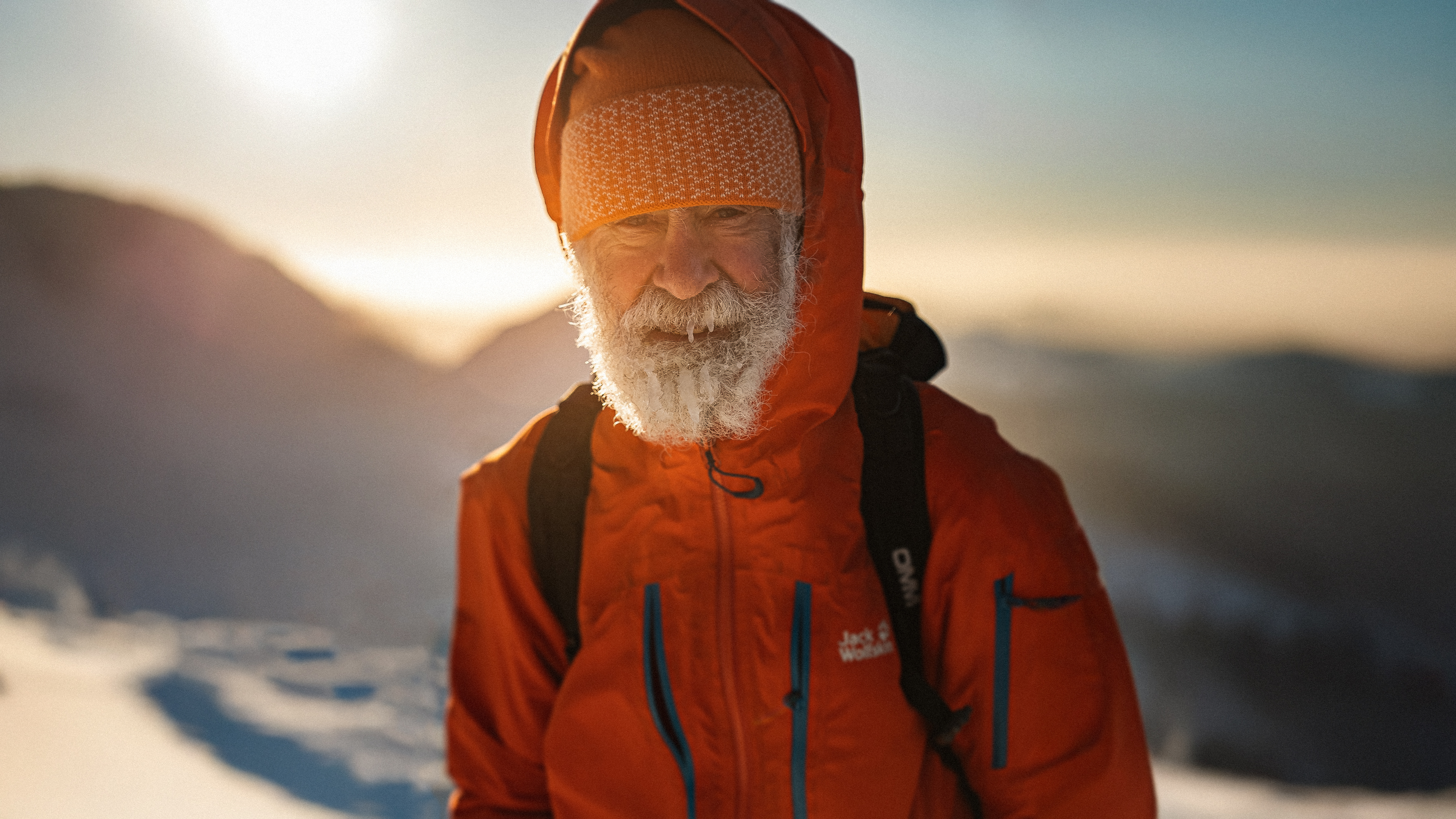
As a child, Nick Gardner from Leicester, England, was always curious about mountains, asking his parents, “Can people even climb that?” They replied with, “Yes, only mountaineers can.”
When Edmund Hillary and Tenzing Norgay Sherpa first summited Mt Everest, Hillary, after returning, gave a lecture in Leicester. Gardner, even while being so young, attended the lecture. This was almost like a foreshadowing of his own future.
Later, Gardner’s wife, Janet, was diagnosed with Alzheimer’s and osteoporosis, requiring 24 hours of full-time care. Seeing his wife’s ill condition, Gardner was devastated. To keep himself going, both physically and mentally, he started climbing in July 2020.
A Munro is referred to as any mountain in Scotland that has a height of over 3,000 ft. There are 282 Munros in Scotland. When Gardner started this challenge, he was 80, but in just two years, he managed to summit all the Munros, earning the title of ‘The Oldest Munrobagger’ and a Guinness World Record.
Although his wife passed away in December 2022, the community of mountain enthusiasts became a source of strength and encouragement.
Throughout his quest, a few mountains tested his endurance. One such peak was the Cuilin Ridge, a tricky expedition considered one of the most challenging Munros. Despite Cuilin’s unpredictability and harsh terrain, his determination helped him conquer it.
At first, his summits were just meant to be a distraction, but they slowly grew into a small movement, one that would help Alzheimer Scotland and the Royal Osteoporosis Society raise more than £60,000. Along with his supporters, he turned his love for mountaineering into something even more meaningful.
This documentary, with its serene Scottish mountain backdrops and Gardner’s inspiring storytelling, portrays that it is never too late to pursue your passion.




 23.24°C Kathmandu