



 18.95°C Kathmandu
Sun, Jun 14, 2026
Culture & Lifestyle
Turning rhythm into care
Maitri Music Therapy Nepal is using instruments, rhythm and training programmes to make music accessible as a therapeutic tool..JPG&w=900&height=601)
bookmark![]()
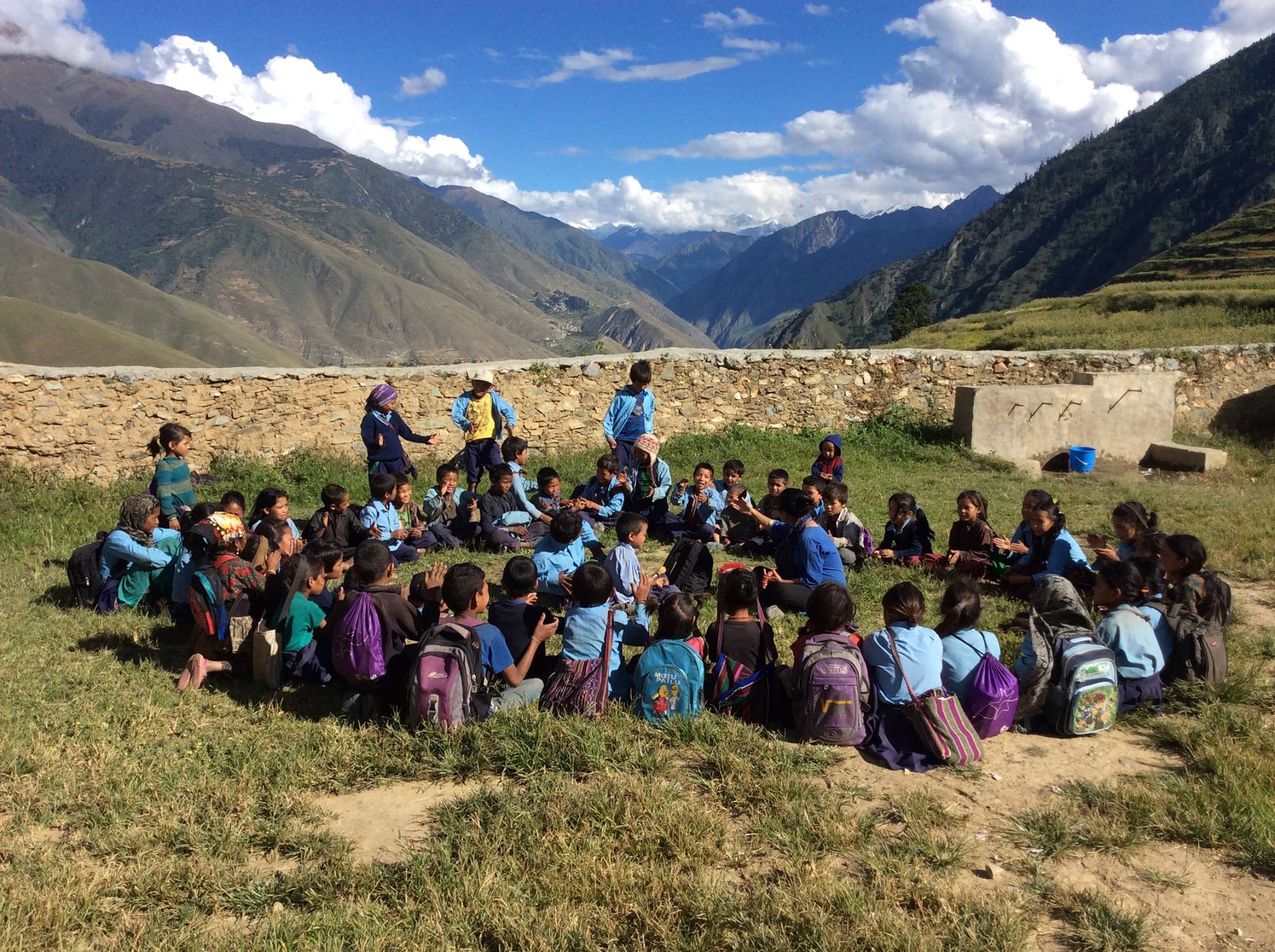
Community-based music therapy in Dolpa. Courtesy of Maitri Music Therapy Nepal ![]()
Jony Nepal
Published at : March 17, 2026
Updated at : March 17, 2026 10:08
Kathmandu
Since 2022, Maitri Music Therapy Nepal, a music therapy company, has been establishing musical communication as an empowering tool for expression and a sense of belonging. Through workshops, training, therapy services, and advocacy, Maitri is driven by the mission of creating a ‘safe and brave’ space through culturally informed, creative therapeutic interventions, asserting music as a health resource and ensuring universal accessibility.
How often do we address accessibility needs when we think of music?
Challenging Ableism, the team at Maitri believes that art and music should be for everybody. And the joy of facilitating and learning intensifies as clients immerse themselves in the rhythms of instruments and songs over time.
For Maitri’s co-founders, Shreeti Pradhan and Sarthak Dhungana, the initiative remains both challenging and deeply transformative.
In an effort to expand human resources in the field, Maitri launched the ‘Therapeutic Music Training’ in 2024, with funding and advisory support from Australian music therapist Verena Clemencic Jones. It was a six-month-long intensive training programme, with three months allocated to foundation-building and three to placement. The eight participants of the cohort were entitled ‘Therapeutic Music Practitioners’, including Abish Man Shakya and Vivek Neupane. “There were anthropologists, lawyers, ethnomusicologists, sound healers”, says Dhungana, “a very diverse bunch.”
Pradhan has over nine years of experience in community well-being, mental health, and neuro-developmental conditions in children and adults. And Dhungana’s areas of work include community healthcare, autism spectrum conditions in children, pediatric oncology, pediatric palliative care and geriatrics. Shaped by their experiences across South Asia, Maitri aims to create a working alliance for physical and emotional safety, as well as communication mechanisms. “Only people in the hospital or the disability centre knew of Music Therapy,” recalls Dhungana.
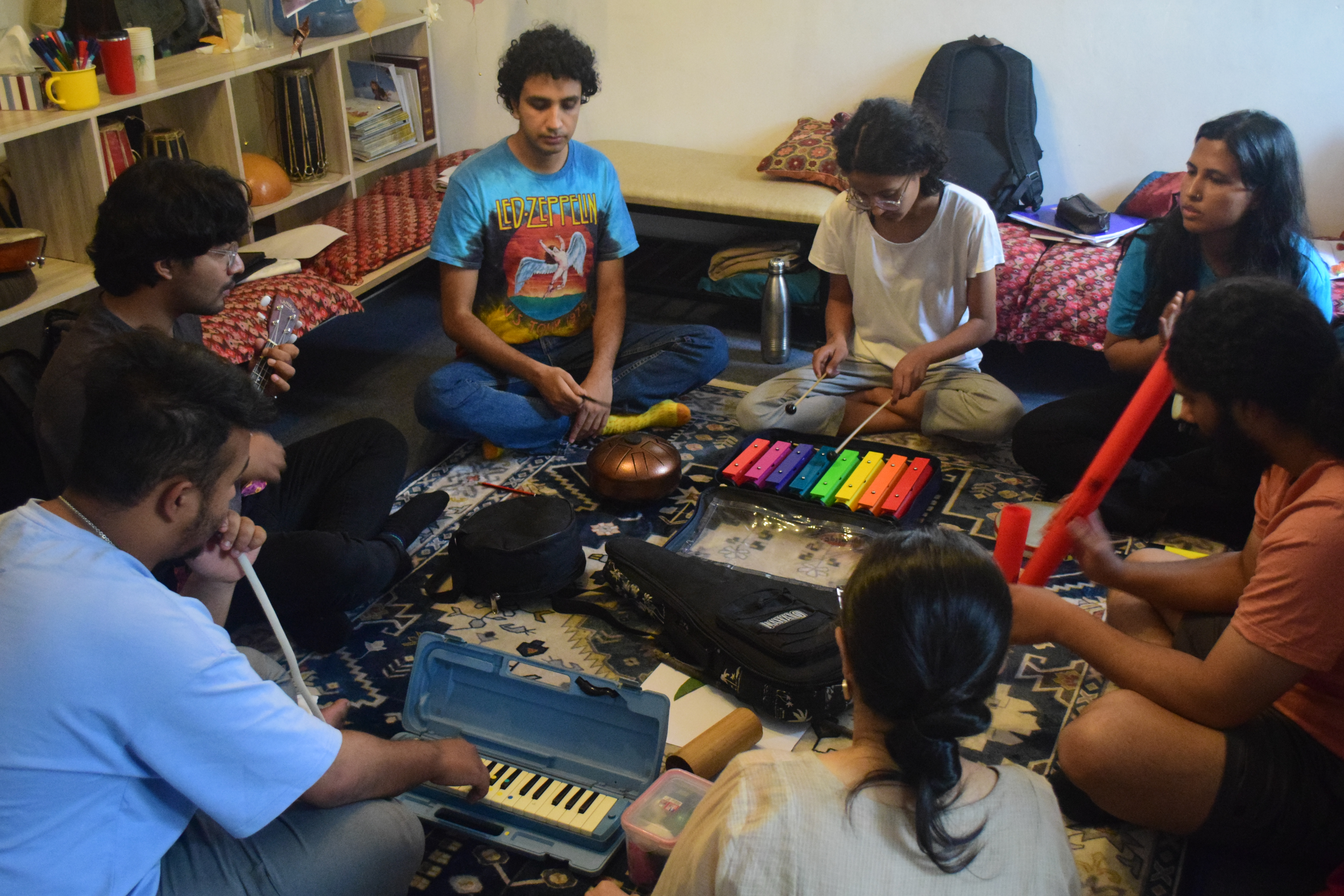
This collaborative teaching experience also consistently connects to the global landscape of music therapy, gathering the status quo from colleagues worldwide, including India, the United Kingdom, Canada, and Australia.
Maitri identified three centres in Nepal, including children’s shelters, daycare centres and elderly care homes: Satprayash Siddhi Sewa Aashram, AWIH (Association for the Welfare of Intellectually Handicapped), and Ganesh Disable New Life Centre Children’s Shelter. Previously, they had also collaborated with Setu Nepal (a non-profit for the rights and welfare of women and children).
With placement, Maitri aimed to present Music Therapy as a legitimate working strategy. However, limited funds became their primary concern. “We had to stop working in Setu Nepal due to financial difficulties,” said Dhungana.
Maitri is driven to expand the understanding of the fundamentals of music therapy. Articulation and embodiment are guided by the music and rhythms, along with professional oversight. During the sessions, the team adapts to the individual needs of the participants while utilising a mix of traditional folk and modern instruments and acknowledging the richness of Nepali musical culture.
They present the ‘Music Therapy Kit’ with accessible, diverse, and colourful instruments (including lolly drums, madal, and shakers), ensuring that participants with different abilities can engage. Initially, participants are encouraged to choose their preferred instrument, and eventually to swap and explore different instruments. “Continuity helps them become better with the instruments. With emotional regulations, participants also return with their genuine interest to learn,” shares Shakya.
“With people with disabilities, initially, we find them isolated as mobility becomes the primary concern. However, eventually, in music, they become deeply interested and explorative,” says Shakya. “Music Therapy is not merely entertainment. Participants, especially the children, become familiar with each other, understanding how each interacts with instruments, songs and rhythms,” he adds.
Meaningful engagement is ensured when clients gradually release their emotional intensity through the tempo and rhythms. “Especially with the non-verbal participants, the patterns of music help understand what they must be going through emotionally and how their emotions are being confronted,” expresses the team.
Hygiene, safety, and diversity are their primary areas of keen oversight, ensuring that people with different accessibility needs can comfortably participate in and interact with the instruments in each session. “The sound and texture of the instruments are designed to stimulate the fine motor skills of the participants,” explains Dhungana.
Hari Lal Kulu, a musical instrument maker based in Patan, works closely with them on instrument design and creation.
Addressing the urban-rural disparity, Maitri also organises ‘Community Musiking’, projecting the body as the main resource. Through engaging with music, the team explains how they observe visible transformation in participants, from conflict and agitation to relaxation and improved mood. “People come around, dance together, projecting how music invites fun and joy. Especially in the rural areas, music visibly excites people,” says Pradhan. “Clients express how they feel content and better, sancho, after the sessions.”
Despite their efforts and experiences, systemic forces resist their flow. The company continues to operate with a small team and limited resources and are actively looking for fundings and donations. Maitri Music Therapy Nepal’s advocacy reflects a long-term, visionary approach. But the lack of multidisciplinarity in addressing psychological assets and care remains a constant challenge.
Actively working in diverse clinical and non-clinical settings, Maitri Music Therapy Nepal moves forward with a vision rooted in care, creativity, and accessibility. By building awareness, nurturing new practitioners and creating culturally grounded therapeutic experiences, the initiative is gradually reshaping how music is understood in the context of health and well-being.
Jony Nepal
Nepal is a culture and lifestyle reporter at the Post. She is also a Psychology and English language student.


Most Read from Culture & Lifestyle



Editor's Picks
Inside the mission of Everest’s first mountain rangers

Weak arbitration defence costs government billions
Nepalis making treacherous trip to Europe through the Balkan route

Women are often at the centre of Nepali films. Why are men still telling most of their stories?
What old newspapers reveal about Kathmandu’s World Cup fever in the 80s and 90s
E-PAPER | June 14, 2026

×