The spicy aroma of Nepali tadkafrom Aloo dum settles in young Rosdip Rai’s kitchen. His private chef is eyeballing the measurements, unlike any other chefs he sees on television. But somewhere around his chef’s cooking, a secret ingredient is already folded into the Aloo Dum; it’s the love of a mother or, as he affectionately calls her, Aamaji.
His Aamaji taught him Nepali cooking in a way no fancy recipe cookbook could. Because it was never intentional, but rather a natural inheritance of intergenerational recipes.
Rai was born in Dharan, a city celebrated for its spicy, tangy street food scene and famous thukpa. Growing up in such a vibrant culinary environment immersed him in his hometown’s rich food culture. Later, he moved to the UK with his family at the age of 17.
One of the fondest memories he holds of Nepali dishes is not something extravagant plated in a restaurant; it is his Aamaji preparing tiffin before school.
Before fully working on content creation as a chef, he worked full-time in the National Health Service (NHS) for over five years. Although the job was fulfilling, his interest in culinary arts always lingered.
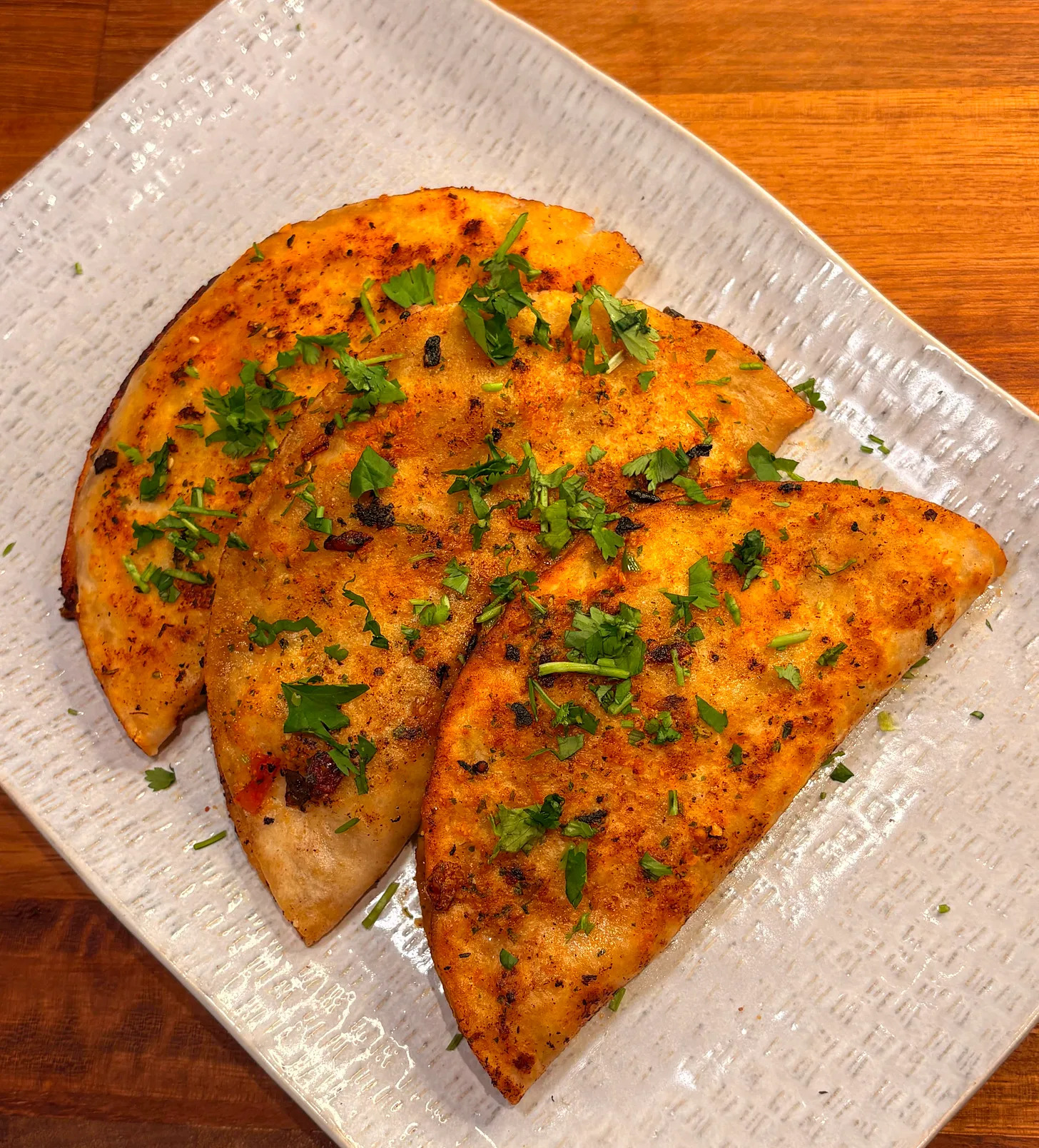
Pork momo taco fusion
“I always knew there was something inside me drawing me towards food and cooking, so I decided to follow my heart,” Rai shares, talking about his career switch.
Quitting a traditional 9-to-5 job—one Rai had invested years of education and dedication into—was not easy. However, he says his family and partner have always supported his decision, encouraging him to keep innovating and to reconnect with his homeland through food.
For him, the ideas for fusion of modern Nepali dishes are not simply born in the kitchen.
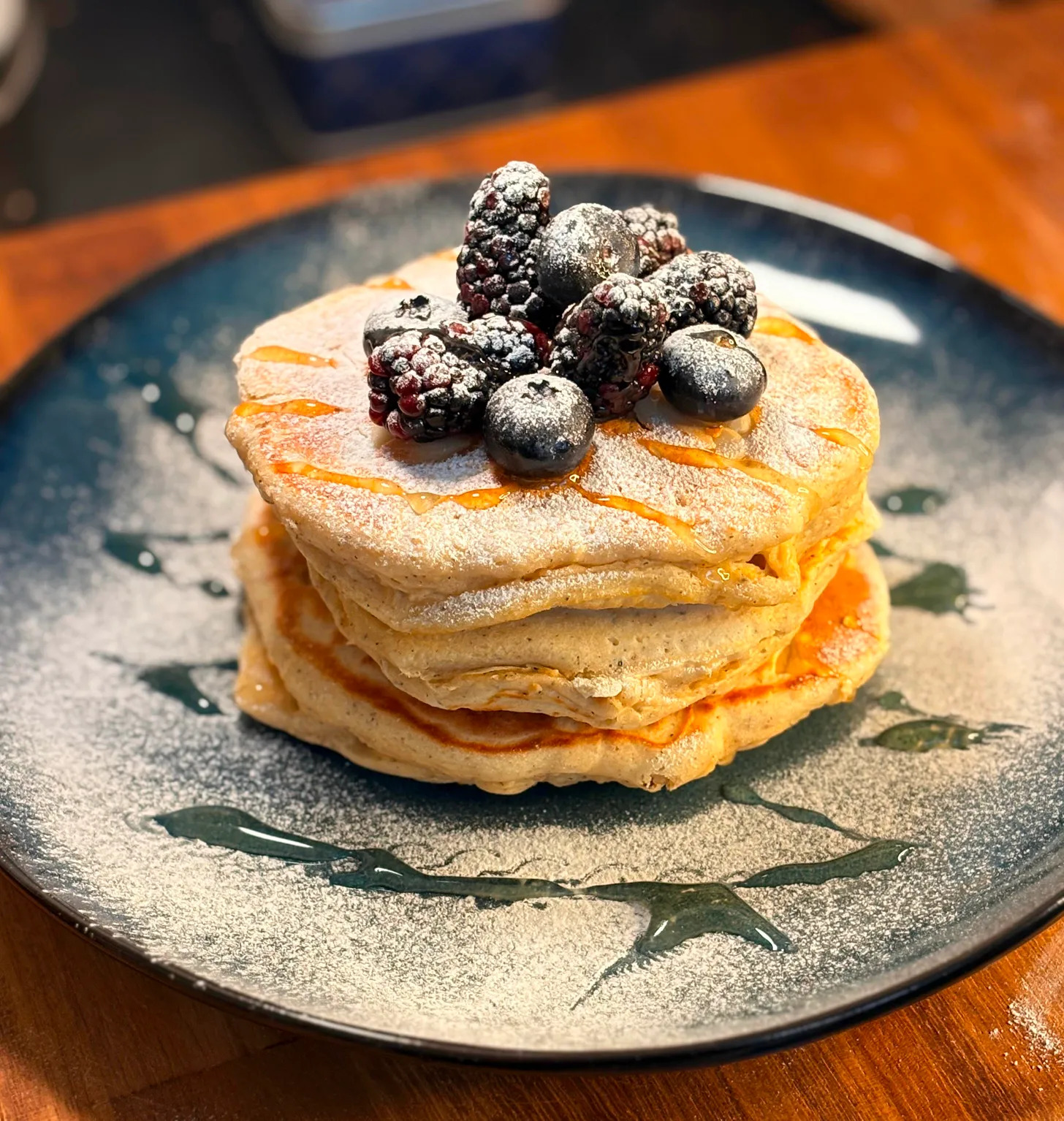
Alachi and almond American pancakes
“A lot of my recipe development happens when I am walking my dog or going for a long run. I think of which Nepali ingredients I should use for my fusion dishes next,” says Rai.
Recently, he created tacos—a Mexican cuisine staple—but with a Nepali twist, blending them with momo. In doing so, he flipped a core principle of making momo: instead of steaming the filling, he pan-seared the spiced meat. The name of this dish is pork momo-taco fusion. Even though his objective is to create recipes that push creative boundaries and blend culinary cultures, maintaining the same Nepali flavour profile remains his priority.
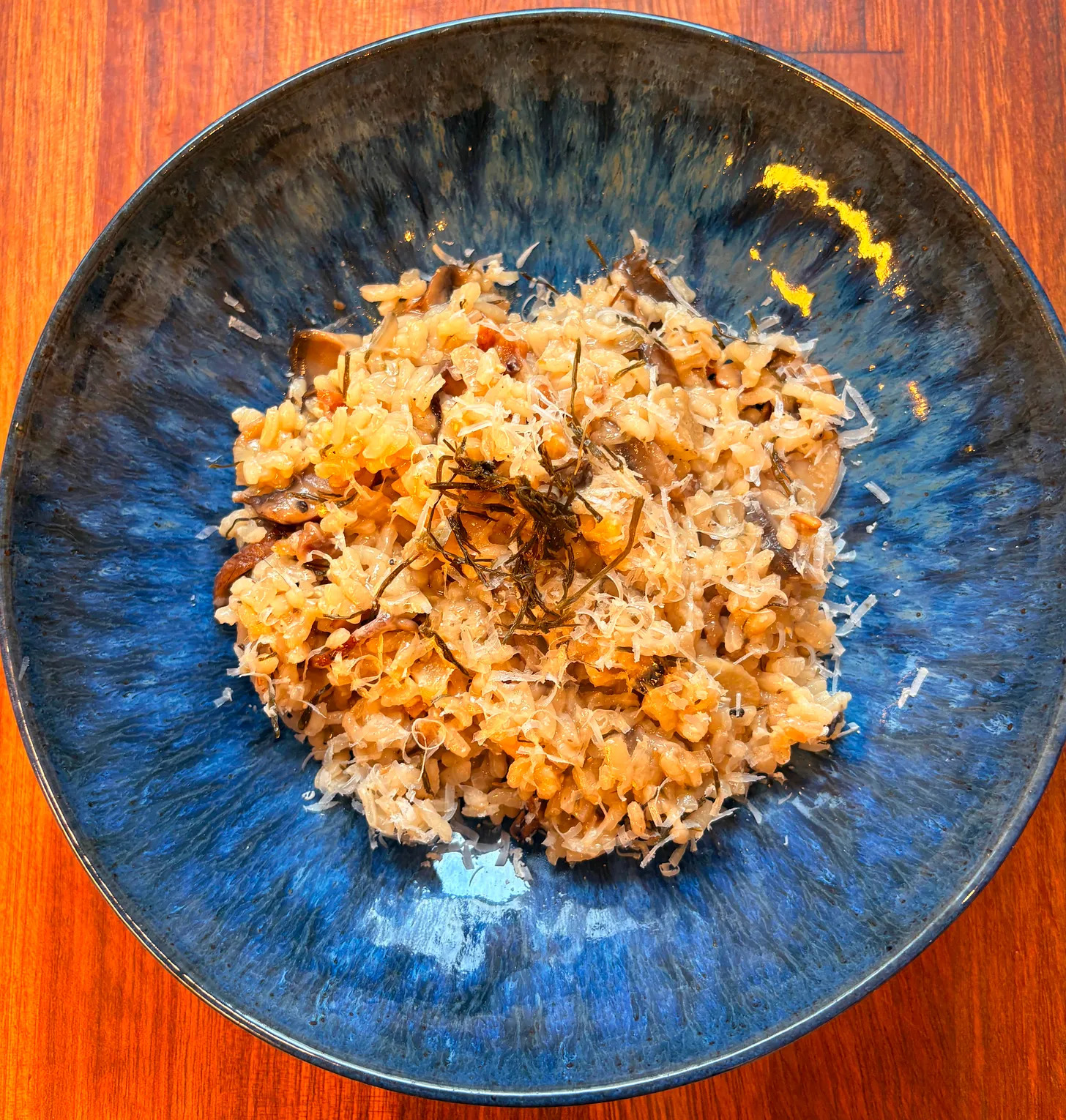
Another one of his fusion dishes is jimboo and mushroom risotto. A recipe that leans heavily on Jimbu, a traditional herbal spice used in Nepal. It is soaked in hot water, creating a pungent golden stock that later allows the risotto’s rice to fully absorb its flavours. This dish embraces Nepal’s beloved Jimbu, creating a balance that feels both comforting and unexpected.
He has also tried out creating desserts. Sel mochi is one such dish, a sweet mixture of Nepal’s crunchy sweet snack, Sel and Japan’s chewy dessert, Mochi. With glutinous rice flour as its base, it is made to replicate the homely, festive-feeling taste of sel and the soft texture of mochi, both of which are rice-derived desserts.
The dishes he presents on social media follow a storytelling style, narrating the moments when he fell in love with food and offering personal takes on cuisines. Beyond that, he shares these fusion recipes with measurements and guided instructions in his virtual cookbook on his Substack, under the handle @rosdapper.
For him, the distinction between Western and Nepali cooking lies in the ingredients and the diversity of flavours.
Jimboo and mushroom risotto
“A lot of us use the term ‘curry’, like Indian curries, but our food cannot quite be called that, right?” says Rai. Our delicacies use different techniques and flavour pairings, so they have their own identities—that is what he believes in. The same goes for the ingredients we use daily.
“Nepali ingredients are actually so specific. Like Timur, it is similar to Chinese Szechuan pepper, but it is not exactly the latter, right? It has a distinct citrussy and tingling flavour. There is a misconception when we brush it off by saying, ‘Oh, Timur is the same as Szechuan pepper,’ when it’s not.”
In other words, generalising specific terms would risk the essence that local ingredients have carried for generations.
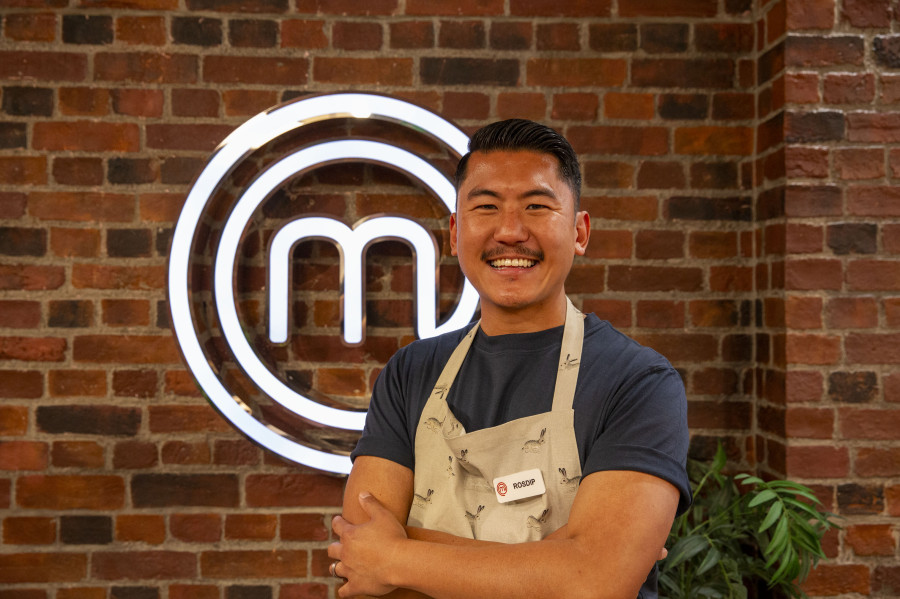
Having watched MasterChef’s seasons for years, he, a home cook, wanted to turn his passion into reality. Then he applied and auditioned, finally getting to showcase his culinary skills in an actual competition.
Although he creates new modern Nepali recipes in his kitchen, some of the dishes he made on the show were local delicacies, packed with strong flavours and fragments of his childhood.
From cooking pungent dishes like Timur Pork Belly to earthy Jimbu Bodi Dal and carrot pulao, he introduced them to the judges, contestants, and viewers, representing Nepal’s diverse gastronomy.
“Nepalis from all over the world have been reaching out and leaving good comments,” expresses Rai, who has garnered huge online attention on social media. The comments on his reels and TikToks say they’d never imagined the food they eat being presented and loved on such an international stage.
The method he approaches cooking with is experimentation, a bold but fruitful style of learning. One of the recipes he tried for the first time was masala chai American pancakes, which didn’t go as planned in the show. But he sees such first-time attempts not as failures but as opportunities to learn. Having now improvised the recipe, he believes trial and error is one of the key ingredients in cooking.
He views Nepali cooking as distinct from the UK’s in how it is made and in its use of ingredients. In MasterChef UK 2026, where he reached the quarterfinals, he also incorporated local ingredients like Jimbu and Timur, which even surprised the judges.
“The judges had never tried those kinds of spices, so I think they were pretty surprised with a new flavour kicking in,” he says.
Inspired by Chef Santosh Shah, he hopes to represent Nepali cuisine on global platforms—not just out of passion but to showcase its rich culinary heritage to an international audience.
“It is about telling the stories of the people who came before me. Through my food, I want to share the stories of those who grow jimbu in Mustang, those who sell roasted corn, and the journey behind the food that is ultimately served on a table,” says Rai, who hopes to take people on a voyage to Nepal through his cuisine.




 16.62°C Kathmandu