“Who is the Kumari goddess? What does the Lakherepresent? Does the temple have a name?”
These were the questions Sony Manandhar found herself answering at a Nepali festival in Australia. Originally from Nepal and now studying in Melbourne, Manandhar attended the event with friends who were not Nepali. The exchange quickly turned into an impromptu explanation of her culture—its deities, rituals and symbols. What sparked the whole conversation? Her T-shirt.
Across the world, clothing is becoming a way for Nepali people abroad to carry home with them and share their culture with others.
Embroidered with a Lakhedancer, a stylised Kumari goddess and a golden-threaded traditional temple against a black background, the Nugah T-shirt Manandhar wore was both casual and striking, something she could wear anywhere.
“I was telling my friends, ‘this means this, and that means that,’” Manandhar says. “They were really interested in my culture.” The festival was a large Nepali celebration, the first of its kind in Melbourne. Manandhar had convinced all her friends to come along. By the end of the day, what began as a simple outing had become something else for Manandhar: a way to carry her culture into a new space and make it understood.
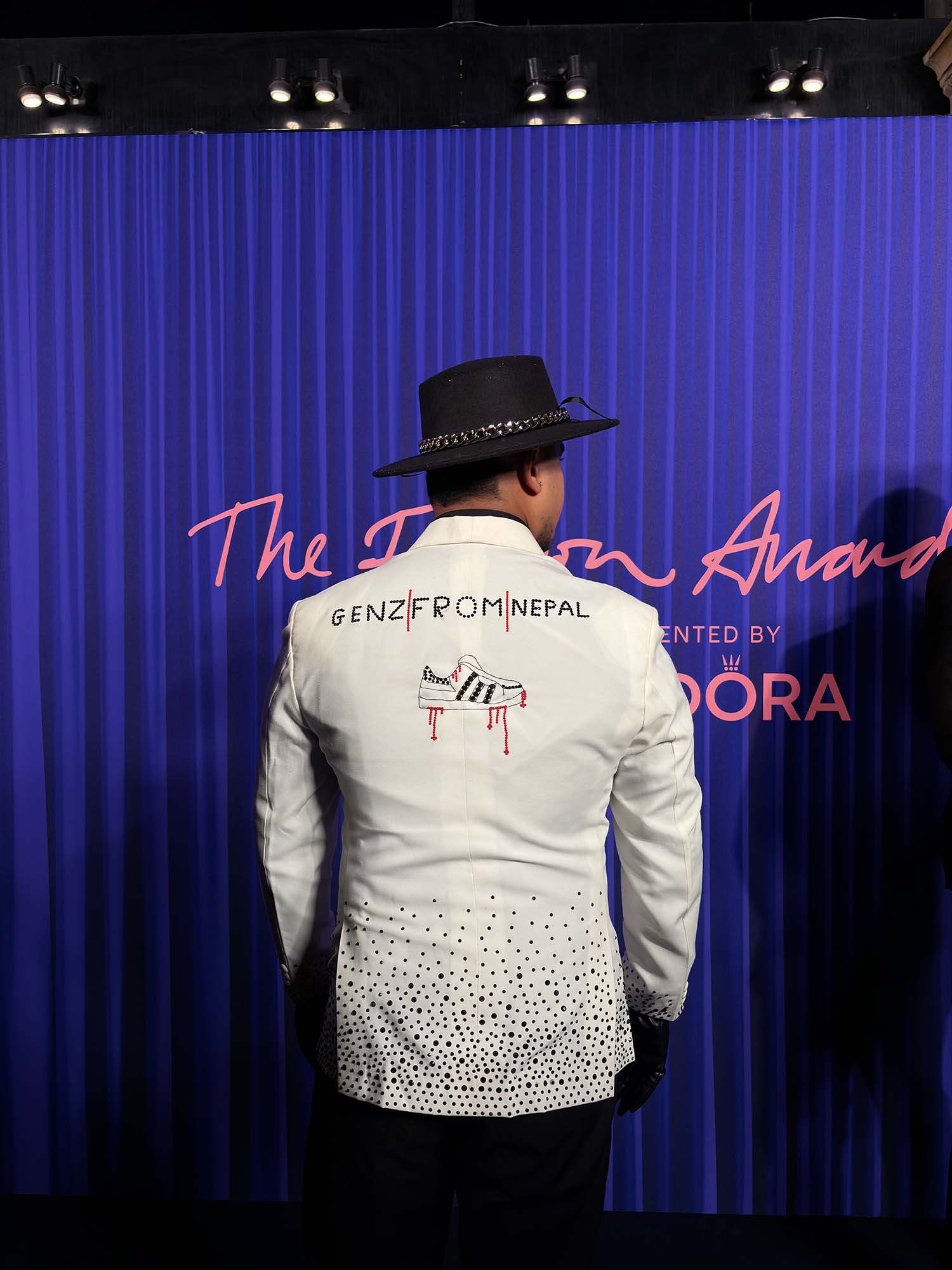
Umanga Raut, founder of RG Fashion, wearing his design ‘Setubandh’ with the words ‘GENZ FROM NEPAL’. Raut presented the piece at the British Fashion Awards in December 2025.
The T-shirt she wore was designed by Kosa, a Nepali brand founded by sisters Rhea and Khushi Shrestha. According to Khushi Shrestha, though Kosa is based in Nepal, the brand has a largely international audience, with roughly 70 percent of its customers living abroad, in countries such as the United Kingdom, the United States and Australia.
“When they buy from us, our customers are looking for a touch of Nepal’s culture,” Shrestha says.
Kosa focused primarily on representing the Newa community when it first started in 2024. As the business gained traction, its scope expanded to showcase all of Nepal, using fabric produced in Nepal to support local craftsmanship. Today, Kosa incorporates elements from across the country, weaving cultural references such as dhaka—a traditional handwoven textile—into contemporary designs. The business also continues to use colour palettes like red and black, a subtle nod to its Newa roots.
The sisters strive to make clothing that is both traditional and comfortable, outfits that customers can wear in everyday settings. One example is their Mikha hoodie, a sweatshirt embroidered with the Kumari goddess on the back. “We have also added a dhaka on that piece,” says Shrestha.
Along with the T-shirt, Manandhar purchased the hoodie, something she wears all the time. “We can’t wear traditional Nepali clothing every day while abroad, but these casual T-shirts and hoodies still reflect my country,” says Manandhar.
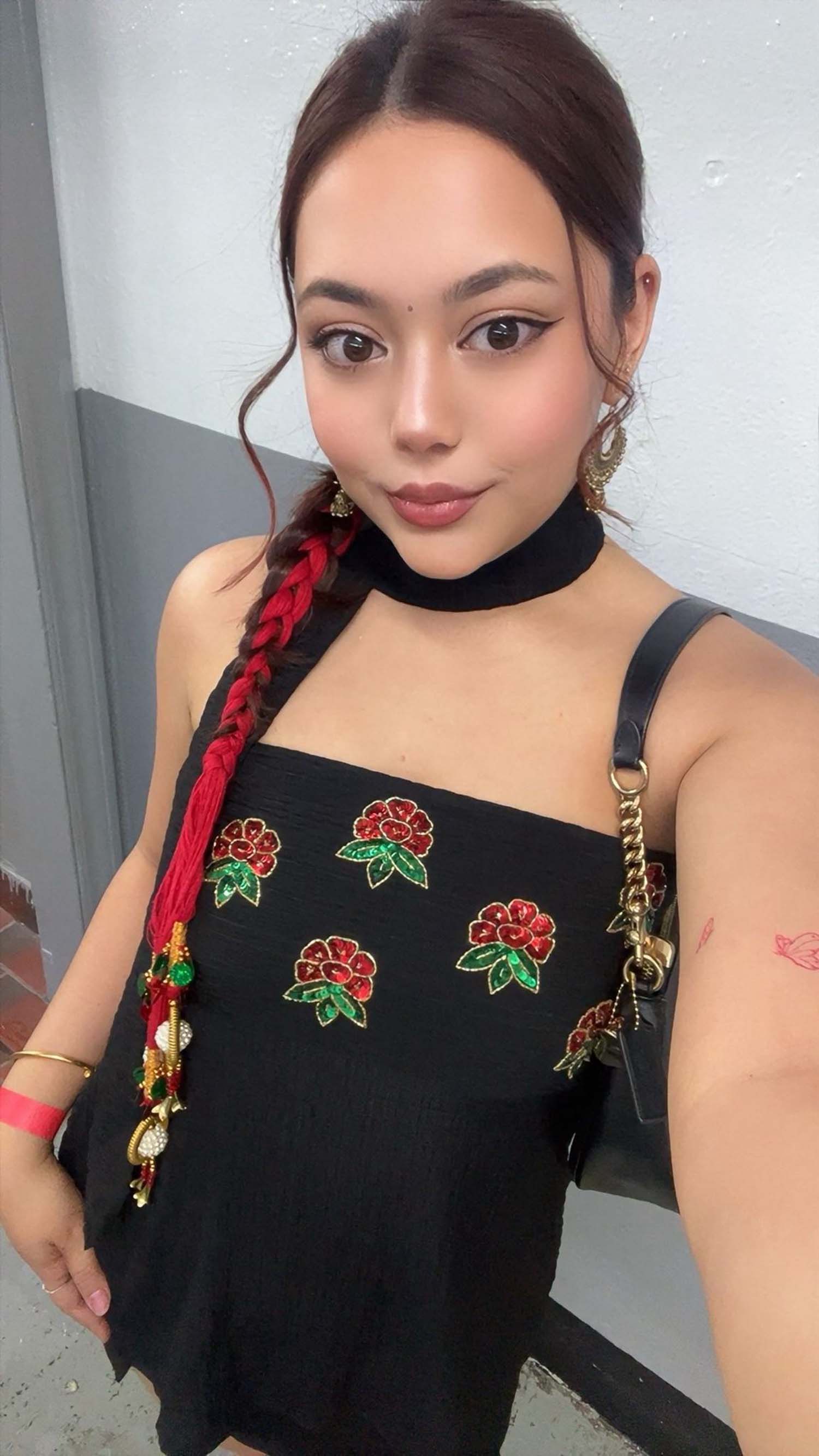
Sweta Kayastha, living in Canada, wearing Kosa’s ‘Phool Top’, featuring the laligurans flower, with sparkling red and green sequins and floral embroidery.
Finding that balance between modernity and tradition is central to Kosa’s work. “The same way we are normalising Western dresses and garments, our Nepali customers living abroad are normalising wearing culture every single day,” Shrestha says.
Kosa’s most recent product, the Phool Top, features Nepal’s national flower, the laligurans, with sparkling red and green sequins and floral embroidery.
Sweta Kayastha, one of Kosa’s customers, wore this shirt to a recent Nepathya concert. Originally from Pokhara, Kayastha is now living in Canada. “I was looking for something that had a touch of Nepal but was still stylish enough to wear to the concert,” she says. That’s when Kosa came to mind. She paired the outfit with a red braided hair accessory, which reminded her of the vibrant colours she wore during festivals and weddings back home. At the concert, people noticed her outfit. “They asked me if the flowers had any meaning,” Kayastha says. “That gave me a chance to talk about Nepali culture.”
Umanga Raut, founder of RG Fashion, is part of this wave of Nepali designers bringing Nepali culture abroad. Based in London and 23 years old, Raut recently designed ‘Setubandh’, a jacket embroidered with a striking symbol from September’s Gen Z revolution: a white sneaker dripping with blood. Above the sneaker, he wrote the words “GENZ FROM NEPAL” in sequins. Raut presented the piece at the British Fashion Awards in December 2025.
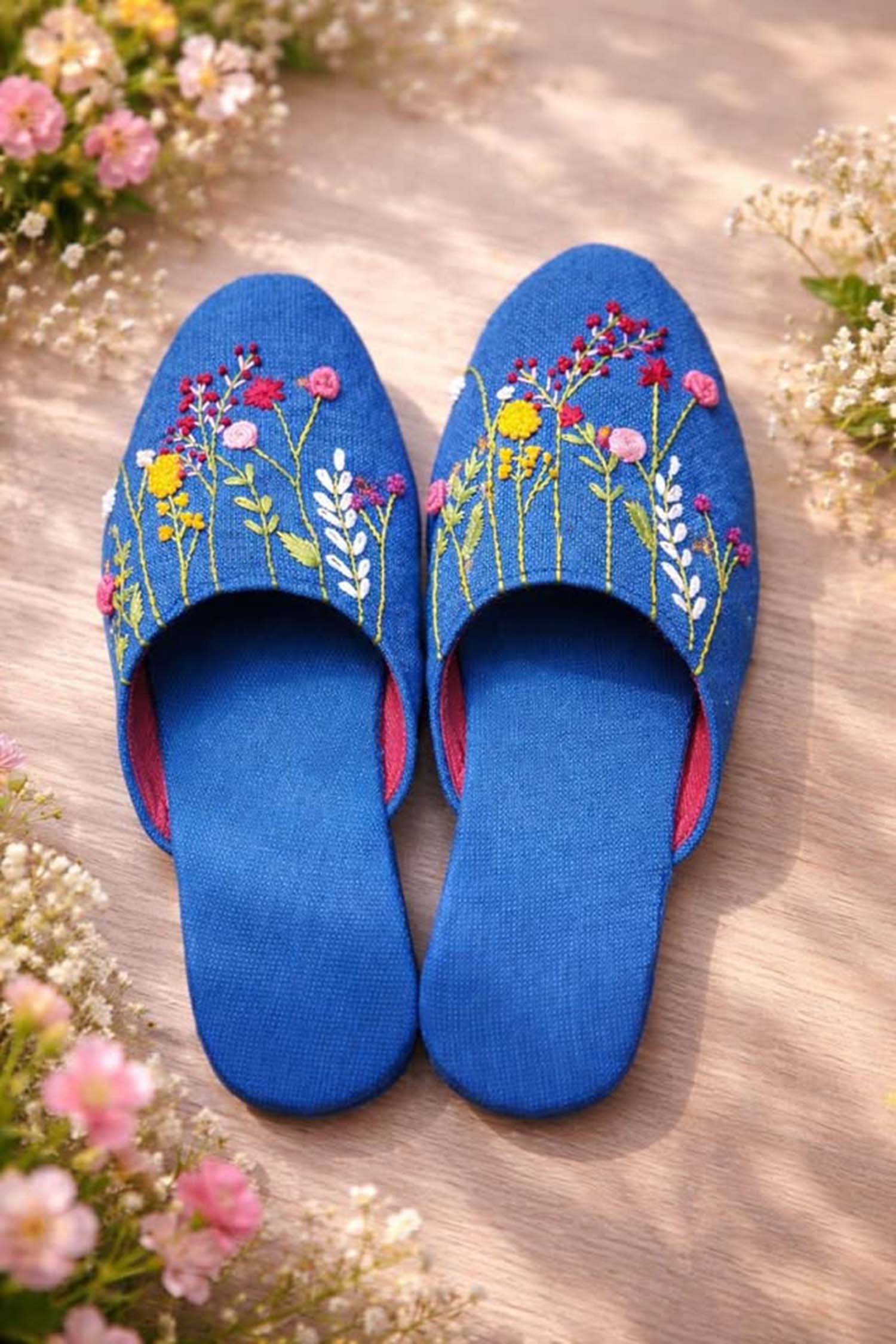
RaaNir embroidered slippers.
“It is more than a garment,” he says. “It is a chronicle of survival.” Raut spent over two weeks making the jacket, struggling to find the right materials in London. He reached out to his mother in Nepal to source the supplies (specialised glue, needles, embroidery thread and rhinestones), then worked with his pattern maker and tailor to prepare a plain white draft of the coat. Once the materials arrived, he hand-embellished the coat with thread and rhinestones, using red stones to depict blood around the shoe. The work was painstaking. Raut had to place each rhinestone individually, with more than a thousand used in total.
However, he found the process to be worth it, recalling how the jacket inspired countless interactions at the Fashion Awards. “People started coming up to me and asking, ‘Oh, you’re Gen Z from Nepal? How has it been? How did the revolution start?” Raut remembered. “I had long conversations with many people.”
In her time abroad, Manandhar has faced resentment for leaving Nepal. She recalls posting a photograph of her Australian passport on her Instagram story, only to receive intense criticism from people back home.
“They were telling me that I don’t belong to Nepal anymore,” she says. In that context, what she wears has taken on new meaning. Clothing has become a way for her to express her continued commitment to her culture. Wearing Nepali-inspired pieces, she says, allows her to stay connected to her roots.
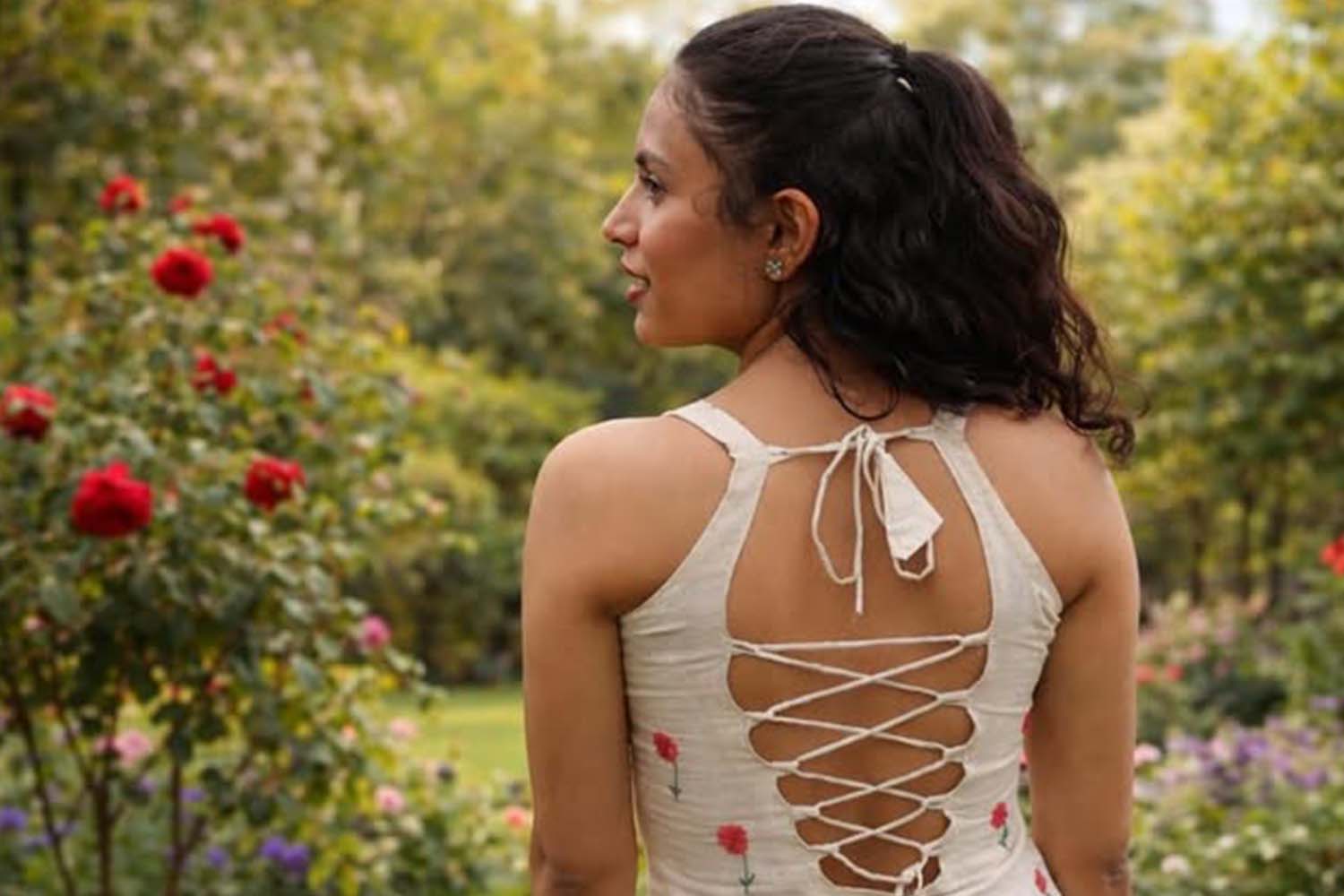
Backless kurti by RaaNir. Provided to the Post
Alongside Kosa, Manandhar shops at Babal Wears, a clothing brand that draws on everyday Nepali culture, such as slang phrases (“suddo”, “murra”, “solta”, and “tori”) and favourite street foods (chatpatey and panipuri).
Silu Gurung, a Nepali designer based in Paris, has also brought Nepali identity to an international audience. Her now recognised design (a dress cut in the shape of the Nepali flag) has been widely replicated.
RaaNir is another Nepali brand creating clothing for a global audience. Drawing heavily on dhaka, the brand reimagines traditional elements through modern designs, including sleeveless and backless kurtis.
Like Kosa, one of its more recognisable designs features embroidery of the laligurans. More recently, RaaNir has expanded into accessories, launching an embroidered slipper.
Living abroad, Raut says, has given him a unique vantage point as both an observer and an ambassador for Nepal. From that distance, he views Nepali culture through a global lens and believes fashion plays a critical role in preserving and sharing it.
He has witnessed some Nepalis abroad losing touch with their roots. Through his work, he hopes to bridge that distance and bring greater visibility to Nepal on the global stage. “The world must know about Nepal,” he says.
For many Nepalis abroad, clothing has become a practical way to stay connected to their culture. “Fashion tells a story,” says Kayastha. “I love being able to share mine through what I wear.”




 14.1°C Kathmandu