Phosphenes wants you to slow down and ‘Sleep on the Grass’
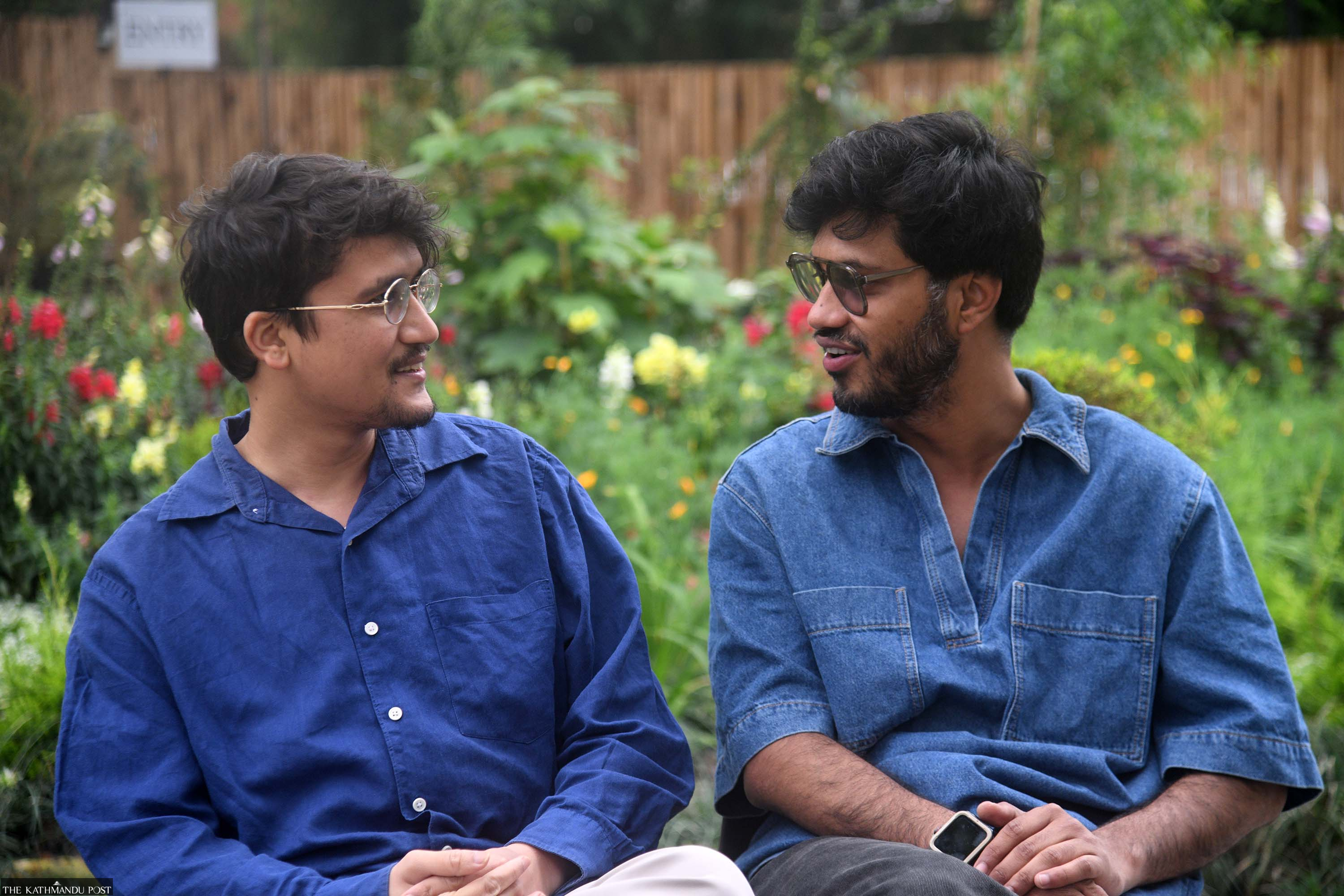
The independent Nepali band discusses its new album, multilingual songwriting, existential themes and the challenges of reaching an international audience. Phosphenes members Abhishekh Pokhrel and Prajwal Aryal Deepak KC/TKP
“Wake up slowly, don’t chase the city lights,” is how the upcoming song ‘Sleep on the Grass’ by Phosphenes starts.
This title track by one of Nepal’s growing bands, which is now making a bid for the international stage, will be released with 13 other new songs next week. The band behind this is not unfamiliar. We all remember the ‘Yestai Nai Hola’ music video released four years ago that echoes every Nepali’s frustration with the country’s sloppy bureaucracy.
A young, groovy guy walks to the local government office with a file to get some work done. But he is met by a lazy government employee who gestures “later” across three different timelines—past, present, and future.
Social media picked up on the song’s relatable lyrics, and soon Phosphenes found many new listeners. Another popular track, ‘Eklai Huda Ta Jhan’, strikes a different emotional chord in our hearts.
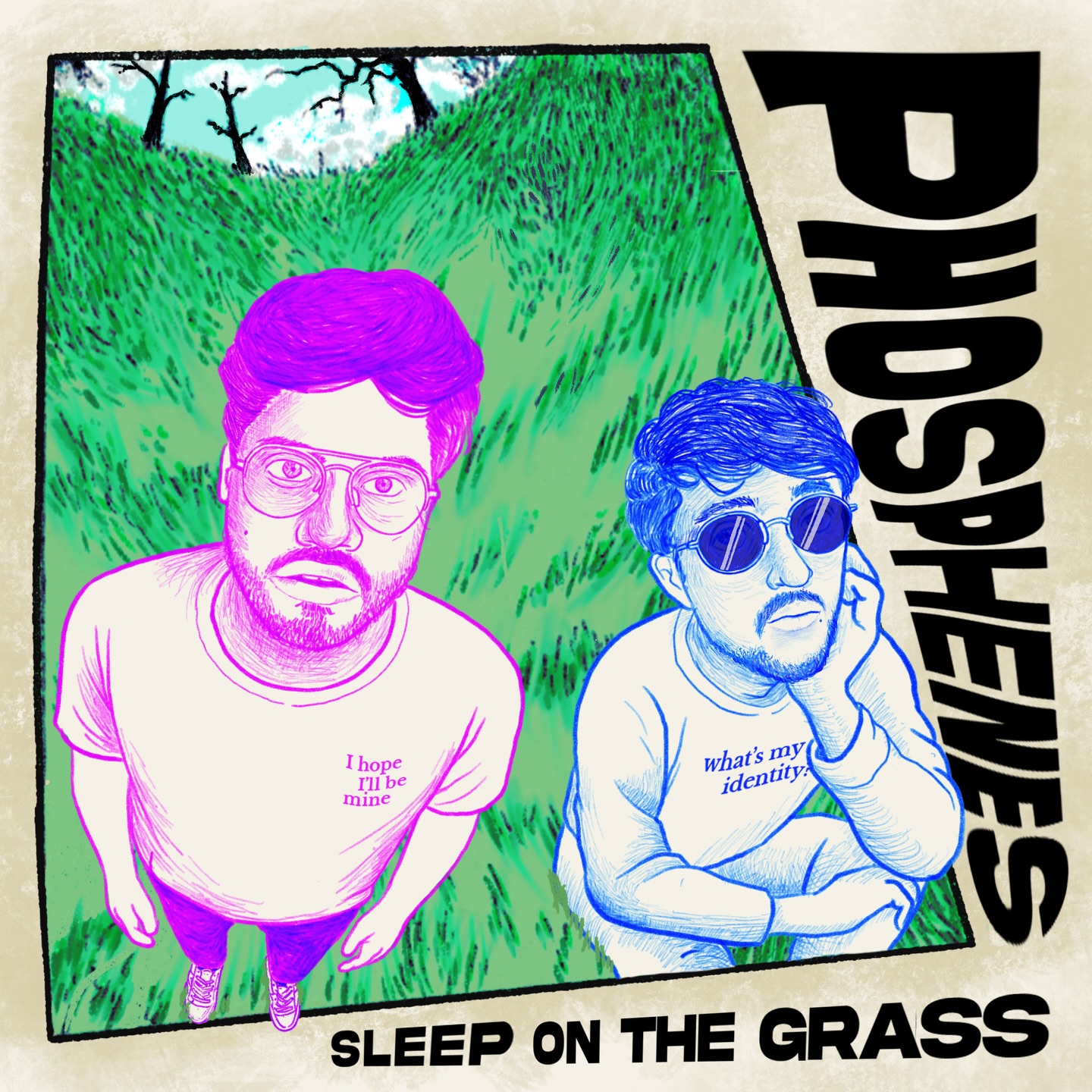
Now the same Phosphenes, which is celebrating its 10th year and has been independently producing its multilingual music, is coming out with a new album, ‘Sleep on the Grass’.
The album consists of 14 songs, with titles like ‘Pay the Bills’, ‘Forever June’, ‘Never Enough’, ‘I Know’, ‘Bujhnai Nakhojne’, among others. Behind this creation stand Prajwal Aryal and Abhishekh Pokhrel. Aryal draws inspiration from existentialism, which is reflected in many metaphors woven into the songs he writes. Pokhrel, who began writing songs at the age of 17, is inspired by the Beatles and Radiohead.
Hints of existentialism and Radiohead can be heard in ‘Sleep on the Grass’. The balanced partnership between the two is evident throughout the 14 songs, whether it is the mellow buildup of ‘Bujhnai Nakhojne’ or the strong start of ‘Nightmare’, which, quite frankly, doesn’t sound like a nightmare but a beautiful dream.
And the title ‘Pay The Bills’ might sound like an order directly from Marx’s society gone wrong, but trust me, the song is magical—a perfect fit for romanticising a road trip that never makes it out of your group chat.
‘Back From The Dead’ can surprise you with its depth and metaphor. In this song, we’re not discussing someone’s death in a worldly way, but the grief that comes when a beloved changes in ways we don’t understand. The line, ‘What happened to you?’ echoes that grief and the piano can be a real tear-jerker.
The multilinguality of the album offers something new as well. When listening to ‘Existential Haze’, you start out in English, but halfway through, the exoticness of French surprises you, which is rare in the Nepali music landscape.
When discussing the album, Aryal and Pokhrel remain stoic in their expression, but their words are laced with passion and energy. There is not even an ounce of nonchalance about their work; it is vibrant, passionate and intense.
In this conversation with the Post’s Anish Ghimire, the men behind Phosphenes, Prajwal Aryal and Abhishekh Pokhrel, discuss the new album, its creation process, and the pros and cons of being ‘independent’.
This album comes 10 years after your journey began. What makes this one feel ‘complete’ compared to your earlier work?
Prajwal: We started by experimenting with indie folk sounds. Later, we moved towards dream pop and different styles. This album brings together everything we’ve explored over the years. It reflects our journey, not just musically but also emotionally and philosophically.
Abhishekh: We might say this album is complete right now, but three years down the line, we might feel otherwise. Because with time, our sounds and thoughts might change, and when thoughts change, the artistic approach changes as well. So, this album, more than being ‘complete’, I’d say includes variations of sounds.
We’ve touched on subjects like capitalism with songs like ‘Pay The Bills’, and tracks like ‘Sleep on the Grass’ question human existence. Along with this, the album has existential themes, darker atmospheres, and even elements of sci-fi rock.
You’ve called it your clearest step towards an international audience. How is that so?
Abhishekh: We’ve always aimed to go international. But we haven’t found the right medium to reach that stage. Today, to get recognised, Reels and TikTok are two of the most important tools, which is why we are creating content to post there.
I agree because four years ago, many people like me first listened to ‘Yestai Nai Hola’ on TikTok, then went to YouTube to find the full song. Talking about visibility, how important do you think collaborating with international artists is?
Abhishekh: Very. We recently collaborated with an Indian artist, Janisht Joshi.
Prajwal: Along with social media reach and collaborations, music festivals can also provide you with a wider reach.
Abhishekh: I feel like what we need right now is the right set of audience. If we find it, then our dream of going international will come true. That’s why we are trying to be more active on social media and collaborate with international artists to increase our visibility.
Album cover for ‘Sleep on the Grass’
You’ve stayed fully independent for a decade. What has that freedom given you, and what has it cost you?
Prajwal: The biggest advantage is freedom. We can make the music we want without thinking about commercial pressure or trends. It’s like we have a blank canvas, and we can paint whatever we please.
But at the same time, independence comes with limitations. Big artists have marketing teams, industry support, and larger platforms. As underground artists, we’ve had to manage everything ourselves—from recording to promotion. It’s difficult, but it also keeps the music honest.
Talking about the new album, was there a unifying idea behind it, or is it more like a collection of moments from different phases of your lives?
Prajwal: The album is introspective and personal. Many of the songs explore themes such as existence, capitalism, identity, and the search for meaning in modern life.
Abhishekh: Exactly. There’s this feeling throughout the album of questioning capitalism—the pressure to climb ladders created by society. We’re not big fans of blindly following what everyone else is doing. Songs like ‘I Know’ are about embracing yourself and understanding who you truly are.
Tracks like ‘Sleep on the Grass’ and ‘Pay the Bills’ feel as if they might sit on opposite ends of life. Is that contrast intentional?
Abhishekh: Yeah, completely intentional. ‘Sleep on the Grass’ and ‘Pay the Bills’ represent very different lifestyles and mindsets. One song leans towards freedom and simplicity, while the other reflects the pressure and chaos of survival, as well as our new appetite for digital consumption. We consume too much information now. People just follow trends—the songs everyone listens to, the movies everyone watches. The message in ‘Sleep on the Grass’ is to build your own identity and not sell your soul easily.
Prajwal: Talking about ‘Sleep on the Grass’, I feel like this is the best lyrics I’ve written so far. It also took time; Abhi and I worked on this track alone for two years.
Talking about contrasts, how do you guys resolve creative differences?
Abhishekh: We trust each other creatively. We’ve been making music for a long time now. Usually, someone brings an idea or song, and then we shape it together. We understand each other’s strengths, so the process feels natural rather than confrontational.
You write in both English and Nepali, but most of your songs are in English. Why has English become your dominant language? And if someone says your music sounds “less Nepali” because of the language, how would you respond?
Abhishekh: The main reason we write in English is that we cannot write in Nepali (laughs). It happens naturally. We don’t sit down and decide which language to write in. ‘Yestai Nai Hola’ and ‘Eklai Huda Ta Jhan’ are in Nepali, and they came naturally for us. Even in our new album, we have three Nepali songs.
Prajwal: And honestly, we don’t think language alone defines whether music is Nepali or not. We are from Nepal, our experiences are shaped by this place, and that naturally reflects in our art.
After ten years of making music across languages, what do you want this album to say about who you are—and where you come from?
Abhishekh: Well, we are from Nepal (laughs). But beyond geography, we want the album to feel like a deep dive into who we are as artists and individuals. A lot of the message is about not blindly following crowds or superficial ideas of success.
Prajwal: We want people to look inward, to find themselves rather than constantly being distracted by the world around them. That’s probably the core of our work. If this album can encourage someone to reflect, search for themselves, and hold on to their individuality, then we feel we have succeeded.




 16.73°C Kathmandu