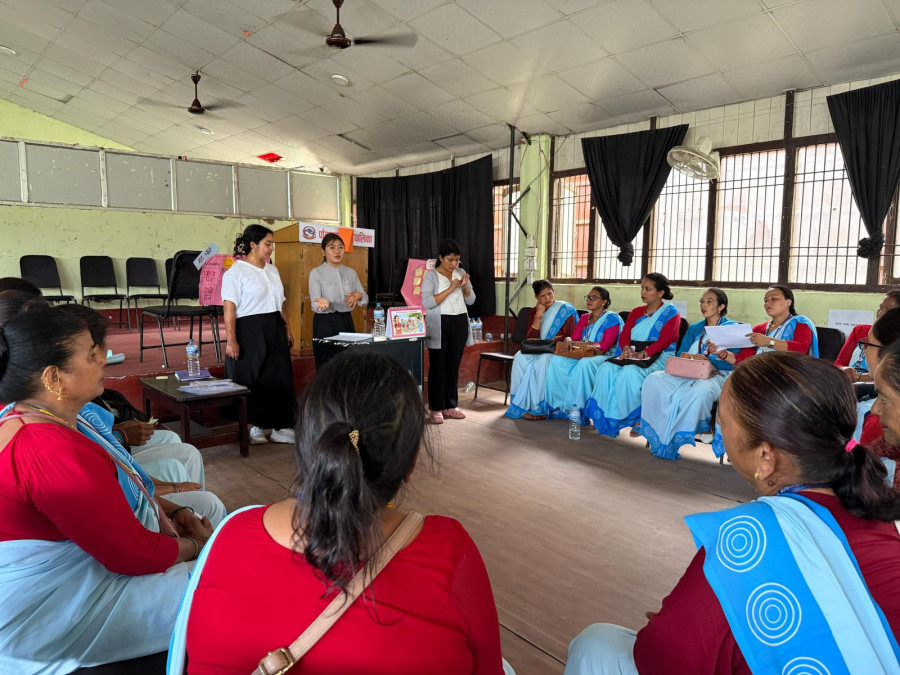
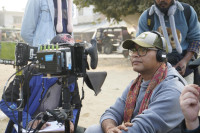
Birthright Nepal brings diaspora youth home to work, learn, and contribute to critical sectors like healthcare. Saisha Adhikari (centre, standing), one of the inaugural fellows at Birthright, working on-site at breast and cervical cancer screening. Photos: Courtesy of Birthright Nepal
When Anmol Shrestha, born in Kathmandu and raised in Southern California, took on a role as a public health researcher at The Oda Foundation in rural Kalikot for nine months, he experienced a renewed connection to his Nepali identity.
Getting to learn from the locals and working in the country he was born in, he wanted to make a change, one where he could reconnect with the fellow Nepali diaspora to make an impact.
This dedication was not just fuelled by his experience at work; it was also shaped by a personal incident that left a huge impact on him.
While working in Kalikot, he says, “I got really close with a colleague there. It was so precious that he thought our time together was cherishable; he ended up naming his kid after me.”
But one day, the baby was caught in a home fire and badly burnt. Recalling the unfortunate incident, Shrestha claims, “They tried to take him to the local hospital, but there was no one who had the capacity to take care of him. They even took him to Surkhet and Nepalgunj, hoping for treatment, yet no one could deal with paediatric burns at the time.”
Remembering baby Anmol and the lack of healthcare facilities that failed him, Shrestha did not want to move on with his life. The incident became a turning point, leading him to want to contribute to the gaps in Nepal’s healthcare system. That is when he formally conceived an organisation called Birthright Nepal, which connects the Nepali diaspora to work mainly in health-sector organisations while simultaneously linking them to their heritage.
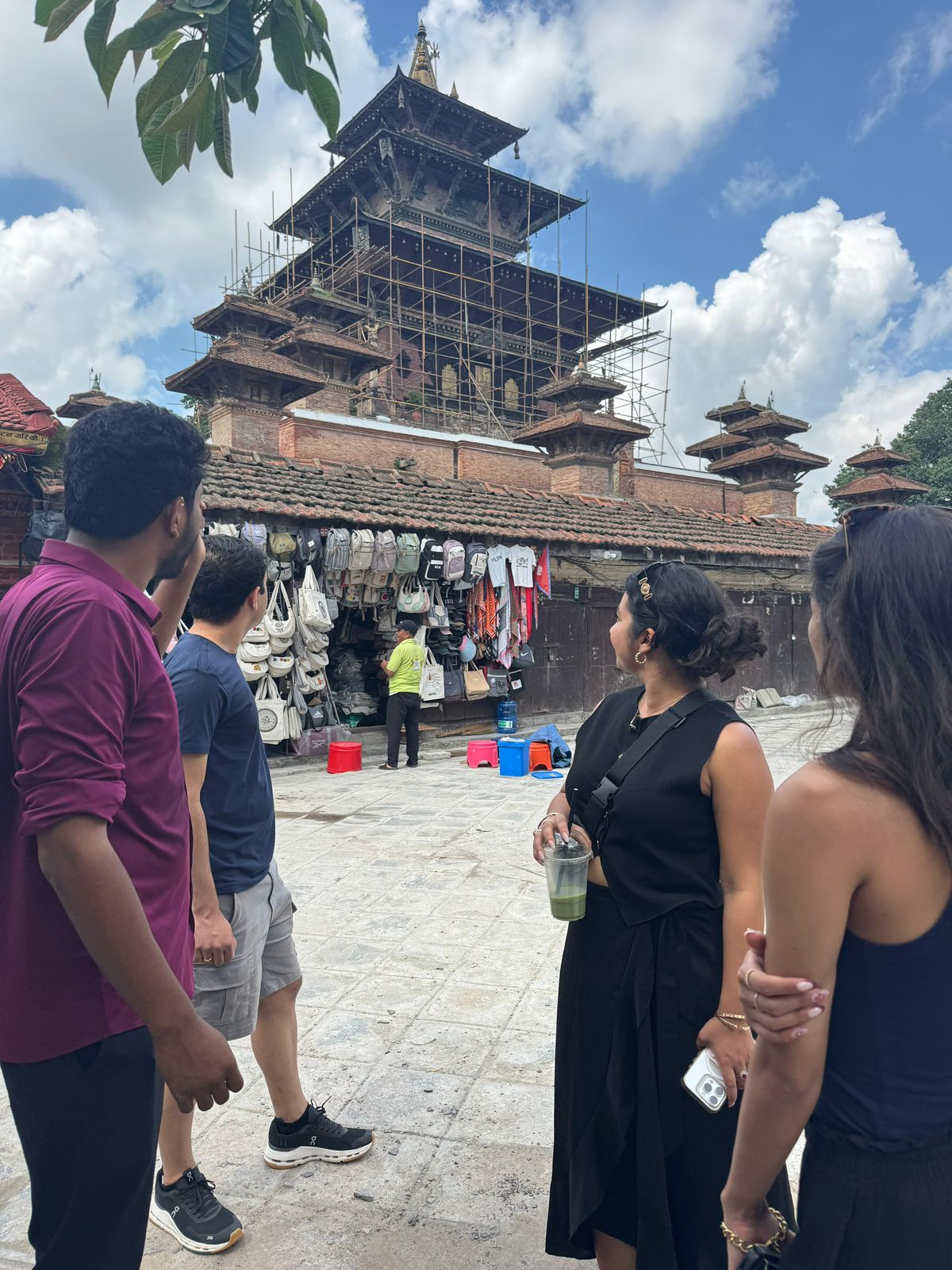
A cultural excursion is also part of the programme.
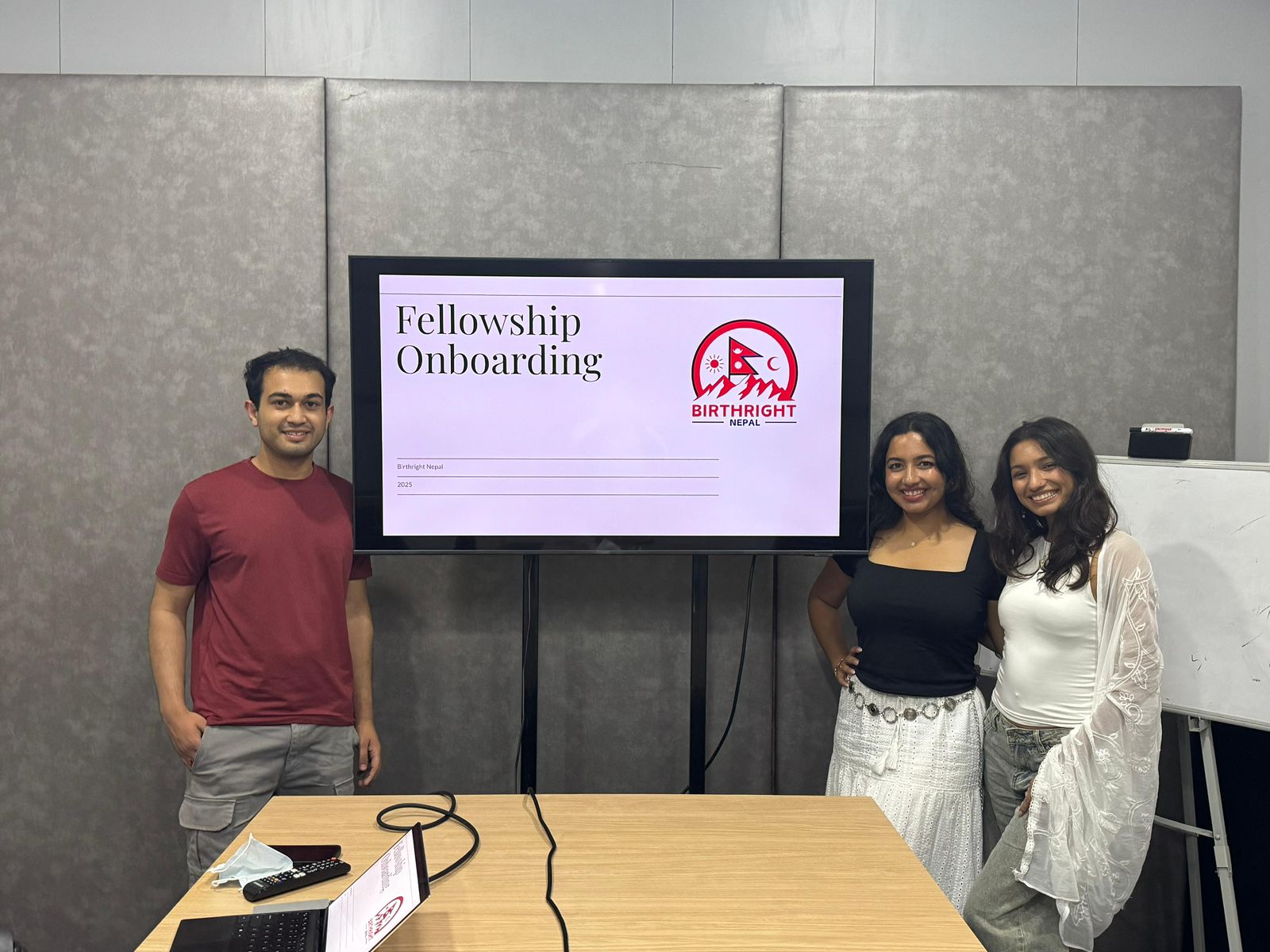
After Shrestha pitched the idea of this non-profit to other Nepali people who were passionate about global health at a conference, formally, the organisation was born in 2024. To date, Shrestha himself, Deepti Ghimire, Hemanta Dhungel, Pooja Singh, Rupak Bhandari, Kala Thapa, and Prashun Chanda have served as co-founders of Birthright.
The organisation follows a similar working model to Birthright Armenia, with which Shrestha’s friend was associated. He says, “Birthright Armenia is almost like a mentor for us.”
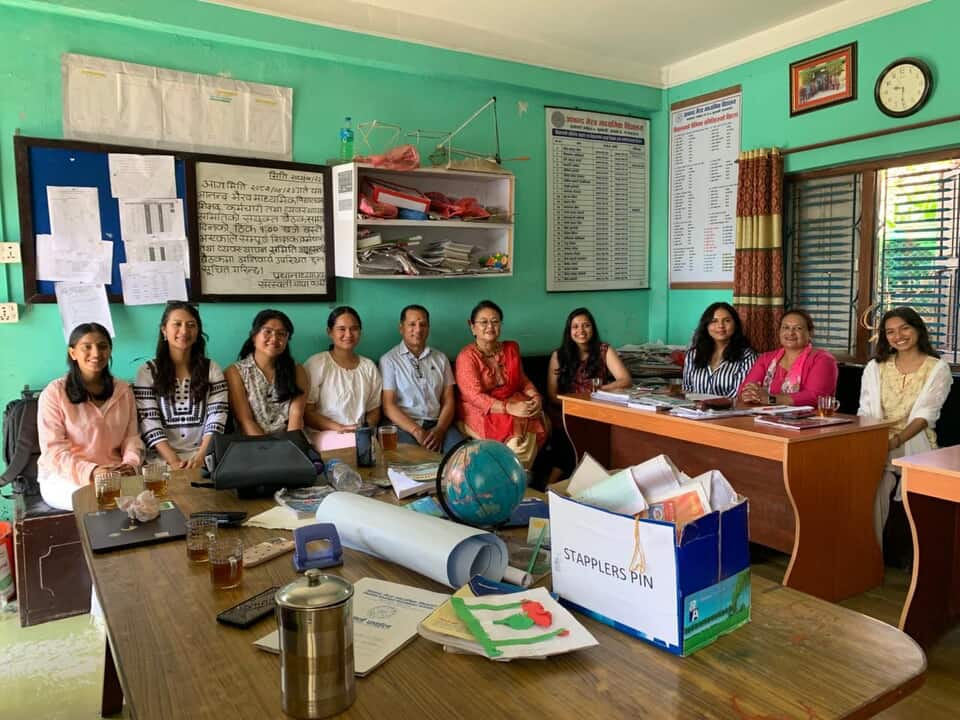
For the 8-week fellowship, fellows work under the partner organisation. Over the coming weeks, they are responsible for actively leading a project or initiative within the organisation. After their time ends, they present their work and output to measure what they were able to achieve.
Currently, the partner organisations for Birthright are primarily in the health sector: the ASK Foundation, the Centre for Molecular Dynamics Nepal, and SunyaEk Computing. But these organisations have been expanding beyond healthcare.
These fellows are selected through an application process that requires an undergraduate degree and at least one parent of Nepali heritage.
Then comes the cultural excursion, which takes place on either Monday or Saturday, where the fellows are taken on tours of historical and cultural monuments such as the Kathmandu Durbar Square. One of the entertaining aspects of the excursion is the cooking classes.
Additionally, on Sundays, language classes are provided to the fellows.
Fellows are responsible for leading a project or initiative within the partner organisation.
For next year’s cohort, a concept for a literature night, where fellows could explore the Nepali literary scene and interact with such figures, is being discussed.
Manasa Sharma, a public health graduate, decided to pursue Birthright’s fellowship right after graduating. She had the chance to work with Pyari, a creative education company focused on reproductive health.
She worked on the project ‘Naya Paila’, which is a comprehensive and creative sex education programme aimed at reaching 10,000 students across Nepal. After her experience at Pyari in reproductive health rights, she got inspired to even pursue a master’s degree in public health.
As a member of the first cohort of Birthright fellows, she shares her experience.
“Working with Pyari education exposed me to the way curricula are executed and implemented. I was fortunate to collaborate with my colleagues to develop a needs assessment framework and to listen to the voices and stories of local people.”
She adds that the topic of identity can be complex, and it can be hard to feel like you truly belong anywhere.
“While this is a common feeling amongst many diasporas, having opportunities to reconnect with your culture and learn more about your heritage is a valuable opportunity,” says Sharma.
Another fellow in the 2025 cohort, Saisha Adhikari, was engaged with Dhulikhel Hospital, where she helped lead Breast and Cervical Cancer Screening efforts for thousands of women.
Adhikari contributed to women’s cancer screening camps, support coordination, and work on community-based research, but what stayed with her most were the people.
“Sitting with women during screenings, hearing their stories, and navigating conversations across language and cultural nuances made the work feel deeply human,” she says. “I wasn’t just visiting but finding my place within it. It reminded me that my roots are something I can actively invest in and grow with.”
For a non-profit organisation like Birthright Nepal, the main challenge lies in fundraising. Until now, they have been able to raise funds from the Nepali community in the USA, who continue to support the organisation through donations and word-of-mouth outreach. However, sustaining and scaling their impact requires more consistent sources of funding.
Shrestha envisions Birthright Nepal’s future by increasing the number of fellows and extending their fellowships, enabling more impactful and sustained contributions in Nepal’s critical sectors.




 22.23°C Kathmandu