In a field dominated by men and scarce resources, astrophysicist Manisha Dwa has carved out a path of her own. She is working to transform astronomy education in Nepal, empowering students and pushing for global recognition. Photos: Courtesy of Manisha Dwa
Planets, stars, galaxies, asteroids, black holes and cosmic background radiation are omnipresent in Manisha Dwa’s everyday life. The astrophysicist and astronomy expert explains why her field of science has such a huge impact on life on earth, even though her objects of interest are light-years away: “X-rays, which are now used in medicine, were discovered in astronomy. The same goes for satellite transmission. Actually, any wave we know nowadays. Everything is related.”
The 38-year-old is pursuing her PhD in high-energy astrophysics. She serves as a project coordinator for the Nepal Astronomical Society, is a co-founder of the National Astronomy Olympiad in Nepal, and is one of the tireless voices working to make astronomy more accessible to young people in Nepal.
When Dwa entered a college physics course for the first time, there were 120 students crammed into the classroom—only five or six were female. Dwa was visiting college to decide what to study. She had initially planned to enrol in biology, where the gender ratio was the opposite of physics. When she asked a male friend for the reason, he said biology was easier for girls than physics. “I took this as a challenge,” Dwa says. “I have always been a very good student. So I thought—why not?”
The studies were hard for the young women, not due to the subject, but because of the male-dominated field. Sometimes, the women did not get a seat in the classroom and had to stand. And in the laboratory, they were only allowed to watch while the young men performed the experiments.
For her Master’s degree, Dwa chose a field with even fewer women than in her Bachelor’s program: astrophysics. Her interest in space had been sparked during her childhood in Pokhara, when she observed the night sky from the rooftop together with her family. Her mother was a primary school teacher and shared her knowledge with her children. “When we asked her if two particular stars were going to collide soon, she explained that they were actually quite far from one another. Or that one of them was not a star, but a satellite,” Dwa recalls.
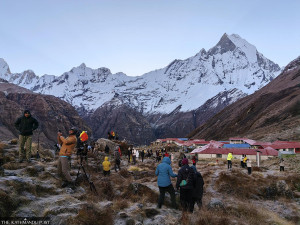
Dwa is a project coordinator at the Nepal Astronomical Society (NASO). The organisation focuses on three pillars: education, research, and outreach. Photos: Courtesy of Manisha Dwa
But her enthusiasm for space faded during her Master’s studies. “It was all chalk and talk; we only took notes,” Dwa says. At one point, she decided to quit, without finishing her degree.
Instead, she started as a project coordinator at the Nepal Astronomical Society (NASO). Back then, in 2013, the Society was in its beginnings, the organisation was not officially registered yet, the team had no office and only a few broken laptops. Their goal: to encourage more people in Nepal to get into astronomy and to ensure better, more interesting education in the field.
Together with her team, Dwa expanded NASO over the years. Recently, the society received membership from the International Astronomical Union (IAU), an international non-governmental organisation to advance astronomy in all aspects, including promoting astronomical research, outreach, education, and development through global cooperation.
“In the more than 100-year-long history of the IAU, no Nepali organisation has ever been a member,” Dwa says. The membership will help astronomers and astrophysicists from Nepal to connect with other experts on a global scale.
NASO today focuses on three pillars: education, research, and outreach. They train teachers and offer courses for students. “We do not want students to go through the same kind of environment that we had to go through,” Dwa explains. “We want to give them an open platform to think critically and to create something themselves, which is not often practised in Nepal.”
NASO equips students and minority groups from across the country with telescopes and books, trains them in astronomy and scientific programming using software and tools, and encourages them to share their knowledge with their communities. With this approach, they have reached thousands of people. “Having so many students engaged in astronomy and taking astronomy to the classroom and to the community is one of our biggest successes,” Dwa says.
Out of NASO also emerged the National Astronomy Olympiad Organizing Committee of Nepal, of which Dwa is a co-founder. They mentor and prepare students to participate in international astronomy competitions, where they demonstrate their skills in theoretical and practical rounds and in team competitions. Dwa’s goal is to give Nepali participants the same opportunities as the competitors from other countries with much larger astronomy communities.
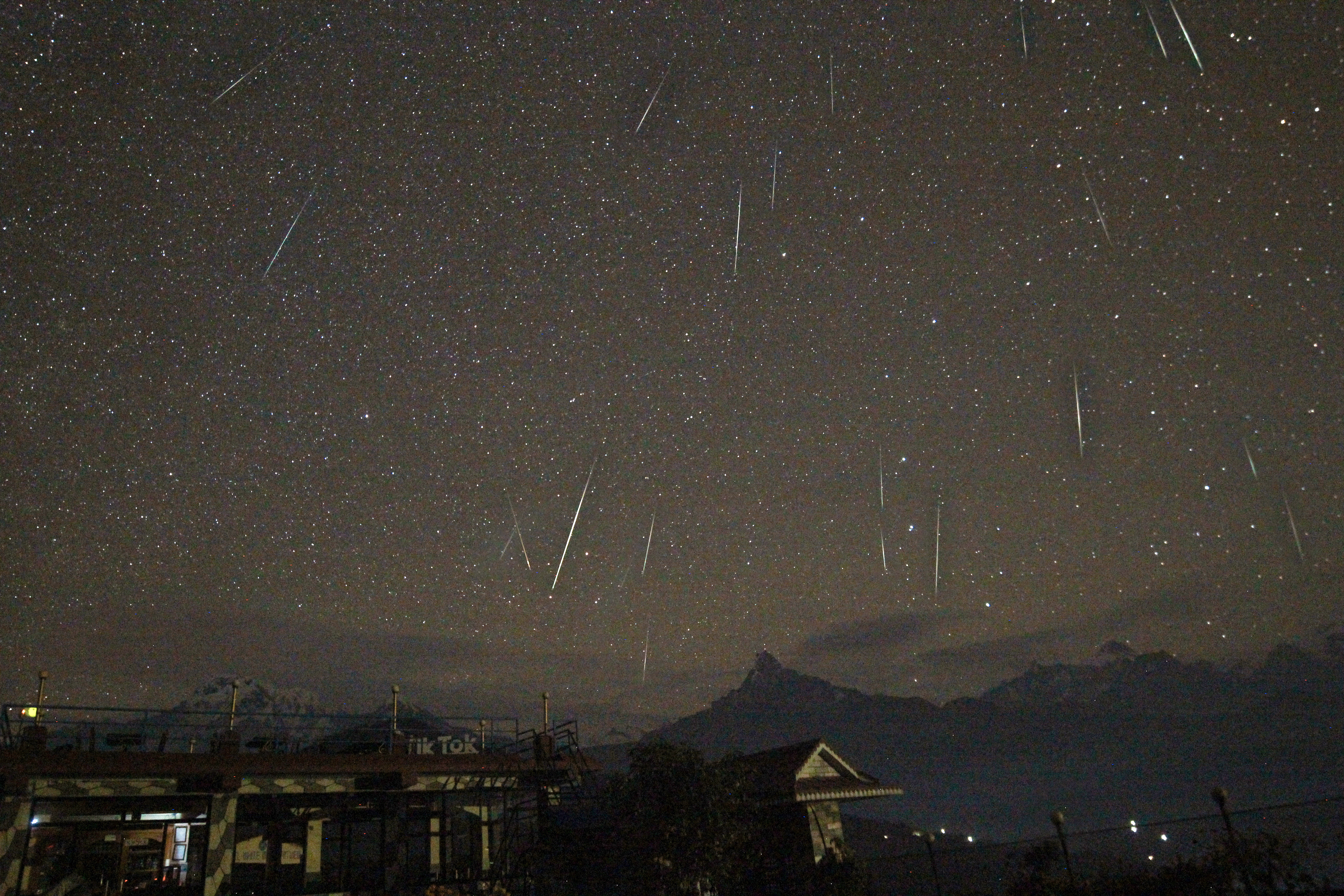
She is also an astrophotographer who has published several of her photos in national magazines and newspapers. She stresses the importance of preserving the dark sky.
She has travelled to several countries with her students, including France, the US and Switzerland. “We are happy with the results of our students. It motivates us to keep going,” she says. For the students, the Olympiad can open doors. Among others, three former participants from Nepal now study at Harvard.
In 2020, Dwa was honoured by the NGO SSVI (Stars Shine for Everyone), which distributes telescopes to children with disabilities and underserved communities worldwide. Every year, scientists, astronauts and Nobel Prize winners sign these telescopes. In 2020, Dwa was one of them.
Dwa wants to inspire others with her story. “We only look at someone already successful. But generally, we don’t care about their journey to get there,” she says. “I want to share my story to encourage others not to give up.”
She and NASO have big plans for the future of astronomy in Nepal. They want to promote more research and aim to inspire more girls and women to engage in the field. “And we dream of having our own observatory in the country, which can be used as a research centre for international students too. Because even though we lack expensive instruments, we have the biggest laboratory in the world: the dark sky.”
Dwa, who is also the first female astrophotographer of Nepal and has published several of her photos in national magazines and newspapers, stresses the importance of preserving the dark sky. A study from 2016 found that 80 percent of the population live under a night sky that is polluted by light from cities and other infrastructure. The situation has only worsened since then. Scientists warn that in 20 years, stars could be invisible from Earth.
NASO is working on projects to protect the night sky in Nepal. “There are many reasons for preserving it—education, culture, and economic growth,” Dwa lists. She is convinced that the country could be one of the best places in the world for astro-tourism—for astrophotographers, stargazers and scientists alike. She adds, “The sky brings us together, it unites us. No matter where in the world you come from, we all live under the same sky.”




 12.65°C Kathmandu


.jpg)