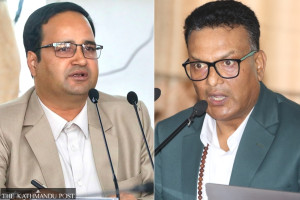
Rabi Lamichhane urges action against those targeting flood victims online
The RSP chair says the Bhotekoshi floods should be declared a national climate-related disaster and calls for a special all-party parliamentary committee to oversee the response and long-term recovery. RSS
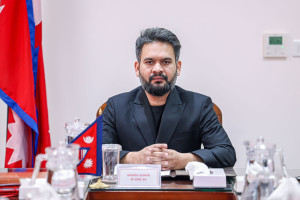
Rastriya Swatantra Party (RSP) chair Rabi Lamichhane on Wednesday urged the government to take immediate action against people who ridicule or attack victims of the Bhotekoshi floods on social media for expressing anger and frustration towards the state.
Addressing the House of Representatives, Lamichhane said people suffering loss and grief had the right to question and criticise the government and should not face retaliation from government supporters or members of his party.
“When people are in deep pain and facing an unexpected loss, they may even question God. How, then, can we expect them not to question the government or the Rastriya Swatantra Party?” he said.
Lamichhane also urged political parties not to turn the disaster into a platform for blame and political point-scoring. He said all parties should work together on the response and recovery.
“After such a terrifying disaster and destruction, another illness appears among us: turning a disaster into an opportunity for blame games and trying to pull each other down,” he said. “This is not the time to make political capital out of the disaster.”
He proposed that the Bhotekoshi floods be declared a national climate-related disaster and called for a special all-party parliamentary committee to examine the causes and damage and help internationalise the disaster.
The floods struck Rasuwa district on August 26, causing widespread destruction and cutting roads and bridges in several areas. Rescue, relief and recovery efforts have continued amid difficult access to affected communities.
Lamichhane convened an all-party meeting the day after the floods, attended by leaders of major political parties. The meeting agreed on a 10-point resolution, including a plan to establish a high-level all-party mechanism to advise and monitor reconstruction, climate adaptation and reforms to Nepal’s disaster management policies.
That mechanism has yet to be formed.
Lamichhane also defended the state’s response to criticism that the government had done little for those affected.
“I have heard people asking, ‘The state has done nothing. Where is the state?’ The strongest rebuttal to that is to show where the state is, with evidence,” he said.
He said state agencies were searching for people trapped beneath collapsed structures and inside tunnels, providing shelter to people who had lost everything, restoring roads and bridges and trying to rebuild public trust.
He said the government was also working on stronger disaster preparedness and safer infrastructure to reduce the risk of similar disasters in the future.
A second all-party meeting held on September 1 agreed to coordinate with the government on rescue, relief and rehabilitation. Political parties have also been discussing whether the proposed national mechanism should operate through Parliament or outside it.
An RSP spokesperson had previously said a parliamentary committee would have legal authority, while a political mechanism outside Parliament could provide broader policy guidance without creating a parallel government.
Lamichhane’s proposal on Wednesday now puts the parliamentary option before the House.




 24.5°C Kathmandu