A proposal by the Rastriya Swatantra Party (RSP) to abolish provincial assemblies has triggered strong backlash from Madhesh-based parties, who say the move threatens federalism. The parties have demanded clarification from the ruling party and the government.
Parties that spearheaded federalism movements in the Tarai–Madhesh region have called on the RSP to withdraw its proposal to abolish provincial assemblies. They warned they would oppose any move by the government to formalise such a proposal. Three Madhesh-based parties—the Janata Samajbadi Party-Nepal, Janamat Party and Nagarik Unmukti Party—said they support restructuring provinces in principle, but maintained that scrapping provincial assemblies would weaken federalism.
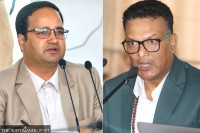
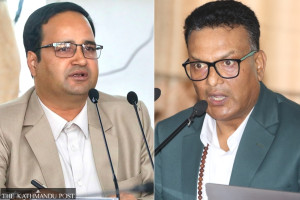
JSP-N chair Upendra Yadav said any move against the federal democratic republic, the provincial system and inclusion would be resisted. He said federalism was achieved through the sacrifice of hundreds of Madhesi people and added that it cannot exist without provincial assemblies. Yadav also said the proposal raised at the RSP general convention does not reflect the government’s position, and that only an official government decision would carry weight. “We will discuss constitutional amendments once the government brings a concrete proposal,” he said.
Janamat Party chair CK Raut said it was political dishonesty on the part of the RSP to bring a proposal at its convention that runs contrary to remarks made by Prime Minister Balendra Shah during an election rally in Janakpur. “The people of Madhesh supported the RSP with the expectation of strengthening federalism. Bringing a proposal to abolish provincial assemblies now is political dishonesty,” Raut said.
He said his party has been informing the public that scrapping provincial assemblies is unacceptable, as federalism is necessary for rights, development and equality. Raut said provincial assemblies are an integral part of the federal democratic republic, and their removal would mean democracy itself would cease to exist.
“Democracy will not survive if provincial assemblies are removed. Other parties, including the Nepali Congress, the CPN-UML and the Nepali Communist Party, must understand this,” he told Kantipur.
Laxman Lal Karna, a member of the 2015 constitution drafting committee and JSP-N leader, said provinces have no meaning without provincial assemblies. He said the proposal to abolish them was serious at a time when a government task force was discussing a concept paper on constitutional amendment.
“Provinces cannot function without assemblies. That undermines the essence of federalism,” he said.
He added that provincial assemblies could be reformed and challenges within provinces addressed. Karna said he would raise the issue with the constitutional amendment task force.
“We should not alter the fundamental principles in the constitution’s preamble while making amendments. We can discuss an amendment if agreement is possible within that framework,” he said.
Karna said task force members had informed him that the proposal had not been formally decided by the convention, but Madhesh-based parties had made clear their position that any weakening of federalism through the removal of provincial assemblies would not be acceptable.
Madhesh-based parties said the proposal to abolish provincial assemblies raises questions about the RSP’s intent, given that federalism was achieved through long movements, including the Madhesh, Tharu and Janajati struggles. They said they would hold internal discussions on the RSP proposal and try to form a common position.
During an election rally in Janakpur on January 20, Shah said provinces should not have to go to Kathmandu to seek rights and stressed that they should be empowered. “Kathmandu should not be a place to demand rights; it should be a place to visit Pashupati and Swayambhunath,” he said, adding that provinces would remain weak as long as even administrative changes require approval from Kathmandu.
During the party’s recently concluded convention, RSP vice-chair Swarnim Wagle presented a proposal that included abolishing provincial assemblies and restructuring federalism. The proposal, presented as a supplementary document by chair Rabi Lamichhane, was endorsed by the general convention.
The report listed proposals including a directly elected prime minister, a system where lawmakers do not become ministers, non-partisan local bodies, reduction of local units by a third, abolition of provincial assemblies, major restructuring of federalism, reform of the Judicial Council and other constitutional bodies, and transparent funding mechanisms for registered political parties.
However, in his political report, chair Rabi Lamichhane mentioned restructuring of provincial assemblies and provincial governments rather than outright abolition. “We are in favour of restructuring provincial assemblies and provincial governments,” the report said.
Within the RSP, debate over abolishing provincial assemblies and establishing non-partisan local governance has continued.
RSP General Secretary Bipin Acharya has said there should be a broad debate on restructuring provinces. “We should only move towards another decision after intensive discussion on its course and terms. Systemic change requires extensive debate,” he said in an interview with Kantipur.
Acharya said the chair’s document did not explicitly mention abolishing provinces and that there was some confusion in the vice-chair’s report. “The chair’s document should be considered the final party line,” he said.
JSP-N leader Jitendra Sonal, a member of the Madhesh Provincial Assembly, said the federal system was established through the struggle and sacrifice of oppressed communities, including Madhesis, Janajatis, Muslims and Tharus, and that any attempt to weaken it would be opposed.
“Provinces have identity, authority, and they ensure accountability to people,” he said. “Abolishing provincial assemblies would create further conflict.”
He added that past weaknesses in strengthening provinces should be corrected through constitutional amendments to make them more effective. “Madhesh and Tarai people voted for stronger provinces,” he said. “Parties should strengthen provincial assemblies.”
Nagarik Unmukti Party patron Resham Chaudhary said it was unthinkable to consider abolishing a federal system that emerged from a long struggle and sacrifice. “There is a discussion on the provincial model. It can be strengthened by reducing the number of provincial assembly members,” he said. “A proposal to abolish provincial assemblies would invite problems.”
He said the constitution can be amended to make federal, provincial and local governments more effective. “No one should be against federalism now,” Chaudhary said. “The RSP convention has raised the proposal to abolish provincial assemblies, but the government has not officially moved it forward. It should not be taken forward either.”




 17.22°C Kathmandu