Oli, Dahal explore fresh alignment amid election setbacks and probes
Battered by election losses and spooked by government asset probes, Nepal’s top communist rivals look set to share a stage and possibly a future. Post Photo
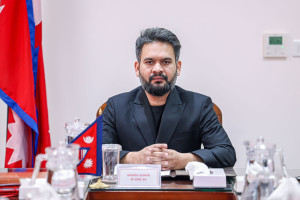
KP Sharma Oli, chairman of CPN-UML, and Pushpa Kamal Dahal, coordinator of the Nepali Communist Party (NCP), are moving closer to a renewed political alignment. Insiders say the two leaders have been in active dialogue in recent weeks to map out possible cooperation.
The sudden acceleration in talks comes at a tense moment for both camps, as the government steps up investigations into the assets of senior UML and NCP leaders.
During a UML office-bearers’ meeting last week, Oli openly stressed the need for cooperation with the NCP and other like-minded parties. He pointed to what he described as an increasingly aggressive posture from the government towards the UML, particularly the arrest of party vice-chairman Bishnu Prasad Paudel in connection with an asset probe, and argued that a united front had become necessary.
“KP Oli is ready to work with the NCP and other parties without any past baggage,” a senior UML leader said. “In fact, the groundwork has already begun with opposition parties cooperating inside Parliament.”
A weak performance in the March 5 parliamentary elections has pushed both Oli and Dahal to reassess their positions and revisit earlier rivalries. The NCP has already formally decided to pursue left-wing cooperation, while the UML is expected to debate the proposal at its upcoming central committee meeting.
With the UML holding 25 seats and the NCP 17 in the House of Representatives, both leaders believe a joint front could increase pressure on the government both inside Parliament and on the streets. They are already aligned on several recent government decisions, including a controversial proposal to scrap trade unions.
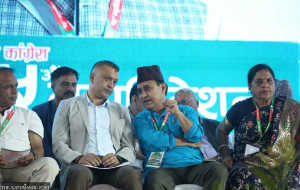
On June 28, Oli and Dahal are set to appear together on a public platform at a seminar titled “Nepali Communist Movement and Madan Bhandari”, marking the 75th birth anniversary of late UML leader Madan Bhandari.
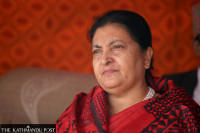
Former president Bidhya Devi Bhandari will be the chief guest. She has recently returned to active politics in the UML. The event will mark the first time Oli and Dahal share a stage since the Gen Z protest movement unsettled the political landscape.
Government anti-corruption investigations have added to anxieties in both parties. The UML has described the arrest of Bishnu Poudel as a political vendetta.
Discussions are also underway on possible coordination in provincial governments, protection of national sovereignty, and defence of the constitution. UML deputy general secretary Lekhraj Bhatta confirmed that talks between the two leaders are ongoing.
“KP Oli and Dahal are discussing provincial coalitions and standing together against government overreach,” Bhatta said. “If there are any moves to weaken the constitution, the UML and NCP will stand as one.”
The Oli-Dahal partnership dates back to 2017, when their electoral alliance secured a near two-thirds majority. However, internal power struggles ended the partnership after two years and ten months. A later post-2022 election alliance lasted only two months.
Political analysts remain cautious about the renewed engagement.
“Oli and Dahal join hands whenever they are in trouble or need to serve immediate political interests,” said political science professor Krishna Pokharel. “History shows they split the moment they gain power. The post-election squeeze has clearly driven them back together.”
However, NCP leader Devendra Paudel argued that unity has become necessary, particularly with local and provincial elections scheduled for next April.
“If the left-wing parties do not unite now, we have no future. Party members at the local level are unanimous that we must merge,” Paudel said. “We cannot afford to let old egos get in the way. Both parties are actively talking about this.”
Dialogue is not limited to the top leadership. Backchannel discussions are also ongoing between UML general secretary Shankar Pokharel, vice-chairman Prithvi Subba Gurung, deputy general secretary Lekhraj Bhatta, and NCP leaders Narayan Kaji Shrestha and Barshaman Pun.
While former Maoists and the Unified Socialist Party announced a merger under the Nepali Communist Party banner last November, organisational consolidation is still incomplete. The NCP plans to launch a broader left alliance once internal restructuring is finalised. Central Committee member Govinda Acharya said, “Left-wing cooperation will formally begin once the party reorganisation is completed. The decision has already been made.”
Weakened by recent electoral setbacks, Oli and Dahal are now projecting themselves as elder statesmen and “architects of the constitution”, seeking common ground on national issues and possible constitutional amendments.
However, differences remain over the Gen Z movement. Dahal openly supported the youth-led protests, while Oli called them a “serious conspiracy”. Following the election setback, both leaders now appear keen to move past that divide.
The NCP’s internal post-election review concluded that split communist votes benefited rival parties. A coordination committee report from March noted that nine separate communist parties contested the elections individually, but collectively secured over four million proportional votes. It concluded that a unified left could have dominated the polls.
The two parties formally merged on May 17, 2018 to form the Nepal Communist Party, with Oli and Dahal as co-chairs. The alliance later collapsed amid power struggles, and the Supreme Court dissolved the merger on March 7, 2021 following a naming dispute.
Even before the verdict, the factions had effectively split. By December 2020, internal conflict had escalated to the point of House dissolution. Oli, facing a minority within the party leadership, recommended dissolution of Parliament, a move later overturned by the Supreme Court.
After losing majority support, Oli pushed for mid-term elections through then-president Bidhya Devi Bhandari. The move triggered opposition consolidation, leading to a counter-coalition involving the Nepali Congress, the Maoists, and the Madhav Kumar Nepal faction of the UML.
By the 2022 elections, the political fallout was evident. The UML emerged as the second-largest party in Parliament, while the Maoists finished third.
Now, after the March 5 elections pushed both parties into a weaker position, the cycle appears to have turned full circle. Whether the latest thaw reflects ideological reconciliation or political survival remains uncertain.




 14.69°C Kathmandu