Election Commission begins review of polling stations ahead of local elections
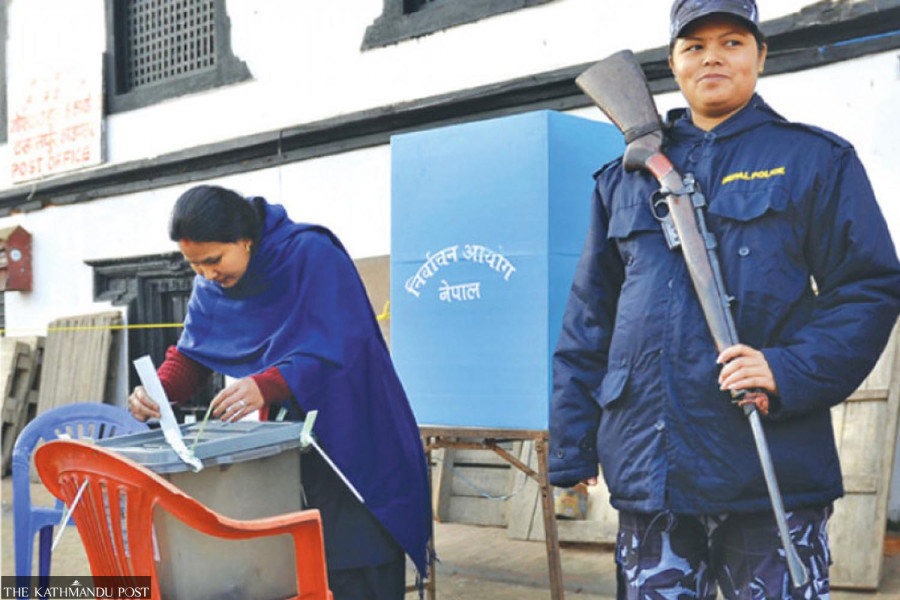
The review will assess voter numbers, accessibility, infrastructure and security, with alternative locations to be identified for polling stations damaged or rendered unusable by disasters. Post File Photo
The Election Commission (EC) has begun reviewing polling stations and polling centres across the country ahead of the upcoming local elections. It has written to all local governments, district administration offices and district election offices, asking them to initiate the process.
The review follows a decision by the commission’s Polling Station and Polling Centre Determination Coordination Committee. Election Commissioner Sagun Shumsher Rana, who heads the committee, said the exercise would cover all polling stations and centres established across the country.
A total of 10,967 polling stations and 23,112 polling centres were in place for the House of Representatives elections held on March 5 this year. All of them will be reviewed, Rana said.
The commission will consider changes in voter numbers, the physical condition of polling locations and the convenience or difficulties voters may face in reaching them. The assessment will also examine the number of registered voters, transport links, ease of access, physical infrastructure, and the availability of toilets, drinking water, electricity, telephone services and internet connectivity.
Decisions on whether to retain, relocate or change polling locations will take into account security arrangements and consultations with election stakeholders, Rana said. Generally, one polling centre is designated for every 1,000 voters.
The commission will also seek alternatives to polling stations that may no longer be usable. The August floods, for instance, washed away 12 polling stations in Rasuwa district. The commission will identify alternative locations for them.
Under the commission’s provisions, every ward of a rural municipality or municipality must have at least one polling station. A polling station can be relocated to another suitable site within the same ward if its existing infrastructure is dilapidated or inadequate, or if the location is unsuitable on accessibility or security grounds.
The commission’s Polling Station and Polling Centre Determination Procedure also provides for relocating a polling centre if the school where it was previously established has been closed or merged with another institution. In such cases, another suitable nearby location can be designated.
The review process involves committees at three levels: the commission, districts and wards.
At the commission level, a coordination committee is headed by a designated election commissioner. Each district has a recommendation committee led by the chief district officer, while a ward-level committee is headed by the ward chair.
Ward committees are responsible for inspecting polling stations and centres within their jurisdictions, consulting relevant stakeholders and forwarding recommendations to the district committee through the local government office.
The district committee examines these recommendations, holds further consultations with stakeholders and prepares a consolidated list of polling stations and centres to be retained, relocated or established in the district. It then submits the list to the commission’s coordination committee.
The commission-level committee forwards the district recommendations for approval. The Election Commission takes the final decision, determining new polling locations and scrapping those that are no longer required.




 20.12°C Kathmandu