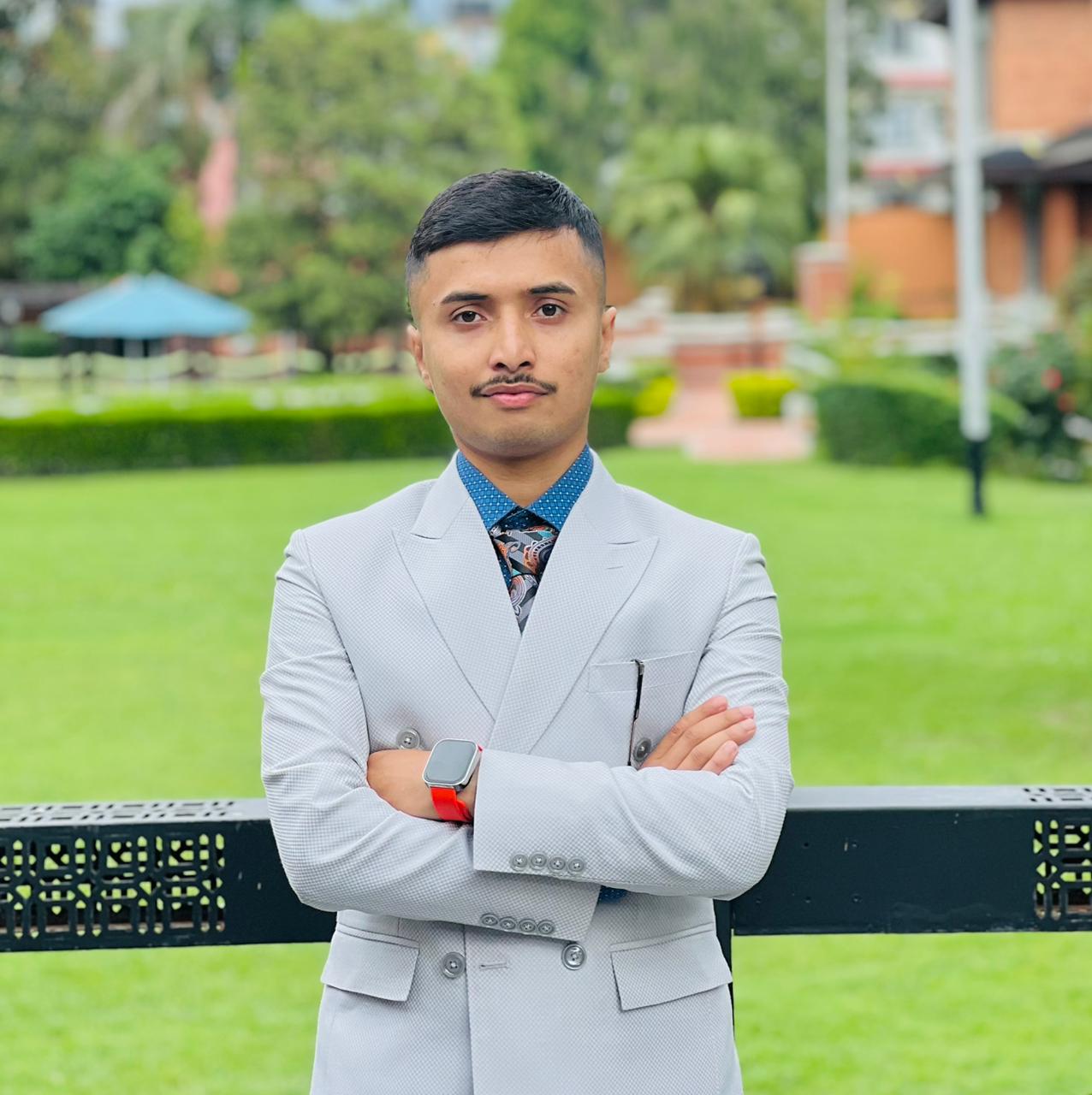
Inam Sapkota now says police dictated his statement
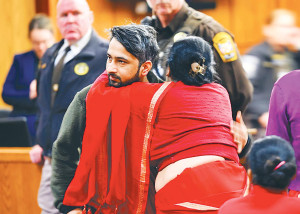
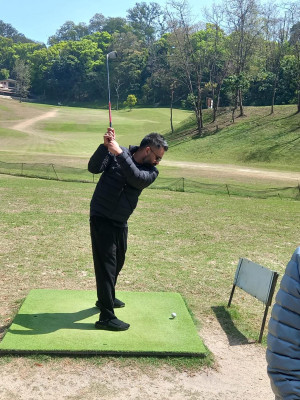
In an application to the National Human Rights Commission, he alleges police threatened and pressured him to implicate senior political and judicial figures. Inam Sapkota. File Photo
Inam Sapkota, who is in police custody in connection with money laundering and violations of the Nepal Rastra Bank Act, has filed an application with the National Human Rights Commission seeking protection, alleging that he was mistreated in custody and pressured to make statements against prominent individuals.
In the application, submitted through his wife, Kabita Pandey, and his personal lawyer, Sapkota has sought protection for his life, claiming that he was arrested at the Tribhuvan International Airport on September 30, had his two mobile phones confiscated, was blindfolded and taken to an undisclosed location, and was repeatedly threatened to make fabricated statements dictated by police.
“They [police] kept me at an unknown location, blindfolded, from September 30 until the evening of October 1. During that period, they questioned me about various things,” the application states.
Sapkota claimed that police told him they had nothing personal against him but that he would be released if he provided evidence and statements against several prominent individuals. He alleged that he was pressured to make statements against former Chief Justice Cholendra Shumsher Rana, Rana’s brother and son, Nepali Congress President Gagan Thapa, Congress leader and businessman Umesh Shrestha, Bhatbhateni Supermarket owner Min Bahadur Gurung, Nabin Tuladhar of the Himalaya Hotel, and some sitting Supreme Court justices.
“Otherwise, things would go badly not just for me but for my family as well,” Sapkota claimed in the application, recounting what police had allegedly told him.
In the application, Sapkota claimed that he had close personal relations with some of the individuals against whom police sought statements, that some were his mentors and teachers, while others were people he did not even know.
Yagya Adhikari, joint secretary at the commission, confirmed to Kantipur that the chairperson of the commission had received the application from his wife. “The commission will now begin its own investigation. We will also make inquiries with the relevant government agencies,” he said.
Details of chats exchanged between Sapkota and senior government officials on mobile phones, as well as audio and video clips of statements recorded by police from him, have been leaked to the media.
An audio made public by Jana Aastha weekly that has become public mentions an alleged Rs180 million deal with former Chief Justice Rana in connection with the case over the Nepali Congress’s official status. In his application to the commission, however, Sapkota has stated that he was threatened and forced to read out a prepared text.
In his application Sapkota claims that police made him read out a statement they had prepared, quoting them as allegedly telling him, “Just read what is written here.”
Police initially said they had begun investigating Sapkota on charges of indecent behaviour following his arrest. “They extended my remand on the charge that I had behaved indecently towards women and members of the public on the public road in front of the airport on the evening of the 14th [of Ashwin, or Sept 30]. I have not behaved indecently towards anyone. Since I was arrested from inside the airport, CCTV footage should be obtained and examined. The documents issued in my name and my boarding pass also make this clear,” he wrote in the complaint.
He later alleged that police used the $1,300 and some Indian currency found on him to seek an extension of his remand under the Nepal Rastra Bank Act. Police subsequently began investigating him on money laundering charges as well.
“I came to know about the audio recordings concerning the Nepali Congress's dispute over its official status and alleged judicial dealings involving Supreme Court justices from my relatives and later from police during further interrogation,” he has written in the application. “I then learned that statements I had never made, matters I knew nothing about and issues about which I had no information had been made public after being edited from what police had made me read on the day of my arrest. I also came to know that the police had recorded what I read that day.”
Sapkota has also claimed that his mobile phone was handed over to unauthorised individuals for two days while he remained in police custody, and that the phone was tampered with to create fabricated evidence. He said he had learned that even AI-generated documents were being presented as evidence.
Setopati.com reported on November 3 that Sapkota’s mobile phone had remained with Kumar Byanjankar (Ben), the prime minister’s chief adviser, for two days following his arrest.
Following Sapkota's serious allegations against the police before the commission—including claims that he was pressured to make statements against his will, mistreated and threatened—the investigation itself has come under scrutiny. His complaint raises questions not only about the methods used in the investigation but also about the possible involvement of influential political and judicial figures in the details that have emerged publicly.
Hemant Malla Thakuri, former deputy inspector general of Nepal Police, said the case had raised serious questions about all the institutions involved.
“How does information from a police interrogation room get leaked?” he told Kantipur. “But I would not blame the police alone. I see serious problems involving the political leadership and other concerned institutions as well. Otherwise, how does an audio recording of an interrogation at a district police office emerge in its entirety?”
The police, however, raise questions over the intention of Sapkota's application.
Senior Superintendent Dilip Ghimire, chief of the Kathmandu District Police Range, said he had no formal information about the application. “You will know everything about this later. Read the complaint carefully and you will understand what the intention is,” he told the Post.
Police officials in Kathmandu claimed that the complaint was an attempt to divert attention from the investigation, which they said was progressing rapidly. Nepal Police spokesman Abi Narayan Kafle said he had no information about Sapkota. “I am not aware of the investigation being conducted there,” he said.
Sapkota’s family reached the constitutional rights commission weeks after the Supreme Court on October 8 dismissed Pandey’s habeas corpus petition.
In his application, Sapkota also claimed that he had committed no unlawful act while in police custody and questioned how simply communicating with people over the phone could constitute an offence. He said he had no knowledge of what the individuals mentioned had done and that, despite repeatedly telling police he could not make statements against others without reason, investigators kept circling back to the same questions.
“They subjected me to mental torture, threatening to file false cases that would keep me in prison for a long time if I did not comply, putting my life and that of my family at risk and causing problems for my entire family,” the complaint states. “They kept trying to coax and intimidate me. After that, they told me I did not need to say much, that I should simply read out what they had written, and that they would release me if I agreed to it. They lifted the blindfold over one eye and asked me to read it aloud so that everyone could hear. I read it accordingly. They repeatedly stopped me in between, telling me I was reading too fast and asking me to read slowly and loudly enough for everyone to hear.”
According to police officials, Sapkota was initially arrested by the police Special Bureau at the airport. The bureau, which operates directly under the Nepal Police inspector general and investigates counterterrorism and transnational crimes, has no formal record of his arrest, however. In informal conversations, police officials have said that Sapkota was in the bureau's custody during the period he described as having been held at an unknown location.
“The bureau took him to its office inside the Police Headquarters and questioned him there,” a police official said. “It is normal for police to use various methods, including intimidation or inducements, while interrogating suspects.”
A retired official who had worked at the bureau for a long time also said that blindfolding suspects and taking them for interrogation was part of the Special Bureau's practice.
An official at the Kathmandu police range said the ongoing investigation was not limited to Sapkota's statements. “His telephone contact records, banking transactions and other details make it clear to anyone that the investigation is not what he has described in his complaint,” the official said.
Police officials said the investigation had found that Sapkota, who was a primary school teacher until two years ago, had deposited Rs63.1 million into a single bank account in one year. Mahesh Shrestha, brother of Congress leader Umesh Shrestha, was found to have deposited the largest amount—Rs14.25 million—into the account. Police arrested him after identifying the transaction. Details of Sapkota's conversations with other high-profile individuals had also surfaced.
Questions had already been raised about the police investigation after allegations emerged that Sapkota's mobile phone had been kept at the home of Prime Minister's political adviser Kumar Ben for two days following his arrest. The phone should have been taken directly to a digital forensic laboratory for examination, with its chain of custody maintained. After it emerged that the seized phone had been taken elsewhere, calls grew for an investigation into the mishandling of evidence.
Sapkota, who has been in the spotlight since his arrest over alleged links to sitting Supreme Court justices, police officials and prime minister's adviser Ben, has also requested the commission to investigate and recommend action against investigators and other individuals in question for allegedly tampering with evidence, fabricating material and leaking investigative documents.
The Post attempted to contact Sapkota's wife, Kabita, for comment, but she did not answer her phone. She also did not respond to messages sent via WhatsApp.




 8.12°C Kathmandu