Three months on, flood survivors still await government response
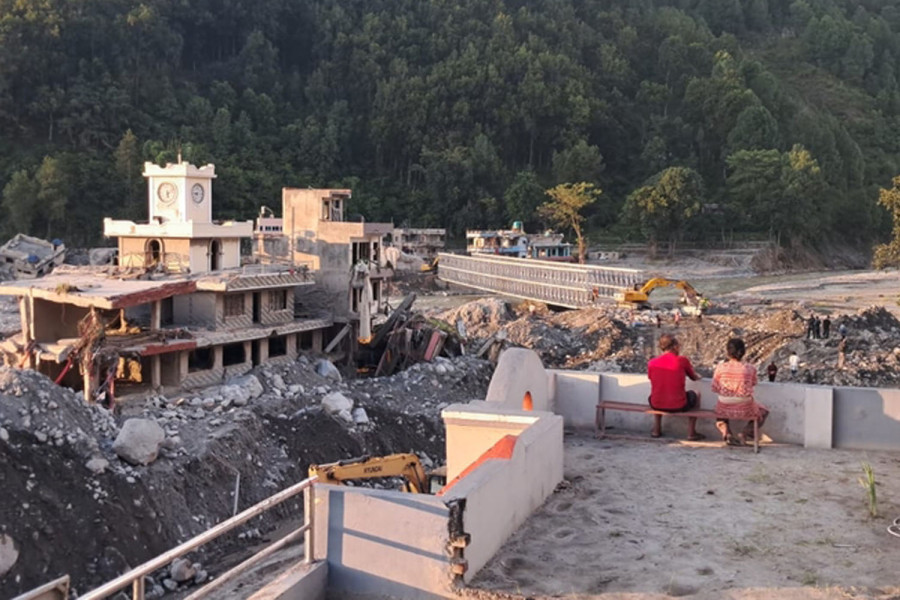
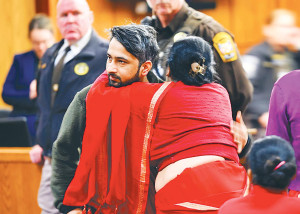
With no resettlement plan, delayed rental assistance and relief running out, survivors face winter without secure shelter as aid organisations begin to withdraw. Strict eligibility rules and delays have blocked promised monthly rental support, forcing displaced families out of Kathmandu and back into unsafe ruins. Photo: Courtesy of Sashi Dangol
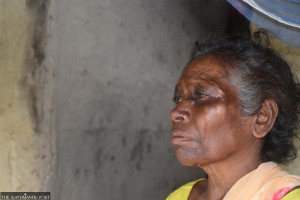
Meena Adhikari of Sole in Nuwakot ran out of her house the moment she heard about the floods on August 26. She had grabbed her tilahari [a beaded necklace with a cylindrical gold centrepiece] and Rs18,000 in cash, and held them tight under her arm. The surging water caught her up midway. The water current washed both from her possession, and she could not retrieve either.
The flood took her house and farmland, and also her mother-in-law, her nephew and her daughter-in-law. A river now runs where her home and settlement once stood.
Thursday marked three months since the disaster. The relief handed out in September is running out, and winter has set in. Yet the government has not decided where, how, or in what form the survivors will be resettled. Organisations that rushed to the affected areas with aid are slowly withdrawing. Without a framework on resettlement, housing standards and land arrangements by the federal government, neither the survivors nor those willing to help have been able to move forward.
Adhikari’s remaining farmland in the village has been taken up by a road. Another plot she owns lies under a high-voltage transmission line, which makes it unfit for housing.
The Adhikari couple first rented a room in the village. But after seeing a lifetime of hard work and ancestral property destroyed before her eyes, Adhikari did not want to stay there longer. When she heard that the government would pay rent to displaced families, she and her husband moved to Kathmandu. Three months on, she has not received a rupee, and she is not sure she ever will.
The delay is only a part of the problem. The conditions attached to the assistance are another. At its September 11 meeting, the Cabinet decided to provide displaced families monthly financial assistance for up to six months, until alternative accommodation could be arranged. Families of up to four members are entitled to Rs15,000 a month, with Rs2,000 more for each additional member.
But the procedure drawn up to implement the decision requires applicants to declare that they own no land or house anywhere in the country. Its second clause reads: “A self-declaration that neither the applicant nor any member of their family owns a habitable house anywhere in Nepal and that they have not received assistance from elsewhere for accommodation and livelihood.”
That clause has kept the Adhikari family from receiving the rental assistance.
“We still have land ownership certificates, but some plots were swept away by the river, some were taken by the road, and one lies beneath a high-voltage transmission line,” said Adhikari. “If they give us the rental assistance because we have no land, we might as well take it. But we fear that we may then be denied other forms of relief. If we don't take it, we are already stranded."
With little hope of finding a way forward in Kathmandu, Adhikari is now preparing to return to her village, uncertain about what lies ahead. “How will we survive if we go back?” she wondered.
Nabin Raila, also from Sole, came to Kathmandu after the floods. But after going three months without rental assistance and struggling with the high cost of living in the capital, he is now preparing to return to his village.
"Staying in Kathmandu has not been easy," he said. "I have rented a small piece of land in the village for Rs15,000 a year. I will probably have to put up a makeshift shelter there and live in it."
Some organisations have promised to build houses for the survivors in the village. Nabin fears they could pull back their offers if he accepts the government's rent money. The government has said that those receiving rental support cannot also claim assistance for temporary shelter. Torn between one form of support and another, survivors are unable to decide.
Uddhav Rijal from Bidur said the state has yet to make its presence felt in the affected areas.
"If you ask the survivors, the state has not reached the affected areas even today. Now, even organisations are gradually pulling out. The relief distributed in September is almost running out. Winter has begun, and flood survivors are left in distress," he said.
Many organisations had arrived with relief materials soon after the disaster, and some had pledged to build houses. But the state has not decided what kind of houses should be built or where, and these organisations have begun to withdraw as well.
Rajan Shrestha, mayor of Bidur Municipality, said it is impossible to build houses within the Rs450,000 ceiling the government has set. The non-governmental organisations also cannot start construction without approval from the federal government, he said.
After waiting in vain for a decision from the centre, the municipality started distributing one month's rental assistance on November 20. By Thursday, around 1,000 families had received Rs15,000 each, the mayor said.
"The money we distributed is not from the federal government, it was donated by various organisations," he said.
"Nature has already hurt these people badly, and the government shouldn't add to their pain. That's why we handed out this money," he said.
The federal government's failure to decide on resettlement in time has only deepened the survivors' suffering, he added.
With government help not arriving on time, some survivors have been forced back to the very areas the floods devastated. Those from Timure in Gosainkunda Rural Municipality have also started moving back into their damaged homes.
Pemba Tamang from Gosaikunda said they went back because staying at the holding centre in Kathmandu had become harder and harder.
“It was difficult to continue staying at the monastery in Kathmandu. Around 40 to 50 people have returned to the village. The state has done nothing, and it has become difficult to keep staying here," he said.
They are yet to receive the assistance the government promised, he said. "We still haven't received the money the government said it would provide. Fortunately, we have managed to get by with small amounts of assistance that various organisations occasionally bring," he added.
In Betrawati and Devighat, some residents have cleaned their flood-damaged houses and moved back. Those staying at holding centres have been made to leave. Families who had rented land for three months to put up temporary shelters had to vacate once the agreements ran out.
"Some 80 to 90 families could not continue living together in one place for so long. The three-month agreement has also expired," said Nima Tamang of Amachhodingmo in Rasuwa. "Some have moved into rented rooms, while others are thinking of renting land and putting up makeshift shelters."
Poor transport and infrastructure add to the obstacles. Locals say the failure to rebuild the bridge linking Gosainkunda and Amachhodingmo at Syaphrubesi has made it hard to carry essential supplies and to travel in and out of the affected settlements.
Buchung Tamang, chair of Amachhodingmo Rural Municipality, said conditions are still not suitable for people to return to their villages. The area remains cut off from the road network. Work on the Bailey bridge at Syaphrubesi is progressing, but at a snail’s pace.
"Even those who are in the village have to keep fleeing. How can we think about returning home?" he said. "There is nothing available here. The relief distributed earlier has already run out."
Ram BK of Gatlang said the growing cold has made travel hardest for children and the elderly.
"It has already been three months, but the work has still not progressed properly," he said. "Whatever little relief we received is also running out. Children and elderly people do not even have warm clothes. How are they supposed to get through this winter?"
Also, the bridges over the Trishuli river are in a sorry state. The floods washed away all the concrete and footbridges across the river, leaving settlements off from the district headquarters. Thousands of residents say they have to walk for hours to reach Bidur.
Bidur Municipality has already built the foundation for a Bailey bridge at Dhunge from its own development budget. The foundation was completed 10 days ago, and the municipality says the work cost Rs37 million. It also spent Rs1.5 million to bring the Bailey bridge, which the Indian government provided through the Indian Embassy in Nepal after the floods, from Hetauda. A date to install it has yet to be fixed.
After repeated requests to the federal government went unheeded, the municipality wrote to the Nepali Army on Tuesday.
"We requested the federal government to install the bridge. When that did not happen, we also wrote to the Nepali Army," Mayor Shrestha said. "We cannot install it ourselves, and the agencies capable of doing so have not shown any urgency. People here are suffering immensely."
The government has put up two Bailey bridges in the flood-hit region, but over the Tadi and Salakhu rivers, not the Trishuli. They do nothing to reconnect settlements across the Trishuli to the road network. Government officials told the mayor that the equipment needed to install the bridge is being used for another bridge under construction in Ilam, and that moving it to Nuwakot would take time.
Once it is in place, the bridge will link Trishuli Bazar with settlements across the river in Nuwakot, Dhading, and Rasuwa.
"Our area has become even more remote than the most inaccessible villages in Karnali," said Paras Adhikari, an employee at Bidur Municipality. "There are places from where people have to walk for five to six hours just to reach the only suspension bridge."
The state has been just as slow in identifying those who died. The National Disaster Risk Reduction and Management Authority had earlier published a list of 5,285 missing people. So far, the government has confirmed the identities of only 3,915 of them, in two phases.
Arjun Poudel is a health reporter for The Kathmandu Post. Before joining the Post, he worked for Sagarmatha Television, Naya Patrika, Republica and The Himalayan Times.




 8.12°C Kathmandu