Loss and Damage Fund calls extraordinary meeting for Oct 22 to support Nepal
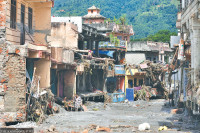
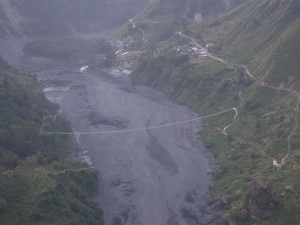
Nepal formally requested an urgent response from the Fund on August 31, calling on the Board to take a special decision to provide assistance rapidly, directly and effectively. The August 26 flash flood wiped out settlements along the Bhotekoshi-Trishuli corridor. Post File Photo
The Board of the Fund for Responding to Loss and Damage (FRLD) is set to hold its first-ever extraordinary meeting on October 22, to consider emergency funding support for Nepal following devastating floods triggered by an ice-and-rock avalanche in August.
The virtual meeting comes after formal requests from Board members representing Least Developed Countries (LDCs), African States and Asia-Pacific States, alongside sustained calls from civil society groups for an urgent response to Nepal’s request for assistance.
According to the proposed Board decision, members will consider provisionally setting aside $21.6 million from the Fund’s available resources, including $20 million for potential support to Nepal and $1.6 million for oversight fees.
The Board will also consider piloting a mechanism that would allow Nepal to submit a funding request outside the Fund’s regular submission window, potentially accelerating access to financial assistance, according to a communication.
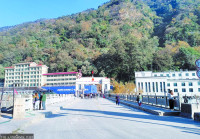
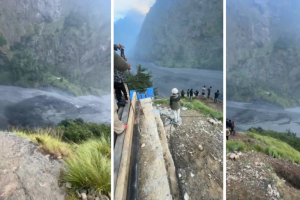
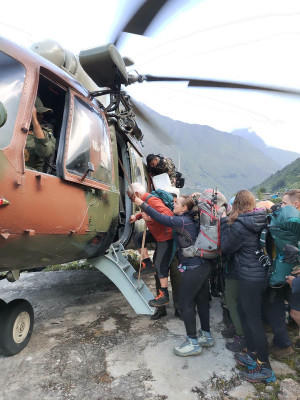
On August 26, an ice-and-rock avalanche in one of Nepal’s watersheds triggered a debris flow and major downstream flooding along the Bhotekoshi–Trishuli–Narayani river system. The disaster caused extensive damage and created significant recovery and reconstruction needs.
The government of Nepal has estimated the initial economic loss and damage at a minimum of $2.69 billion, while recovery and reconstruction requirements are projected to reach at least $4.71 billion.
The meeting was called on Thursday. First extraordinary meeting of the board, said the correspondence to the member states, it will take place in virtual mode and the agenda involves matters related to the urgent request for an immediate response to the catastrophic flash floods in Nepal.
The proposed $20 million allocation represents only a small fraction of the country’s estimated needs, highlighting the continuing challenge of mobilising adequate finance for climate-related disasters in vulnerable countries.
Nepal formally requested an urgent response from the Fund on August 31, calling on the Board to take a special decision to provide assistance rapidly, directly and effectively. Subsequent communications from Board members across several regional groups supported efforts to explore available options for responding to the request.
According to the Board’s correspondence, several member countries have expressed solidarity with Nepal.
“On September 16, an informal consultation was convened by the co-chairs with the Board to provide a space for engaging on the substance of the requests from Nepal and hear their expectations for a potential response to the request from Nepal,” reads the correspondence. The co-chairs also had an informal dialogue on September 28 with the observers to the Board which included a discussion on this matter.
Informed by these discussions, the co-chairs held two meetings with an informal drafting group of members and alternate members of the Board on October 5 and 8 to work on a draft decision text for a potential Board response to the request from Nepal. The informal group produced a draft text for the consideration of the Board, according to the correspondence.
A senior Nepal government official said that the decision will be made on October 22 but its formal announcement will come only during the COP 31 scheduled to take place from November 9 to 22 in Antalaya, Turkey.
The proposed decision would invite Nepal’s national focal point to submit a funding request for consideration and approval by the board. According to the correspondence, the Fund’s Secretariat will be asked to assess lessons from the response to the disaster, including implications for the Fund’s long-term operating model.
Climate advocates have welcomed the planned meeting as an important step towards enabling the Fund to respond to a specific disaster. However, they have also emphasised the need for a permanent rapid-response mechanism and significantly greater financial resources to address the scale of climate-related loss and damage. Prime Minister Balendra Shah to Foreign Minister Shisir Khanal to other government officials have been asking for climate justice and compensation for Nepal that has been affected by the adverse effect of climate change.
Some international and domestic climate experts and advocates have argued that emergency assistance should not depend on extraordinary meetings, prolonged negotiations or exceptional procedural arrangements. Instead, rapid access to finance should become a standard feature of the Fund’s operations.
The October 22 meeting is expected to be an important test of how the FRLD can respond to urgent requests from climate-vulnerable countries, said a senior Nepal government official. Its outcome could also inform future discussions on emergency funding procedures and the Fund’s broader role in addressing climate-related loss and damage.
Anil Giri is a Chief Sub Editor covering diplomacy, international relations and national politics for The Kathmandu Post. Giri has been working as a journalist for more than two decades, contributing to numerous national and international media outlets.




 18.53°C Kathmandu