Can Nepal turn Himalayan vulnerability into a case for compensation?
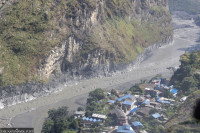
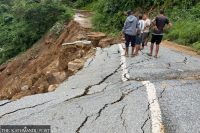
The Bhotekoshi disaster highlights rising climate risks in the Himalayas, but experts say Nepal needs stronger evidence, sharper diplomacy and a clear strategy to secure international grants. The preliminary official estimate of loss from the Bhotekoshi flood is approximately Rs 387.5 billion.
The devastating Bhotekoshi floods of August 26, which caused an immense loss of life and property, have brought a longstanding question into sharper focus: How should Nepal seek climate justice, and what can it realistically expect from the international climate-financing system?
The disaster has also intensified debate over whether increasingly extreme events in the Himalayas are linked to climate change, how such risks can be better understood and prevented, and whether countries that have contributed most to global greenhouse gas emissions should provide financial support to vulnerable countries such as Nepal.
Here are seven key questions and answers explaining where Nepal stands.
Why is Nepal seeking climate justice now?
The August 26 Bhotekoshi disaster has become a powerful example of the vulnerability of Himalayan communities to climate-related risks. Scientists, government officials and political leaders have linked the growing intensity of disasters in the mountains to the broader impacts of climate change.
Prime Minister Balendra Shah has said the international community must recognise the flood as a warning about the growing risks confronting the Himalayan region.
“Climate change is a global problem,” Shah told Parliament this week. “Mitigating and managing its impacts is a shared responsibility of the international community.”
The government argues that Nepal contributes very little to global greenhouse gas emissions but faces disproportionate consequences from a changing climate.
The debate, therefore, is not simply about securing money to rebuild after one disaster. It is increasingly about whether vulnerable countries should receive international support to cope with the loss and damage caused by climate change.
What has Nepal asked from the international community?
Finance Minister Swarnim Wagle and Environment Minister Geeta Chaudhary have jointly written to the Board of the Fund for responding to Loss and Damage, seeking urgent support for Nepal. The request comes after a rapid assessment by the National Disaster Risk Reduction and Management Authority estimated that the Bhotekoshi floods caused losses of approximately Rs386.16 billion.
The assessment says early recovery needs to be completed within six months and estimates that Rs7.96 billion will be required for that phase.
Nepal’s request is therefore linked to the international Loss and Damage Fund, established under the United Nations climate regime to provide support to developing countries particularly vulnerable to the adverse effects of climate change.
But Nepal’s move has also attracted criticism.
Former Nepal representative to the United Nations Madhu Raman Acharya questioned whether Kathmandu had done sufficient diplomatic and technical homework before approaching the fund.
He argued that Nepal had not attached sufficient supporting documents, a detailed proposal or a preliminary assessment establishing the basis of its request.
The criticism highlights an important distinction: asking for support is one thing; establishing eligibility and demonstrating the climate-related causes and impacts of a disaster is another.
What exactly is the Loss and Damage Fund?
Loss and damage refers to the economic and non-economic harm caused by climate-related events and processes that cannot be fully avoided through adaptation.
The fund is intended to help vulnerable developing countries respond to such impacts.
But it is not simply a compensation mechanism where a country submits the bill for a disaster and receives an equivalent payment.
Climate-financing experts say Nepal needs to understand this distinction clearly.
Manjit Dhakal, lead adviser to the chair of the Least Developed Countries Group on Climate Change, said there is considerable misunderstanding about what the Loss and Damage Fund is designed to do.
Nepal, he said, has already held several rounds of discussions and is progressing with the process. The next major step is a meeting of the fund’s board.
Maheshwar Dhakal, joint secretary and alternate member of the fund’s board, told the Post that Nepal is expecting a response soon and that the fund’s two co-chairs are discussing the request in coordination with its executive director.
This means Nepal’s request is already moving through an international institutional process. But the amount Nepal ultimately receives, and the conditions attached to it, will depend on the fund’s rules, available resources and assessment of the request.
Is Nepal asking China, India and the United States to pay?
This is where Nepal’s diplomatic messaging has become complicated. Foreign Minister Shisir Khanal initially made strong remarks about developed countries bearing responsibility for climate-related losses.
He said major emitters should compensate vulnerable countries and described Nepal’s approach as a shift “from aid to justice and compensation”.
He also referred to China, the United States and India as major emitters with responsibility for climate-related impacts. Those remarks generated considerable attention in Indian and Western media. But Khanal subsequently clarified Nepal’s position.
Following a meeting with Chinese Ambassador Zhang Maoming, the Chinese Embassy said Khanal told the ambassador that Nepal had no intention of seeking “climate justice compensation” from any specific country, including China.
Instead, Nepal would seek compensation from the international community as provided by the UN Framework Convention on Climate Change and the Paris Agreement.
Khanal also told Indian news agency ANI that neither he nor the foreign ministry nor the Nepal government had asked India, China, the United States or any other particular country for compensation.
Nepal’s message is therefore increasingly being framed as a call for international support through established climate-financing mechanisms, rather than a bilateral demand for compensation from its neighbours.
What do climate-financing experts say Nepal should do?
Experts generally support Nepal's decision to seek international climate finance, but they caution against presenting the issue solely as a demand for compensation.
Raju Pandit Chhetri, an expert in international climate financing, said Nepal should seek grants rather than loans from international climate funds and other multilateral and bilateral sources.
“Not increasing debt for Nepal,” he said, arguing that reconstruction should be supported through international collaboration and cooperation.
Chhetri expects Nepal to receive some funding from the Loss and Damage Fund, although he does not believe the country will receive the much larger amount of around Rs5 billion that some government expectations may have suggested.
His assessment is that the fund could provide up to about $20 million. For Nepal, the larger strategic challenge is therefore to develop a strong case based on science, evidence and international law while ensuring that climate finance does not add to the country’s debt burden.
He also warned that politically charged language about compensation and blaming neighbouring countries could complicate Nepal’s diplomatic efforts.
China and India, he noted, are themselves developing countries facing significant climate risks and are not generally treated in the same way as historically high-emitting developed countries under the climate regime.
Does Nepal have a legal basis for its climate-justice argument?
Nepal has already been making a broader legal argument about responsibility for climate change. In December 2024, Nepal’s Deputy Permanent Representative to the United Nations in Geneva, Suvanga Parajuli, presented Nepal’s position before the International Court of Justice in The Hague.
Nepal argued against the idea that the climate crisis is merely a shared tragedy for which no specific responsibility can be assigned.
Its submission pointed to scientific evidence identifying countries that historically contributed most to greenhouse gas emissions, evidence showing what those countries knew about the consequences of their actions, and the harm climate change has caused and continues to cause.
Nepal has also argued that questions of attribution should take into account the legal responsibilities of developed countries that have historically contributed to greenhouse gas emissions.
This provides the broader legal and diplomatic foundation for Nepal’s climate-justice position. But turning that principle into actual financial support remains considerably more complicated.
The international climate system has evolved through negotiations, funds and mechanisms that do not automatically translate historical responsibility into direct compensation for individual disasters.
What should Nepal do next?
The Bhotekoshi disaster has created an opportunity for Nepal to move beyond rhetoric and build a strong, evidence-based climate-justice strategy.
The immediate priority is reconstruction and recovery. But the government also needs to invest heavily in scientific research, early-warning systems, hazard mapping, monitoring of glaciers and rivers, disaster modelling and institutional capacity.
The question is no longer simply how much money Nepal can obtain after a disaster. It is also about how the country can identify and reduce risks before another disaster occurs.
Prime Minister Shah is preparing to lead the Nepali delegation to the 81st United Nations General Assembly, where officials say Nepal will raise the Bhotekoshi disaster, the growing climate risks facing the Himalayas and the country’s reconstruction and resettlement needs.
Anil Giri is a Chief Sub Editor covering diplomacy, international relations and national politics for The Kathmandu Post. Giri has been working as a journalist for more than two decades, contributing to numerous national and international media outlets.




 23.81°C Kathmandu