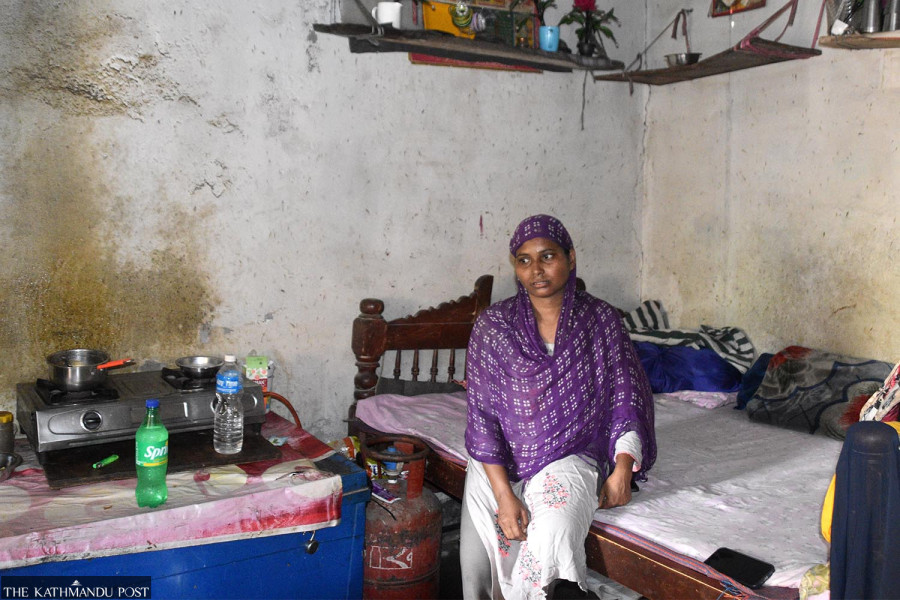
Nepal has no death penalty. Instead, it has life imprisonment until death — a sentence with no release date.An investigation by Kantipur shows who receives this sentence, how it is applied, and what justice means for victims, prisoners, and the state. Apsana, elder sister of Mohammad Abbas Ansari, who is serving imprisonment until death at Morang Prison, at her rented home in Baluwahi Tole, Biratnagar-8. She waits in the hope that “some miracle will happen and my brother will be released.” Tufan Neupane/TKP
At dusk on June 17, Mohammad Abbas Ansari stood by the window of his cell at Morang Prison. At the window to his left, another inmate — about his age — was speaking with his mother. From outside the prison wall, she tried to reassure him, “Don’t worry too much. Only 34 days left until you’re released.”
Ansari struggled to hold back his tears.
“I’ve been here for seven years and four months,” he said, wiping his eyes. “So many men I lived with have walked free. Others are counting down the days until they leave. They tell me I’ll never get out.”
On January 30, 2020, the Morang District Court sentenced Ansari, who was 25 at the time, to imprisonment for the remainder of his natural life after convicting him of raping and murdering a 10-year-old girl. It is the harshest punishment under Nepali law. His conviction is currently under appeal before the Supreme Court.
In an interview with Kantipur, Ansari maintained that he was innocent. He had told the court the same during his testimony. But he had confessed the crime to the police. Now he says that confession was extracted through intimidation and physical assault, and insists he committed no crime.
In his statement to police in 2019, Ansari said he had been using drugs and chatting with a friend from his village, Chandu Mahato (also serving the same sentence, along with Ansari), when he saw the girl and sexually assaulted her. Before the court, however, he said he had spent the entire day working as a furniture maker. Asked about the discrepancy, Ansari told Kantipur: “I had taken some pills that evening, but I was at home. The police arrested me the next day after I returned from work.”
The court rejected that claim.
Police submitted a video recording of Ansari’s confession as evidence. After reviewing it, the court found no indication that the statement had been made under coercion. The judgment noted that if Ansari had indeed been threatened or forced into confessing, he could have raised the issue during hearings on the extension of his judicial remand, but he did not. The court also cited police evidence showing that the victim’s clothing was recovered from the location Ansari had identified in his confession. On that basis, it concluded that he was responsible for the crime.
Ansari said the case had destroyed his life and torn his family apart, leaving him unable to find peace day or night. At the same time, he acknowledged the suffering of the victim’s family.
“Their daughter is gone. They must be grieving too,” he said. “Which parents wouldn’t be devastated after losing a child?”
If the Supreme Court upholds the conviction, Ansari will spend the rest of his life in prison.
Nepal does not have the death penalty. Before the democratic constitution of 1990, capital punishment existed for certain political and military offences. Every constitution since then has prohibited laws allowing the state to impose the death penalty. The punishment was abolished on the moral principle that the state should not take the life of one of its citizens.
That debate has resurfaced following the rape and killing of a minor in Bara, with demands growing for harsher punishment, including calls for the death penalty. The government has also moved to review the laws governing punishment for heinous crimes and recommend new legal provisions.
But Nepal already has a punishment that can keep a person behind bars until death. When the new criminal code came into force in August 2018, it introduced a sentence of imprisonment for the remainder of a person’s natural life — a punishment that also ends in death.
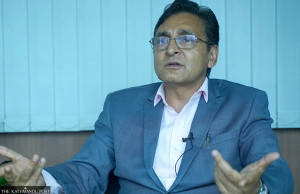
According to Deputy Attorney General Sanjeev Raj Regmi, the new sentence was designed as an alternative to capital punishment, but one that ultimately takes away a prisoner’s entire life — not all at once, but gradually.
“It is effectively equivalent to the death penalty,” Regmi said. “Nepal follows a reformative model of criminal justice. The idea is that prison should rehabilitate people. But if a prisoner knows there is no possibility of release, no matter how much they change, what kind of mentality will that person have while living in prison?”
The introduction of this law came amid intense public anger over a series of horrific crimes, particularly cases involving rape and murder. Former law minister Madhav Paudel, who chaired the Nepal Law Commission when the legislation was drafted, says the decision was shaped by the public reaction following the gruesome murder of Khyati Shrestha.
The 19-year-old from Anamnagar was abducted onJune 5, 2009.After she was killed, parts of her dismembered body were dumped at different locations between Kathmandu and Chitwan. Police later arrested Biren Shrestha of Sohrakhutte, who had allegedly kidnapped her for ransom after suffering heavy gambling losses at casinos. He was later convicted and remains in prison.
The brutality of the killing triggered nationwide demands for the death penalty. At the time, the maximum sentence for murder was 20 years in prison.
“Nepal could not legally reintroduce capital punishment,” Paudel said. “But many felt that a maximum prison sentence of 20 years was far too lenient for crimes of such brutality. That’s why life imprisonment until death was adopted as an alternative.”
“Prisoners with good behaviour could even be released earlier,” Paudel said. “But we concluded that some offenders could continue to pose a threat to society. That is why the law moved toward keeping them imprisoned for the rest of their lives.”
Under the revised law, the standard life sentence was increased from 20 years to 25 years. For six categories of homicide, however, courts can impose imprisonment for the remainder of the offender’s natural life, with no possibility of release. The prison gates open only once — for the inmate’s body after death.
Nepal’s current Criminal Code prescribes this sentence for six categories of murder: killings committed after kidnapping; by poisoning food or drink intended for public consumption; after rape; through cruel torture or exceptionally brutal means; through aircraft hijacking or explosions; and acts of genocide.
A review by Kantipur of judgments issued by all 77 district courts from the law’s implementation in 2018 through the end of 2025 (see methodology) identified at least 107 cases involving 206 defendants charged with offences punishable by imprisonment until death. Courts ultimately imposed the sentence on 79 people.
Ansari is one of them. His case began with the disappearance of a 10-year-old girl in Morang.
On January 26, 2019, the girl, like every evening, left home to watch television at a neighbour’s house before returning to sleep. But the next morning, her father, Ram Prasad Das, woke to find that she had never come home.
Panic spread quickly through the neighbourhood in Baluwahi, a settlement of roughly 1,500 people in Biratnagar Metropolitan City. After searching unsuccessfully for hours, the 47-year-old reported her disappearance to the District Police Office.
While he was there, a relative called the mobile phone of another family member who had accompanied him and asked to speak with him. “Your daughter’s body has been found in the Singhiya river,” the relative said over the phone.
As Ram Prasad listened in disbelief, the grandmother had already reached the riverbank east of their home. She pulled her granddaughter’s naked body from the water with her own hands, cradled it in her arms and covered it with the black shawl she was wearing — as if trying, one last time, to warm the child against the winter cold.
When police arrived, they asked Ram Prasad whether he suspected anyone.
“I don’t know,” he replied in his statement. “Let the state investigate. Whoever is responsible should be punished according to the law.”
It took authorities a year to complete the investigation. A post-mortem conducted at B.P. Koirala Institute of Health Sciences in Dharan and forensic analysis by the Central Police Forensic Science Laboratory concluded that the girl had been gang-raped before being murdered.
On January 30, 2020, the Morang District Court sentenced two of her neighbours — Ansari and Chandu Mahato (now 26) — to imprisonment for the remainder of their natural lives.
Today, Ram Prasad Das says the punishment has not brought him peace. He says he wants something closer to retribution — an eye for an eye.
“I never saw it myself, but my father and grandfather said there used to be hanging,” he said. “If that punishment still existed, I would say hang them publicly, at the centre of a crossroads, so others would see it and never commit such crimes. Then society would be safer. Women and children would be looked at with respect.”
Nepal won’t hang anyone. But unless the Supreme Court overturns his conviction, Ansari will die in prison.
When Ansari spoke about his elder sister during the interview with Kantipur, his expression briefly softened.
“She calls me all the time,” he said. “She visits and brings my favourite food. Whenever I talk to her, I forget all my pain. But she’s the one who’s suffering the most.”
His sister, Apsana, has rented a single room within walking distance of Morang Prison. She lives there with her younger sister and their ageing father, who, according to her, spends most of his days drinking.
Everything happens inside that one room.
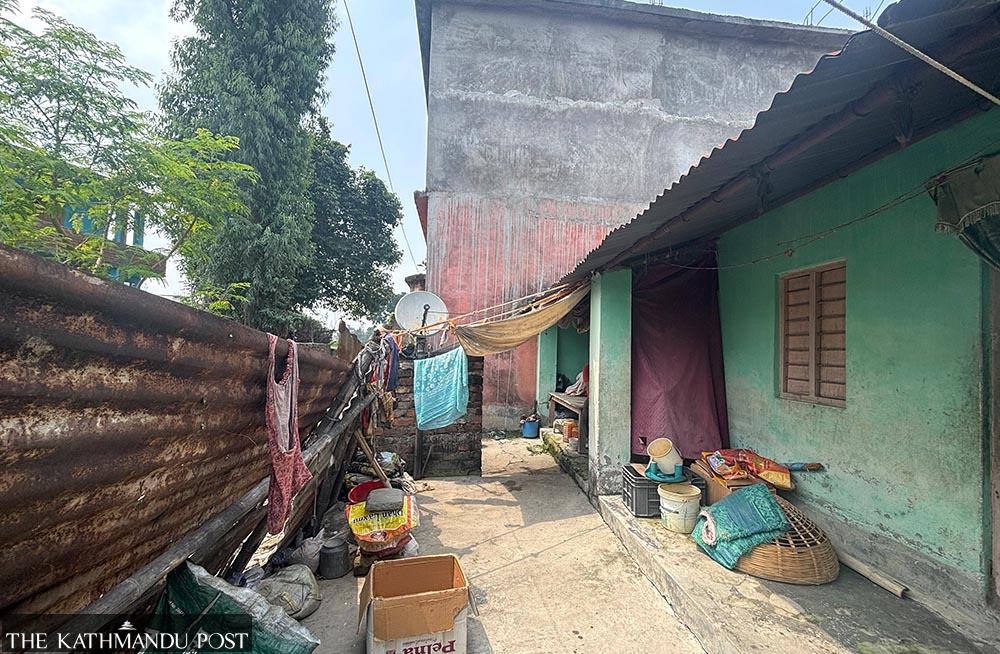
The stove sits in one corner. A bed occupies another. The plaster has peeled away from the walls and floor, leaving dark stains across the room. The one-storey house is roofed with corrugated metal, stifling in summer and leaking cold in winter.
Above the bed hangs a narrow wooden shelf suspended by rope. It is her small display of hope.
Neatly arranged on it are a few glasses and plates, plastic flowers tucked into cups, a framed photograph and a stand filled with colourful bangles.
Apsana sits beneath it, wearing a white kurta embroidered with bright flowers and a purple shawl stitched with white patterns. She is 30, though exhaustion makes her appear older.
Throughout most of the interview, her hands remained tightly clasped in her lap. She rarely looked toward the camera, instead gazing into the distance. But in the cramped room, the farthest her eyes could travel was the opposite wall — a boundary not unlike the prison walls that have enclosed her brother for years.
“I work as a kitchen helper at a Thakali restaurant in town,” she said. “They pay me Rs10,000 a month.”
That salary pays for the rent, food, her younger sister’s tailoring classes after she dropped out of school, and, every month or two, a visit to prison with homemade food and a small gift for her brother.
Their mother died of asthma when Apsana was just 15. “She held everything together,” she recalled, her voice trembling. “After she died, all the responsibility fell on me.”
Her father, she says, withdrew into himself. “He leaves early in the morning, comes back at night, eats a little and goes to bed. He has nothing to do with the household.”
She became the family’s sole provider. After Ansari’s arrest, her younger sister left school in seventh grade. Ansari’s wife returned to her parents’ home with their two children.
“There’s no room for everyone here,” Apsana said. “If we could still live in our old house, we’d all fit together.”
She once had a home, back in Baluwahi, near the river. It flooded almost every monsoon, but the family managed. After Ansari was jailed, neighbours turned on the family.
“People said we should be killed just like that girl — that we should be raped and our bodies thrown into the river,” Apsana said.
“Groups of neighbours came at night and beat us. They attacked us for three or four days. I would leave for work, and my younger sister would be alone at home. They started following her too. We simply couldn’t stay there anymore."
When they fled, there was only one place she wanted to go — somewhere close enough to visit her brother in prison. So she rented the room near the prison.
“He is my only brother,” she said quietly. “I miss him so much. But what can I do?”
It was that desperation that made her vulnerable. Someone inside the prison had told Ansari in 2021 about a lawyer who, for Rs55,000, supposedly could secure his release. Ansari called Apsana. She borrowed money and transferred the amount in two installments to the bank account he was given.
As soon as the money arrived, the lawyer — who had promised to “withdraw the case” and “settle everything” — stopped answering his phone.
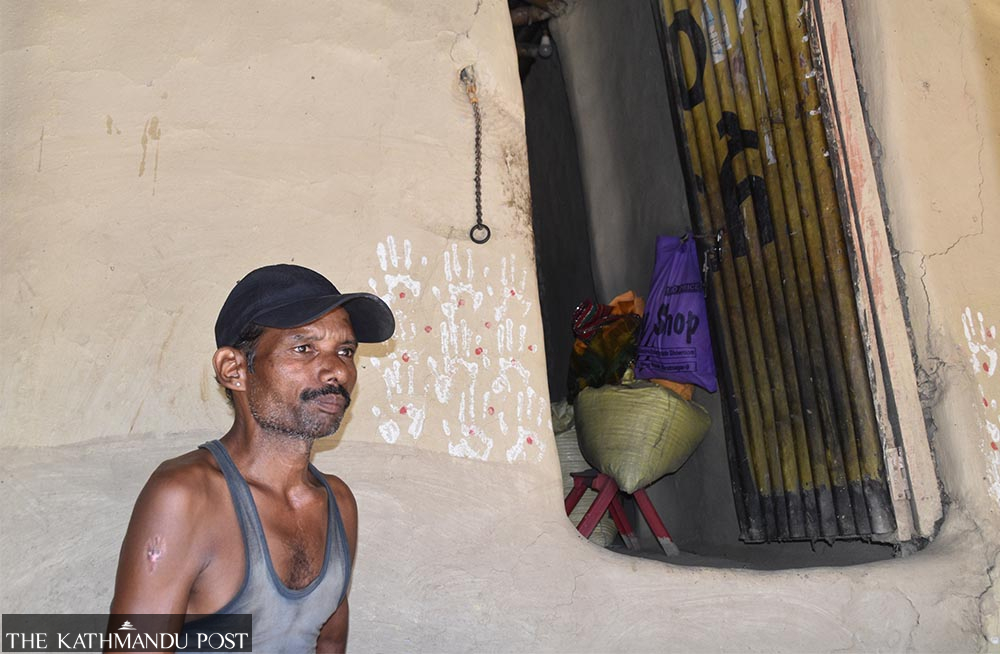
Ram Prasad Das, whose 10-year-old daughter was raped and murdered in 2018. Although the court sentenced those involved to life imprisonment, Das says he has yet to get justice. He wants the perpetrators to be sentenced to death. Tufan Neupane/TKP
Even today, Apsana does not realise that this is not a case that a lawyer, the victim’s family or even the government can simply withdraw. Ansari still calls her from prison to inquire.
“He keeps asking whether I’ll get him released,” she said. “He says if we hire a better lawyer, he’ll get out. But every lawyer we’ve trusted has cheated us. We’re still paying off the old debt. How can we afford another one?”
When Ansari told the court he could not afford a lawyer, it appointed one for him.
Kantipur’s analysis of all 79 people currently serving life imprisonment until death in prisons across Nepal found that 60 percent, like Ansari, were unable to hire their own legal counsel. In other words, six out of every 10 people sentenced to Nepal’s harshest punishment relied on court-appointed lawyers to defend them against the state.
The analysis covered 206 defendants charged with offences punishable by life imprisonment until death. Of them, 135 hired private lawyers. Thirty-one of those defendants — 23 percent — were ultimately sentenced to life imprisonment until death.
By contrast, 47 of the 55 defendants represented by court-appointed lawyers were convicted, a rate of 85 percent. Fifteen of the total 206 accused are at large, so no question of legal representation has yet arisen. In one additional case, although the defendant had retained private counsel, the court delivered its verdict in the lawyer's absence.
That defendant was Rajkumar Mahato Koiri.
Koiri and Nitesh Kumar Rajak were charged with the brutal murder of Laxminiya Devi Kapar in Akrahiya Forest near Karjanha Municipality in Siraha on September 13, 2022. On September 1, 2024, the court sentenced both men to imprisonment for the remainder of their natural lives.
Both had hired private lawyers. But when Koiri received Nepal’s harshest sentence, no lawyer was present to defend him.
According to the judgment, Koiri’s counsel had repeatedly sought adjournments. On the day the verdict was delivered, the court recorded that it repeatedly called for the defence lawyer, but no one appeared. Koiri was therefore sentenced to life imprisonment until death without legal representation in the courtroom.
The data reviewed by Kantipur show that defendants who rely on court-appointed lawyers are sentenced to life imprisonment until death at a higher rate than those who hire private counsel.
Court-appointed lawyers receive only a modest fee — typically just a few thousand rupees even for serious cases such as homicide — and often handle numerous cases of different kinds at the same time.
Although Nepal’s Criminal Code authorises life imprisonment until death for six categories of offences, Kantipur’s review found that prosecutors have so far pursued the sentence in only three: murder following rape, murder committed with exceptional brutality or cruelty, and murder following kidnapping.
The data show that the punishment is imposed most frequently in rape-murder and exceptionally brutal murder cases. In both categories, courts sentenced 63 percent of convicted defendants to life imprisonment until death. Put differently, roughly six out of every 10 defendants convicted of those offences received the sentence.
The picture is markedly different in kidnapping-murder cases. Although more defendants were prosecuted for murder following kidnapping than for any other qualifying offence — 104 of the 206 defendants identified in Kantipur’s analysis — only about four percent ultimately received life imprisonment until death.
Since the sentence’s introduction, its use has grown, though not in a straight line: courts imposed it on two people in 2018, four in 2019, one in 2020, and larger numbers in most years since, reaching 18 in 2022 and 16 in 2025 — the two highest annual totals on record.
Among the 79 prisoners currently serving life imprisonment until death, only one is a woman: Kalpana Mudbhari of Chitwan.
The Kathmandu District Court sentenced her to life imprisonment until death after finding that she had murdered Krishna Bahadur Bohara of Dang in 2020 with exceptional cruelty following a dispute arising from their relationship.
Kantipur’s analysis also found that about one-quarter of all defendants — 53 of the 206 — were convicted of some offence but received a lesser sentence.
In many cases, judges convicted defendants of only part of the prosecution’s allegations. For example, a defendant charged with rape followed by murder might be convicted of rape but the death reclassified as abetment of suicide, or convicted of murder but acquitted of rape. In kidnapping-murder cases, courts sometimes found murder proved but not kidnapping. In others, judges concluded that although a killing had occurred, it did not meet the legal threshold of “exceptional brutality” required to impose life imprisonment until death.
Kantipur also identified a small number of cases in which defendants were convicted of offences that legally qualified for life imprisonment until death — such as rape followed by murder or kidnapping followed by murder — but judges instead imposed the ordinary 25-year life sentence without explaining their reasons in the written judgment.
Those patterns raise a broader question: Is the harshest punishment the Nepali state can impose genuinely just, even for the country’s most serious crimes?
That question is being asked not only by legal scholars but also from within the justice system itself. Two studies commissioned by the Office of the Attorney General have concluded that the law should be reconsidered. One describes the punishment as even harsher than the death penalty. The other recommends replacing it.
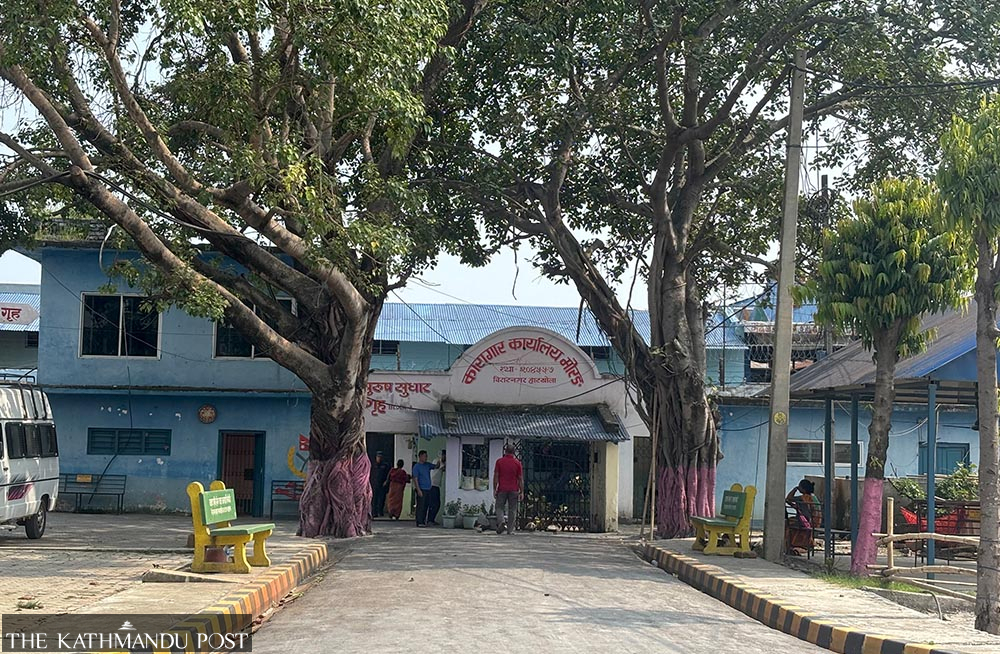
Morang Prison, where Mohammad Abbas Ansari and Chandu Mahato have been serving their sentences for the past eight years after being convicted of the rape and murder of a minor. Tufan Neupane/TKP
A 2024 reportby the Office of the Attorney General’s Criminal Justice Administration Reform Study and Recommendation Task Force warns that prisoners serving life imprisonment until death may lose all hope, creating risks of self-harm and posing challenges for prison management.
Instead, it recommends allowing courts to consider remission after an offender has served 30 years in prison — five years longer than the ordinary life sentence.
“After a prisoner has served 30 years, the district court should be able to consider reducing the remaining sentence after assessing the prisoner’s conduct, mental condition, remorse and the views of the victim’s family, upon the recommendation of a parole officer,” the report states.
It describes life imprisonment until death as “more severe, more terrifying and more inhumane than capital punishment.”
The report argues that the sentence extinguishes all hope, conflicts with international human rights principles, exceeds even the sentencing framework of the International Criminal Court — which generally limits prison terms to 30 years — and creates additional challenges for maintaining order inside prisons.
It also warns that ageing prisoners may eventually become physically incapable of caring for themselves, while having no realistic prospect of release or rehabilitation could increase the risk of further violence inside prison. The report recommends amending the law to replace life imprisonment until death with a maximum prison term of 30 years.
Deputy Attorney General Regmi believes the current law also contradicts the broader philosophy of Nepal’s criminal justice system.
“Our entire sentencing framework is based on rehabilitation,” he said. “The idea is to keep offenders in prison, help them reform and eventually reintegrate them into society. Policies such as open prisons, probation and parole all stem from that philosophy.”
Yet the debate does not end there.
Supporters of imprisonment until death argue that without such a punishment, or without enforcing sentences already handed down, perpetrators of the most horrific crimes would escape adequate punishment and victims’ families would be denied a sense of justice. Critics of the practice, however, say keeping people imprisoned until they die is itself cruel and unjust. They argue that a system built on permanent confinement should not continue.
Former Constituent Assembly member and CPN-UML leader Binda Pandey argues that victims’ rights must remain central to the discussion.
“When we talk about human rights, we cannot forget the families of victims,” she said at a programme organised by the Supreme Court Bar Association and the Women Lawyers’ Committee in Kathmandu on June 26. “Isn’t justice for them also a human right?”
Pandey said she had previously supported making life imprisonment until death mandatory for those convicted of raping children under 10 and elderly or disabled women, and believes Parliament should revisit the issue if necessary.
The question of how far the state should go in punishing the most serious crimes is not unique to Nepal. In a landmark 2013 case in the United Kingdom, the European Court of Human Rights ruled that a life sentence with no prospect of review or release amounted to “inhuman and degrading treatment.”
“A prisoner must have both a prospect of release and a possibility of review,” the court said. “To detain a person for life without any realistic chance of regaining liberty is incompatible with human dignity.”
The court held that, after many years in prison, there should be a mechanism to assess whether a prisoner has changed and whether continued detention remains justified.
The Rome Statute, which established the International Criminal Court, also limits prison sentences to a maximum of 30 years even for crimes such as genocide and crimes against humanity (Article 77). In the exceptional cases where life imprisonment is imposed, the sentence must be reviewed after 25 years.
Around the world, countries generally take one of three approaches to the harshest criminal punishments.
Some countries — including India, China, Japan and the United States — retain the death penalty. In those jurisdictions, life imprisonment exists alongside capital punishment and serves as an alternative rather than the most severe sentence available.
Others have abolished the death penalty but allow life sentences to be reviewed, creating the possibility of release. Germany, the United Kingdom and most European countries follow this model. In a landmark 1977 ruling, Germany’s Federal Constitutional Court held that “life imprisonment without a realistic prospect of release is incompatible with human dignity.”
Nepal belongs to a far less common third category. It has abolished the death penalty, yet the alternative it adopted — imprisonment until death — has no fixed endpoint and provides no legal mechanism to reconsider release.
In Nepal, every sentence of imprisonment until death is automatically reviewed by the High Court and then the Supreme Court, even if the convicted person does not appeal. But that review examines only whether the conviction and sentence are legally sound. Once the verdict becomes final, Nepal’s law provides no mechanism to reconsider continued imprisonment or the possibility of release, regardless of how many years have passed.
Deputy Attorney General Regmi argues that justice for victims cannot be achieved simply by keeping offenders behind bars for longer.
“We should involve victims in the justice process as much as possible,” he said. “We need to listen to what would help them feel that justice has been done and keep them informed at every stage of the proceedings. That is also the principle underlying Nepal’s victim protection law.”
The government, however, is moving in the opposite direction by expanding the scope of offences punishable by life imprisonment until death. A draft amendment to the National Criminal Code, published by the Ministry of Law on June 22 for public consultation, proposes adding one more category to the existing six: murder committed in the course of a terrorist act.
The proposed amendment also seeks to resolve an ambiguity in how the sentence should apply to juvenile offenders. Under Nepali law, children between 16 and 18 years of age receive only two-thirds of the sentence prescribed for adults. For example, because an ordinary life sentence is fixed at 25 years, juveniles in that age group receive a maximum sentence of 16 years and eight months.
The law, however, does not specify how that reduction should be calculated for life imprisonment until death. Of the 79 individuals currently serving life imprisonment until death, 10 are minors.
A review of court judgments shows that judges have so far treated the sentence as equivalent to 25 years solely for the purpose of calculating statutory sentence reductions. The government’s proposed amendment would instead deem the sentence to be 30 years for the limited purpose of such calculations.
Although the law requires prisoners serving life imprisonment until death to be housed separately from other inmates, that rarely happens in practice. According to Chomendra Neupane, spokesperson for the Department of Prison Management, Nepal’s prisons simply do not have enough space.
“Prisons also house people convicted of relatively minor offences, whereas those serving life imprisonment until death have committed the most serious crimes,” he said. “The law says they should be separated because they should not be freely mixing with other prisoners.”
The policy also serves another purpose, he added.
“Watching prisoners with short sentences complete their terms and leave can create a deep sense of despair among those who know they will never be released,” said Neupane. “That is one reason the law requires separate accommodation. But we simply don’t have the infrastructure to do that.”
Neupane believes the issue extends beyond prison facilities.
The law itself, he says, deserves another look.
“We need a broader debate about whether this kind of punishment is actually necessary,” he said. “We should consider its psychological impact on prisoners, the financial burden on the state, the emotional consequences for their families and whether people who can never return to society should be imprisoned in this way for the rest of their lives.”
According to him, when this law was introduced, those questions were never thoroughly studied. “Any future reform should be based on that kind of evidence.”
At Morang Prison, where Ansari is being held, prison administrator Rajan Ghimire says seven inmates are currently serving life imprisonment until death.
He describes them as men weighed down by hopelessness.
“They live with the constant feeling that they will never walk out of prison again,” he said. “We describe prisons as correctional institutions. The whole purpose is to rehabilitate offenders and eventually reintegrate them into society. But for prisoners serving life until death, that possibility no longer exists. They must spend the rest of their lives here, until they die.”
The people serving these sentences are also strikingly young.
Of the 79 sentenced to life imprisonment until death, court judgments disclosed the age of 62. Nearly half — 30 of them — were 25 or younger when they were sentenced. Seven were between 18 and 20 years old, while 10 were legally juveniles.
The youngest was 13; the oldest 63.
After her brother was jailed, Apsana was forced to relocate after enduring repeated threats and physical assaults. She has rented a house in Baluwahi Tole, near Morang Prison, to make it easier to visit her brother. Tufan Neupane/TKP
Under Nepali law, offenders aged 16 to 18 received two-thirds of the adult sentence. As a result, juveniles in that age group sentenced to life imprisonment until death receive a prison term of 16 years and eight months. Children below 14 cannot legally be imprisoned for more than six months. One 13-year-old boy, despite being convicted on an offence punishable by life imprisonment until death, was therefore sentenced to only six months in custody.
Almost all of the defendants under 20 had been convicted in rape-murder cases.
Five of the seven offenders aged 18 to 20, and nine of the 10 juveniles, were prosecuted in rape-murder cases. In a single case in Parsa, three boys aged 13, 16 and 17 were sentenced to such terms for rape-murder. But unlike juveniles, adult prisoners who receive such sentences have no certainty about how long they will actually remain incarcerated. It is as long as the rest of their lives — a stretch of time whose endpoint they do not know when they will reach.
Ansari’s wife now lives with their two children at her parents’ home in Inaruwa. His sister, Apsana, still waits for what she knows is unlikely: a miracle.
She committed no crime. Her name appears neither in the indictment nor in the judgment. Yet the verdict reshaped her life as though the sentence had been imposed on her as well.
“The children don’t understand,” she said. “Whenever they come here, they ask where their father is. My sister-in-law is still waiting for him. And somewhere inside me, I still hold on to a small hope that one day he might come home.”
The Singhiya river still flows past Ram Prasad’s home. It was there that he said his final goodbye to his youngest daughter.
Unlike Apsana, he has no room left for hope. His daughter will never return.
To support his family, Ram Prasad works as a labourer and drives an auto-rickshaw during the day. But when night falls and he returns to his small house, the real ordeal begins. In the darkness, he still searches for the daughter who used to spend her evenings playing with the neighbourhood children.
“The moment I lie down at night, I think of her,” he said. “Then the tears come. I cry uncontrollably. My heart breaks.”
His daughter was a third-grade student at Narayan School in her village. She was never still. Her neighbours had nicknamed her “Bijuli”— lightning.
“She was a good student,” Das recalled. “She was always singing, dancing, praying and playing. Everyone said she was like lightning. If you asked her to do something, she’d run off immediately and finish it in no time.”
On the evening of January 26, 2019, Bijuli went out forever.
Ram Prasad says he had always treated Ansari and Mahato like his own nephews. “They were neighbourhood boys. I always cared for them.”
Since the verdict, he has not spoken to Ansari or Mahato.
Asked what he would say if he ever met them, he said he’d want to understand why they did it. “I’d ask them: What did I ever do to you? I watched you grow up. What wrong did I ever do?” he said. “Didn’t I help you whenever I could? Why did you do this?”
*******
Methodology: How we collected and analysed the data
There is no centralised record in Nepal of people serving imprisonment until death.
The Department of Prison Management maintains records of all prisoners, but information about the nature of their sentences — whether a fixed term or imprisonment until death — is not recorded reliably. In the data obtained by Kantipur from the department, we found that some defendants convicted of offences such as theft and corruption had been mistakenly categorised in the database as subject to imprisonment until death. The data therefore could not be considered a sufficient or reliable source for this investigation.
We therefore reviewed the daily cause lists of all district courts in Nepal.
From the date the Criminal Code came into force — August 17, 2018 — to April 13, 2026 (a period of 92 months), the daily cause lists of all 77 district courts, covering more than 212,000 court-days in total, were automatically collected (scraped).
Each cause list identifies the subject matter of every case. From these lists, we selected only cases involving offences to which Section 41 of the Criminal Code applies.
Although the law provides for imprisonment until death for six categories of offences, our review found that in practice prosecutors have sought it only in three categories during the past seven and a half years: murder following rape; murder following kidnapping or unlawful confinement; and murder committed through cruel torture or in a brutal manner.
We then collected judgments issued in these three categories during the study period.
Cases filed during this period but decided after April 13, 2026, as well as cases where a full written judgment was not yet available, were excluded from our analysis.
Therefore, the 107 cases involving 206 defendants identified in this investigation — and the 79 defendants among them who received imprisonment until death — do not represent the total number of such cases in Nepal. They should be understood as the minimum number identified through our methodology.
To test the reliability of our automated data collection, we cross-checked a limited number of cases obtained from the Department of Prison Management. Since all of those cases were found through our review of court cause lists, we believe the analysis captures the vast majority of relevant cases.
However, cases may have been missed if courts incorrectly categorised the subject matter of a case in their cause lists.
We also excluded cases involving crimes committed before the Criminal Code introduced imprisonment until death, even if those cases were registered after the Code came into force. Since the law does not apply retroactively, such cases remain governed by the previous legal framework, under which the maximum sentence was 20 years.
During the same period, we also found some cases involving offences that could legally qualify for imprisonment until death where government prosecutors did not seek that punishment.
For example, in some rape-murder and kidnapping-murder cases, prosecutors sought punishment separately under the laws governing rape or kidnapping and murder, rather than seeking the combined offence that attracts imprisonment until death.
Although such cases technically fell within the scope of the offences covered by our research, they were excluded because prosecutors had not sought the relevant sentence.
In cases involving multiple defendants, we included only those defendants against whom prosecutors sought imprisonment until death.
Defendants against whom such a sentence was not sought were excluded. For example, in some cases, certain defendants were charged only as accomplices, for whom imprisonment until death was not applicable. In other cases — such as kidnapping-murder cases — some defendants may have been accused only of kidnapping while others only of murder. Since those charges do not independently attract imprisonment until death, those defendants were also excluded from the analysis.
All of these figures are based on judgments of the district courts. Whether or not an appeal is filed against a district court judgment, higher courts and the Supreme Court subsequently review the judgment through the judicial review process. All figures included in this story are limited to district court judgments.




 26.87°C Kathmandu