Nepal pitches ‘Sagarmatha to Sea’ alliance ahead of COP31
Foreign Minister Shisir Khanal calls for a coalition of mountain and island states, stronger climate finance and a fully operational Loss and Damage Fund. Photo: Courtesy of Ministry of Foreign Affairs
Nepal has proposed a new international climate partnership linking the Himalayas with vulnerable Pacific island states, seeking to build a common front among mountain and ocean countries ahead of the COP31 climate summit in Turkey next month.
Foreign Minister Shisir Khanal unveiled the idea of a “Sagarmatha to the Sea” partnership while addressing a Pre-COP Leaders’ Event in Fiji on Monday. He argued that melting glaciers in the Himalayas and rising sea levels in the Pacific are different manifestations of the same climate crisis.
“From Sagarmatha to the sea, we are facing the same crisis,” Khanal said.
The proposal comes as Nepal seeks to put the climate vulnerability of the Himalayas higher on the international negotiating agenda and secure greater access to financing for adaptation and loss and damage.
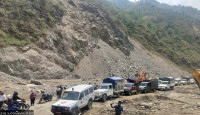
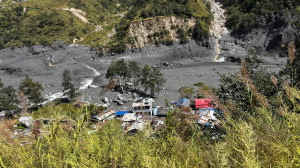
Khanal highlighted the devastating Bhotekoshi floods in Nepal, which he said killed more than 1,400 people, left thousands missing and destroyed infrastructure and communities.
The disaster, he said, underscored the growing risks faced by mountain communities as temperatures rise and the Himalayan cryosphere becomes increasingly unstable.
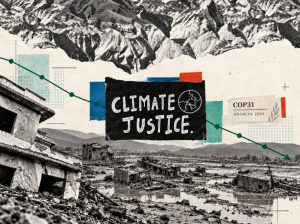
Nepal, Fiji and other climate-vulnerable countries have contributed little to global greenhouse gas emissions while bearing some of the most severe consequences of climate change, Khanal said, calling this “the very definition of climate injustice”.
Ahead of COP31, Nepal called for adherence to the 1.5-degree Celsius temperature limit, predictable and grant-based adaptation finance, and a fully operational and adequately funded Loss and Damage Fund.
Khanal also stressed that climate finance should not add to the debt burden of vulnerable developing countries. He called for simpler procedures and fewer bureaucratic barriers to accessing international climate funds.
The proposed mountain-island partnership is intended to give countries facing climate threats at opposite ends of the planet a stronger collective voice in global climate negotiations.
“Let the Pacific speak for the Himalayas, as the Himalayas speak for the Pacific,” Khanal said.
He drew parallels between Fiji’s tradition of Solesolevaki, which emphasises collective action, and Nepal’s tradition of Shramadāna, saying both reflected the principle that communities can confront common challenges through solidarity and shared responsibility.
The proposal is part of Nepal’s broader effort to make the rapidly changing Himalayan environment a central issue in international climate diplomacy. Nepal has increasingly sought to link glacier melt, glacial lake outburst floods, landslides and other mountain hazards with the wider global climate agenda.
Khanal’s Fiji visit comes ahead of COP31, which Nepal sees as an opportunity to push for stronger international commitments on adaptation, loss and damage, and climate finance for highly vulnerable developing countries.
Anil Giri is a Chief Sub Editor covering diplomacy, international relations and national politics for The Kathmandu Post. Giri has been working as a journalist for more than two decades, contributing to numerous national and international media outlets.




 14.82°C Kathmandu