For women drug users, a cycle of addiction, abandonment and relapse
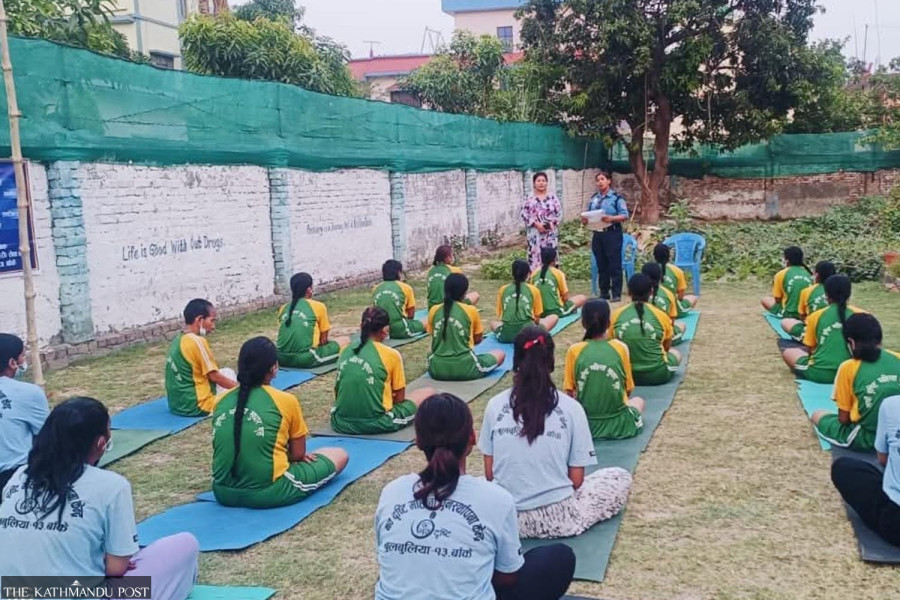
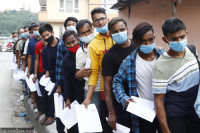
With little support after treatment, they face family rejection, economic insecurity and a risk of sexual exploitation. Women take part in a motivational class at a rehabilitation centre in Banke, recently. Rupa Gahatraj/TKP
Meena was living in a rented room in Nepalgunj, a submetropolis in Banke district, when police arrested her in possession of illicit substances. Then a higher-secondary science student, she was using hard drugs. The police handed her over to her family, who subsequently placed her in a rehabilitation facility. Two and a half years later, Meena, now 20, is still there, anxious about what awaits her outside.
“I got trapped in the swamp of addiction to the extent that I was ready to do anything just to get a fix,” Meena says. “What I endured during that time is something I do not even wish to recall now.” The Post is using pseudonyms for the drug users interviewed for this story to protect their privacy.
Meena has now undergone a profound transformation. She now counsels young women and teenage girls who arrive at the facility and assists in ‘rescue operations’. She, however, doesn’t know what lies in store for her once she steps out of the facility.
While drug addiction in Nepal is frequently discussed in general or male-centric terms, female users face a uniquely punishing cycle defined by intense social stigma, family abandonment, and a severe lack of state-run rehabilitation and reintegration infrastructure. Private facilities shoulder much of the burden without adequate post-rehab support systems or employment pathways. As a result, vulnerable young women are left with an alarmingly high risk of relapse and sexual exploitation—underscoring a critical systemic failure across local and provincial governments.
Soniya, 17, for instance, has been admitted to a rehabilitation centre three separate times. She is from Rukum, and used to live in Kohalpur with her mother and elder brother. After her father married to a second wife, the family breakdown and deprivation left her feeling utterly despondent. By grade 8, she had taken up smoking and drinking. Not long after, she became addicted to hard drugs.
“When I am inside the centre, I am firmly determined to change myself,” Soniya says. “But once I leave, I plunge back into addiction.”
After spending 10 months in a rehab during her second stay, her family enrolled her in a boarding school hostel. Soon afterwards, she ran away from the facility.
Recently, police rescued her from a Nepalgunj-based hotel and brought her back to the rehabilitation centre. Though she is determined to reform completely this time, she lacks family support. Her mother does not even come to visit her, and her family has failed to pay the monthly fees required for her stay at the centre.
“To buy drugs, I endured so much abuse,” Soniya says. “I worked in hotels, and did things that should never be done.”
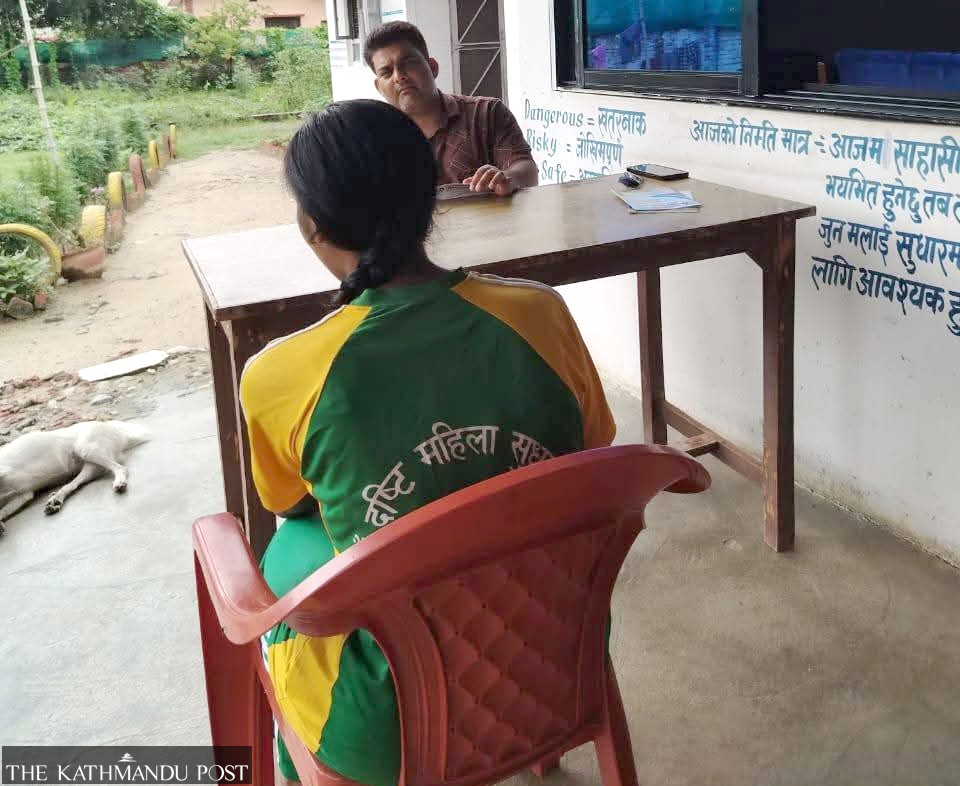
The troubles of women trapped in drug addiction extend far beyond treatment and rehabilitation. Rupa Gahatraj/TKP
The report ‘Hard Drug Users in Nepal 2019’ puts the number of drug users in the country at 130,425, with an annual growth rate of 5.06 percent. A 2022 report by the Ministry of Home Affairs found that Lumbini Province alone accounted for 25,930 drug users, including 24,912 men and 1,018 women. The province thus accounted for 19.9 percent of the country’s total drug users, the second-highest share after Bagmati Province.
Districts bordering India—particularly Banke, Rupandehi, and Kapilvastu—are the most affected. Rashi Rawat, operator of the Naya Dristi Women’s Rehabilitation Centre, says social stigma and lack of awareness keep the official number of female drug users low in public records, stressing that the real situation is far more alarming.
“The number of women drug users is rising invisibly,” Rawat says. She notes that female drug users face far greater social, economic, and mental challenges than men, alongside a heightened risk of sexual violence.
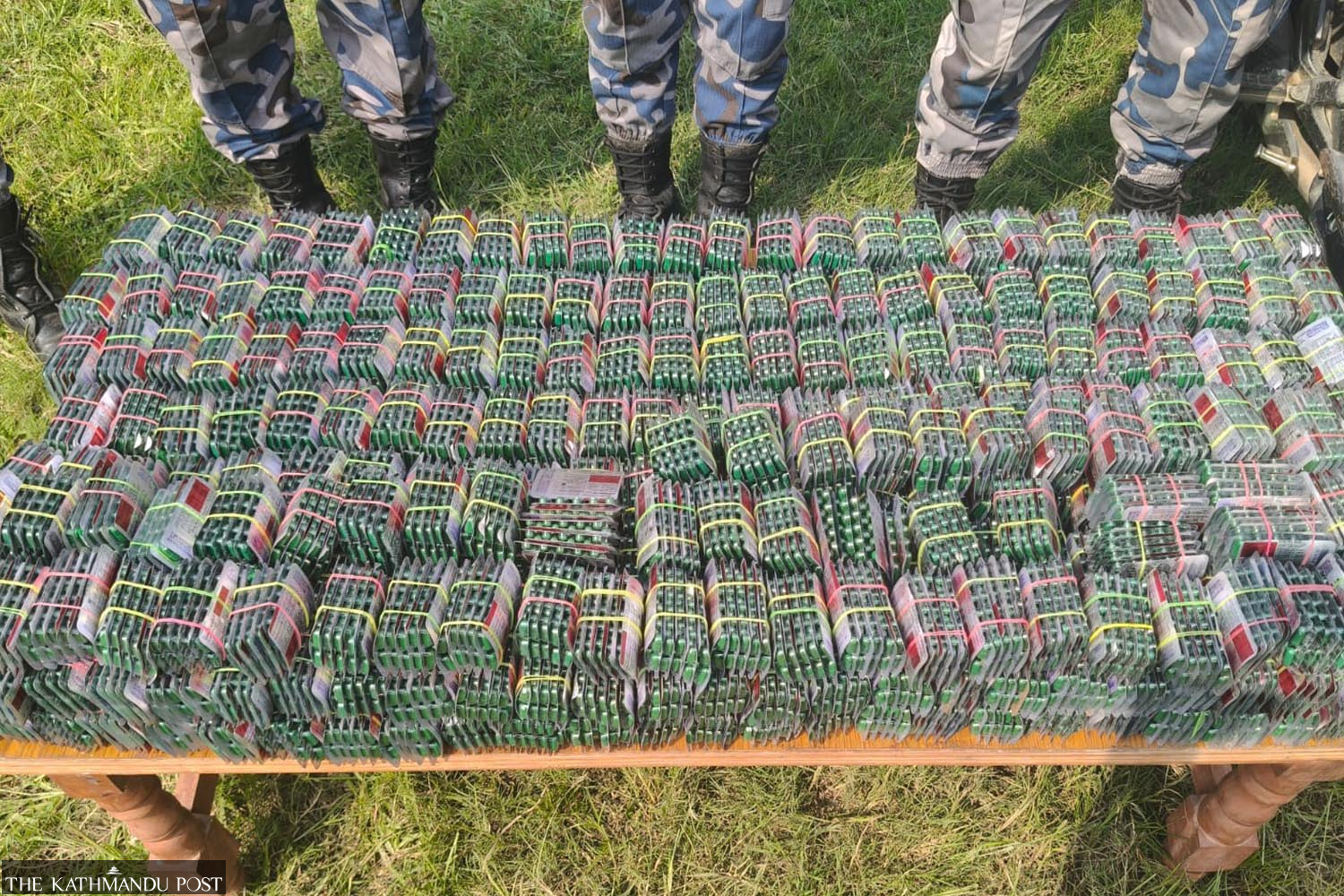
In recent years, drug-related crimes have also surged in Lumbini Province. Provincial police registered 2,481 drug-related cases between the fiscal year 2022-23 and mid-June 2025-26. A total of 8,176 individuals, including both users and peddlers, were implicated in these cases.
In the fiscal year 2022-23, 776 individuals were involved in drug offenses, comprising 310 users and 466 smugglers. Among the users, 17 were women, while 34 women were smugglers. In 2023-24, the number rose to 898 individuals, consisting of 459 users and 439 smugglers, including 21 female users and 29 female smugglers.
In 2024-25, a total of 1,167 individuals were involved—603 users and 564 smugglers—with 38 female users and 43 female smugglers. By mid-June of the fiscal year 2025-26, 1,247 individuals were implicated, comprising 612 users and 635 smugglers, including 20 female users and 36 female smugglers.
The statistics reveal that the numbers of female users and smugglers have both increased year after year. Rights activist Prakash Upadhyay points out that fear of family rejection and social stigma keep many women from seeking treatment. “The real numbers could be significantly higher than official records,” he says.
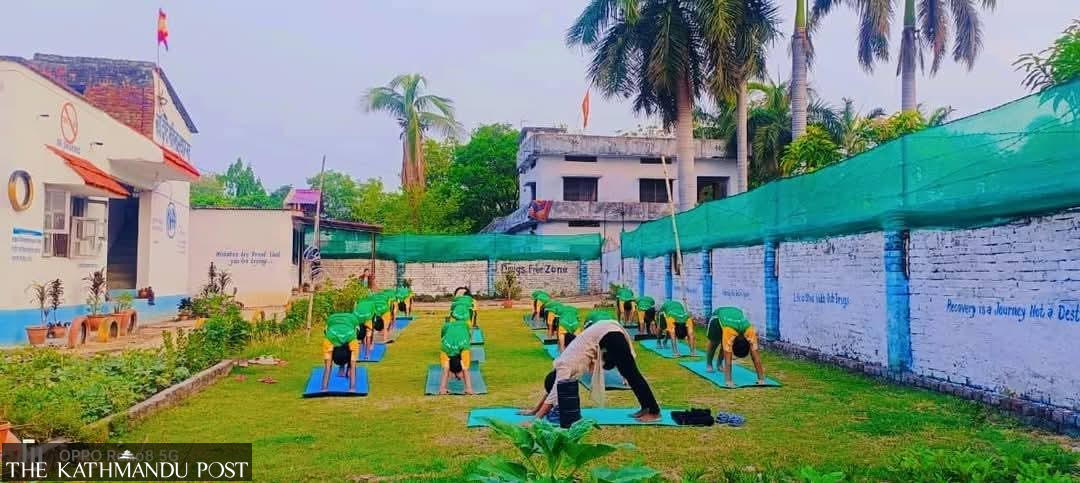
While drug addiction in Nepal is frequently discussed in general or male-centric terms, female users face a uniquely punishing cycle defined by intense social stigma, family abandonment, and a severe lack of state-run rehabilitation and reintegration infrastructure. Rupa Gahatraj/TKP
The troubles of women trapped in drug addiction extend far beyond treatment and rehabilitation. Many end up in prostitution, driven by financial deprivation, family abandonment, social insecurity, and the threat of violence, officials and rehab centre operators say.
Abhiraj Chhetri, operator of Sahara House Rehabilitation Centre, says that a substantial proportion of women working in massage centres, hotels, casinos, and dohori sanjh bars tend to be drug users.
“When the police raid, they often find young women in an inebriated state,” Chhetri says. But since police stations lack holding spaces, they often leave them there. “If we attempt a rescue, there is no trace of their families,” Chhetri adds. “Without financial support, private centres cannot host them.”
Recovery and rehabilitation is way harder for women drug users than men, Rawat says. “While addicted men often receive family support, women are abandoned by their families at the very outset for supposedly ruining the family honour,” she says. “Once thrown out of their homes, they are forced into relapse and ultimately compelled to choose high-risk pathways like sex work.”
Indu Rawal, who works in drug prevention, agrees that financial constraint pushes female drug users into commercial sex work. She explains that women often start using drugs due to peer pressure, curiosity, or stress, while some fall into the drug trap while trying to lose weight or improve their physical appearance.
Banke District Police Chief Angur GC confirms the severity of the crisis. “A majority of those involved in commercial sex work are drug users,” he says. “After rescuing them, we lack both accommodation spaces and budget allocations. We have no choice but to trace their relatives and hand them over.”
While long-term male users tend to drift into drug trafficking, long-term female users overwhelmingly end up trapped in commercial sex work, Chhetri says.
Under the federal structure, drug control policies and laws assign clear responsibilities to provincial and local governments. The National Drug Control Policy 2006 and Strategy 2009 frame drug control as a multi-dimensional issue. Rupa Gahatraj/TKP
Under the federal structure, drug control policies and laws assign clear responsibilities to provincial and local governments. The National Drug Control Policy 2006 and Strategy 2009 frame drug control as a multi-dimensional issue. The government has also formulated the Drug Control and Prevention Guidelines 2019 for local units. However, the situation in Banke shows that while federalism decentralised responsibilities to local governments, the necessary infrastructure and resource allocations have failed to follow.
Banke comprises eight local units. Yet none have set aside dedicated budgets, developed rescue procedures, or established post-rehabilitation employment schemes for female drug users.
Aasha Kumari Shahi of the Women, Children, and Senior Citizens Section at Nepalgunj Sub-Metropolitan City admits that local efforts do not go beyond basic public awareness campaigns. “We do not have procedural guidelines for rescues,” Shahi says. “Although this is necessary, no decisions have been taken so far.”
Rights activist Prakash Upadhyay says that law gives local units responsibility for prevention, treatment facilitation, rehabilitation, reintegration, and awareness. “We urgently need creative interventions, sports programmes, and reintegration drives to save users from addiction,” he says.
Beyond local governments, provincial structures also lack dedicated infrastructure and targeted programmes for treating and rehabilitating female drug users.
Simran Rajbhandari, central vice-president of Recovering Nepal Women, notes that there are eight female rehabilitation centres in Lumbini Province, all operated by private entities or non-governmental organisations on a fee-paying basis. Nepalgunj houses four such centres, Butwal has three, and Dang has one. Each facility has a capacity for at least 25 individuals. Around 800 women are admitted annually across these centres. Roughly 500 return home after treatment, while approximately 300 end up readmitted.
Harikala Saru Magar, under secretary at the Lumbini Ministry of Social Development, acknowledges that while the ministry runs youth programmes, it lacks female-specific initiatives. “This is an extremely sensitive issue, but no concrete steps have been taken to establish state-run female rehab centres yet,” she says.
In the provincial budgets for fiscal years 2024-25 and 2025-26, no separate funding was allocated for female treatment and rehabilitation under drug control.
Kamala Gyawali, women development inspector at the ministry, notes that interventions are mostly limited to school-level programmes.
Because all three levels of government have failed to provide adequate infrastructure and funding, private facilities and NGOs carry the primary burden of treatment and rehabilitation. However, there remains no effective provincial or local follow-up mechanism for girls and young women once they leave rehab facilities.
Child rights activist Sahil Ansari points out that local governments do not even assist with treatment costs, let alone help recovering addicts return to school or secure employment. “Who looks after them once they leave rehab?” he says. “Local governments do not even know where these citizens are in their wards. This neglect pushes young women and girls straight back into danger.”
Banke Police Chief GC says that the open border with India makes drugs easily accessible. While access continues to expand, the state system for pulling victims out of addiction remains woefully inadequate.
Dr Tanveer Ahmad Khan, a consultant psychiatrist and neurologist, stresses that overcoming drug addiction is not an instantaneous process. Prolonged drug use severely impairs an individual’s cognitive processing, perception, and emotional balance. “When trapped in addiction, the substance controls the individual rather than the individual controlling the substance,” Khan explains. “Once a person loses the capacity to make rational choices regarding substance use, addiction has taken hold. Escaping it requires equal support from the individual, family, and stakeholders.”
After all, the stories of Meena and Soniya serve as clear evidence that rehabilitation centres alone cannot break the cycle of addiction. Meena continues her recovery inside the centre, preparing for a new life, while Soniya remains determined to return home. Yet, a crucial question lingers: once they step outside the centre’s gates, who will be there to support them?
(This report is prepared in collaboration with the Center for Investigative Journalism-Nepal.)




 25.92°C Kathmandu