Full or constitutional? Supreme Court split over bench for asset probe case
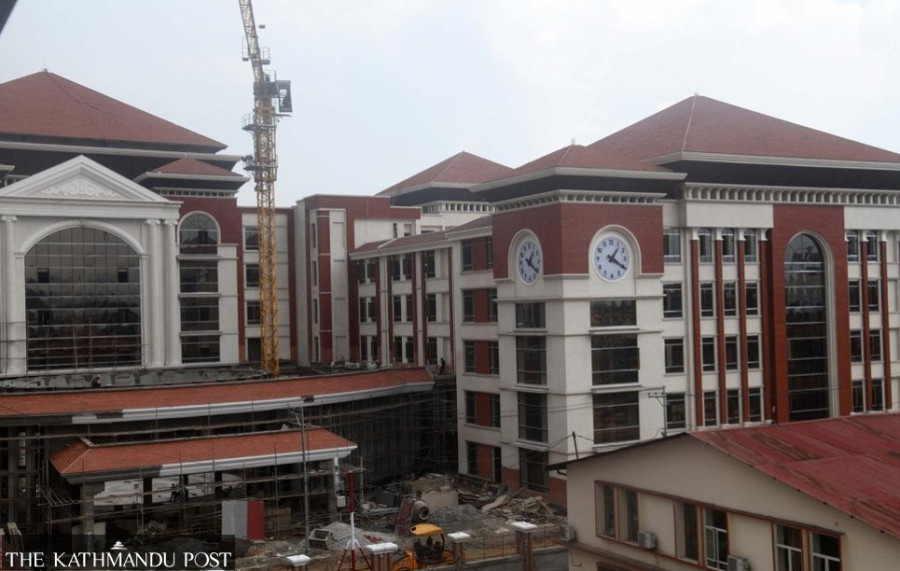
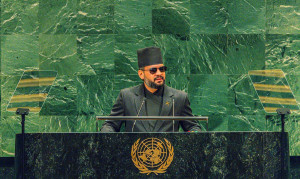
Nepal Bar Association objects to moving the case from a three-justice full bench to the constitutional bench, raising questions over judicial procedure and bench selection.Post file photo
Nepal’s Supreme Court is facing a dispute over which bench should hear petitions challenging a government commission tasked with investigating the assets of politicians and senior officials.
A two-justice bench had ordered that the case be heard by a three-justice full bench. But the Supreme Court administration has recommended sending it to the constitutional bench, triggering objections from the Nepal Bar Association and lawyers involved in the case.
The dispute has left the case in limbo even as an interim order has halted the commission’s work.
On July 10, justices Tek Prasad Dhungana and Shreekanta Poudel ordered the commission to suspend investigations into submitted asset declarations and barred it from recommending legal action against anyone. They also said no one should be compelled to submit an asset declaration until the case was resolved.
The justices concluded that the commission’s formation and mandate raised serious and complex constitutional and legal questions and ordered that the case be decided by a full bench. They also ordered that senior lawyers be appointed as amici curiae to assist the court.
The Nepal Bar Association has nominated former attorney general and senior advocate Badri Bahadur Karki and senior advocate Tikaram Bhattarai. The Supreme Court Bar Association has recommended former attorney general and senior advocate Dinmani Pokharel and advocate Raman Karna.
The case was not listed for hearing for some time. Then, on August 3, the Supreme Court administration prepared a note recommending that it be heard by the constitutional bench instead of the full bench.
The administration cited six grounds, including the presence of serious constitutional questions, and invoked Article 137(3) of the Constitution. The provision allows the chief justice to assign a case pending before the Supreme Court to the constitutional bench if it involves a serious question of constitutional interpretation.
Arjun Koirala, spokesperson for the Supreme Court, said the administration had acted within that constitutional framework.
The move, however, has drawn strong criticism from the Nepal Bar Association. The association met Chief Justice Manoj Kumar Sharma on Tuesday and submitted a 10-point memorandum objecting to the proposed transfer.
The lawyers argue that an administrative decision should not override an order already issued by a judicial bench. They also say the full bench should hear the case as directed by the two-justice bench.
Lawyer Prem Raj Silwal, one of the petitioners, has separately challenged the administrative recommendation. The Supreme Court administration has neither registered nor rejected his petition. Silwal has since submitted an application against that decision to the chief justice’s secretariat by post.
The disagreement also centres on how the two benches are formed.
A three-justice full bench is constituted through the Supreme Court’s roster and lottery system, meaning the justices who will hear a particular case are not known in advance. A constitutional bench consists of the chief justice and four other judges designated by the chief justice from among the justices recommended by the Judicial Council.
Silwal alleges that the case is being moved to the constitutional bench because the government fears that the commission’s formation could be struck down by a full bench. He argues that the chief justice has greater control over the composition of a constitutional bench.
Under Nepal’s constitutional system, decisions of the constitutional bench are final, subject only to limited constitutional procedures and not ordinary appeal. If justices on a full bench disagree, the matter can be referred to a larger bench.
The Nepal Bar Association has also raised concerns over the recent practice of selecting justices for constitutional benches. It says justices should be selected according to established seniority-based practice or, if that is not possible, through the same lottery system used for other benches.
Former attorney general and senior advocate Ramesh Badal said the chief justice could still reject the administration’s recommendation.
“The chief justice has been made aware of our concerns,” said Kedar Koirala, general secretary of the Nepal Bar Association. “He told us he would not act outside the Constitution.”
The dispute comes as the government faces scrutiny over the commission itself.
The government formed the commission on April 15 under former Supreme Court justice Rajendra Bhandari. Its members include former judges Chandiraj Dhakal and Purushottam Parajuli, former deputy inspector general of police Ganesh KC and chartered accountant Prakash Lamsal.
The commission has been tasked with collecting, verifying and investigating the assets of political office-holders and senior government officials who have held public positions since the 2006 political transition.
With the commission’s work already suspended by the interim order, lawyers say the immediate priority should be resolving the case rather than creating another dispute over which bench should hear it.




 14.46°C Kathmandu