Nepal opens door for state-backed power trader, while private firms remain shut out
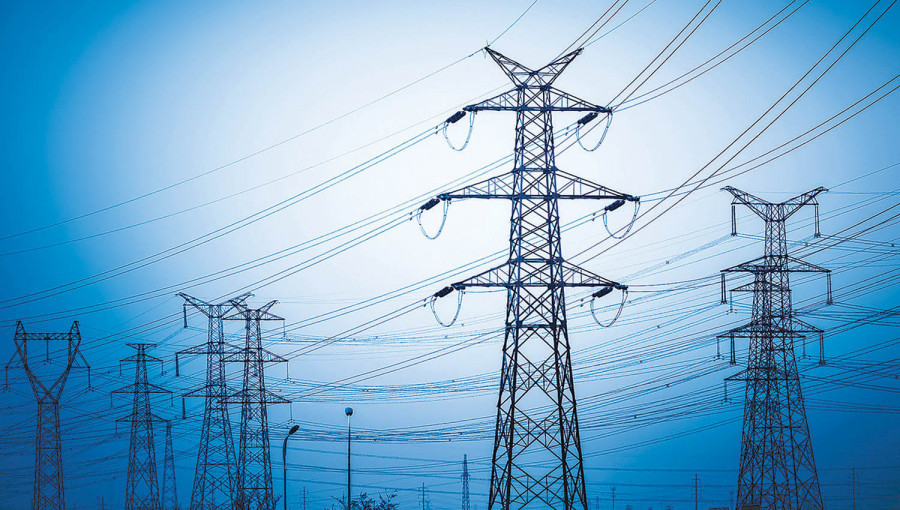
The move gives Nepal Electricity Authority’s subsidiary a foothold in cross-border power trading, even as private companies seeking licences remain locked out pending changes to the legal framework. Shutterstock
Nepal Electricity Authority’s subsidiary, Nepal Power Trading Company Ltd (NPTCL), is set to enter the electricity trading business after the authority’s board approved the sale of up to 100 megawatts of electricity.
NPTCL will trade electricity generated by projects that already have power purchase agreements (PPAs) with the Nepal Electricity Authority, selling the power to India and potentially other countries.
The NEA board has already approved the arrangement and the proposal has now been sent to the Electricity Regulatory Commission for its consent, said NPTCL Chief Executive Officer Kamal Acharya.
“We have sought the commission’s consent to buy and sell electricity,” Acharya said. “Once we receive its approval, we will look for a market to sell the electricity.”
Nepal exported electricity worth Rs29.32 billion during the last fiscal year. At the same time, it imported electricity worth Rs10.23 billion from India during the dry season, when domestic hydropower generation falls sharply. The NEA currently handles both imports and exports.
The authority has been trading electricity under Section 20(1)(d) of the Nepal Electricity Authority Act, 1984. The provision authorises the NEA to “sell electricity to foreign countries or purchase electricity from foreign countries”.
The government designated the NEA as the nodal agency on February 28, 2020, to formulate plans for cross-border electricity imports and exports, as well as transmission lines and electricity trading, in coordination with India’s designated authority.
The government had also authorised the NEA in 2020 to sell electricity to India and Bangladesh. The authority has been conducting cross-border power trading under that prior approval.
NPTCL, however, has remained largely dormant in the business despite being established as an NEA subsidiary in 2016.
The Cabinet had authorised NPTCL to operate on December 23, 2021, but the company has yet to begin electricity trading.
The NEA has now approved NPTCL to sell 100 MW of electricity, said Dirghayu Kumar Shrestha, NEA acting managing director.
The approval comes with price and margin restrictions. NPTCL cannot sell electricity for less than 5.45 Indian rupees per unit and cannot charge a trading margin of more than 10 paise per unit.
In practical terms, NPTCL will not be allowed to sell the approved 100 MW at a price below the floor price of 5.45 Indian rupees per unit.
Acharya said the company would invite proposals from potential buyers after receiving the regulatory commission’s consent.
The company has an authorised capital of Rs1 billion. The NEA owns 51 percent of NPTCL, while the Vidhyut Utpadan Company Limited owns 17 percent, the Rastriya Prasaran Grid Company Limited owns 17 percent and the Hydroelectricity Investment and Development Company Ltd owns the remaining 15 percent.
The move, however, has renewed complaints from private power companies that the government is opening the electricity-trading market selectively, allowing a state-backed company to operate while keeping private firms waiting for licences.
Private-sector power producers have long demanded the right to trade electricity directly.
The Independent Power Producers’ Association, Nepal (IPPAN), registered Nepal Power Exchange Ltd (NEPEX) in 2018 and sought government approval to operate as a power trader. It has yet to receive a licence.
Several other companies, including NEPEX, NIFRA Trading and Energy Exchange and Himalayan Trading Electricity, have also been waiting for licences. They applied to the Ministry of Energy, Water Resources and Irrigation years ago.
IPPAN Senior Vice-President Uttam Bhlon Lama said the government was using the need to amend the Electricity Act as a reason to keep private companies out of the trading business.
“The government cannot sell all the electricity itself, while at the same time it is not opening the door for private companies that are ready to sell it,” Lama said, arguing that the issue has become more urgent as Nepal increasingly faces the prospect of surplus electricity being wasted.
NEPEX has already sought to establish a cross-border trading business. It signed a memorandum of understanding with India’s Manikaran Power Ltd in January 2021 to trade up to 500 MW of electricity and another agreement in April 2023 covering an additional 200 MW.
But without government facilitation and a trading licence, those agreements have remained on paper.
Private-sector promoters argue that the legal framework for electricity trading already exists. Section 4(1) of the Electricity Act, 1992, states that any individual or organised entity wishing to conduct electricity surveys, generation, transmission, distribution or trading must apply for a licence to the designated authority, along with the required economic, technical and environmental studies and other details.
Despite this provision, the NEA continues to hold a de facto monopoly over electricity trading.
Nepal’s electricity market has become increasingly dependent on finding buyers outside the country, particularly during periods of high hydropower generation. Yet the government has not allowed private companies to trade surplus power in the domestic or cross-border markets.
Power developers have therefore accused the government of discriminating against private companies in the distribution of electricity-trading licences.
They say the government has effectively granted its own subsidiary, NPTCL, access to a business that remains closed to private competitors.
The Electricity Regulatory Commission Act, 2017, provides a regulatory framework for electricity purchases and sales. Section 13(1)(b) authorises the commission to determine electricity purchase and sale rates and procedures between licensed distributors and licensed power producers, electricity traders or organised entities established by the government under prevailing law until a wholesale electricity market is established.
Section 13(1)(c) allows the commission to approve power purchase agreements between entities authorised to buy and sell electricity, while Section 13(1)(e) gives it authority to determine transmission and distribution charges, commonly known as wheeling charges.
The commission’s Electricity Regulatory Commission (Open Access) Directives, 2025, also provide for open access for cross-border electricity trading.
It states that approval and operation of electricity trading for cross-border transactions will be governed by procedures issued by the government and by cross-border electricity-trading directives issued by the commission under those procedures.
The government says it is working to resolve the legal uncertainty surrounding private-sector participation.
Shaligram Bhandari, joint spokesperson at the Ministry of Energy, Water Resources and Irrigation, said preparations were under way to amend the Electricity Act, 1992, to allow private companies to enter the electricity-trading business.
“We are working to involve the private sector in electricity trading,” Bhandari said.
The government’s budget for the current fiscal year also calls for legal arrangements that would allow electricity trading through transmission lines in return for wheeling charges.
In a directive issued in April, Energy Minister Biraj Bhakta Shrestha said the NEA board would operate NPTCL as a fully functional electricity-trading entity.
For now, however, the government’s approach leaves Nepal with a state-backed trader preparing to enter the market while private companies that have been seeking licences for years remain on the sidelines.




 17°C Kathmandu