More than 13,000 public officials have filed asset declarations while around 1,500 complaints alleging concealed wealth and proxy ownership are under review. AI-generated image
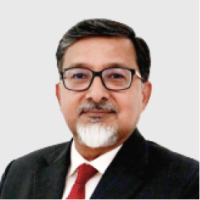
The Property Inquiry Commission, chaired by a former Supreme Court justice Rajendra Kumar Bhandari, has begun preliminary investigations after receiving thousands of asset declarations and specific public complaints.
By Wednesday evening, the commission had received comprehensive asset declarations from around 13,000 public officials and registered about 1,500 individual complaints. The deadline for submissions is July 14. Of the around 25,000 public officials who are required to disclose their assets, only about half have complied so far. Meanwhile, some retired justices have publicly said they will boycott the entire process and would not submit their property details.
The Bhandari-led panel includes former Supreme Court justices Purushottam Parajuli and Chandi Raj Dhakal, retired Deputy Inspector General of Nepal Police Ganesh KC, and chartered accountant Prakash Lamsal as members. Its mandate is to investigate the wealth of high-ranking officials and civil servants who held public office over the last two decades, covering the period from fiscal year 2005-6 to 2025-26.
Formed on April 15, the commission has begun analysing declarations and initiating investigations, according to spokesperson Ganesh KC. The panel started opening sealed files on Friday, taking up about 1,500 cases in the first phase.
"In the past four days, the commission has completed preliminary reviews of 300 files. This pace of the review will now pick up. We will recommend legal action where wealth appears unexplained or disproportionate to legitimate income,” said KC.
The investigation will be carried out in two stages. "The inquiry takes place in two phases. Initially, we carry out the preliminary phase to sort files. Once that is completed, the commission will launch a detailed, comprehensive investigation," said KC. "The findings will then be forwarded to the government and subsequently to the Commission for the Investigation of Abuse of Authority for prosecution."
According to KC, those who have submitted declarations include serving civil servants, political leaders, former ministers, sitting and retired judges, and advisors to state-owned enterprises. As the July 14 deadline is approaching, the commission expects a significant surge in last-minute submissions.
Among those who have filed declarations include former chairman of Public Service Commission Umesh Kumar Mainali, former ministers Madhav Prasad Paudel, CP Mainali, Raghuji Pant, Bhim Rawal, and Rameshwar Khanal; former chair of Special Court, Gauri Bahadur Karki; and former chief secretary Lila Devi Gadtaula.
Four former chief justices—Ram Kumar Prasad Shah, Gopal Parajuli, Om Prakash Mishra, and Prakash Man Singh Raut—have also submitted their property details. The commission’s inquiry covers 52 retired Supreme Court justices, 48 retired high court chief judges, and 173 retired judges.
Former officials from the Election Commission, National Human Rights Commission, and the anti-graft body also submitted details via post, email, or through their representatives.
"Submissions have risen encouragingly. We believe everyone will comply before the deadline," said KC.
Alongside the declarations, the commission has received a growing number of complaints alleging that former ministers and other public officials concealed assets by registering them in the names of relatives, drivers, office assistants, and close associates.
Spokesperson KC said the commission would seek the asset details of relatives if there are grounds to suspect that public officials used them as proxies to conceal their unexplained wealth. Investigations will be launched if any signs emerge indicating that property has been concealed under the names of relatives within three generations or through any other proxies.
What action against those who fail to submit property details?
The commission clarified those who fail to submit property details within the timeframe will not escape scrutiny.
For non-compliant individuals, the commission will conduct independent, detailed investigations and recommend punitive action, said KC.
"The commission is prepared to collect data independently from land revenue offices, banks, and company registries and share records," said KC.
He said failing to submit a declaration does not place anyone beyond the commission’s reach, he said.
During the second phase of the inquiry, the commission will obtain land ownership records, bank statements, transaction histories, shareholding records, vehicle data, and verify sources of investments.
The most critical aspect of the entire inquiry involves comparing an individual's legitimate income—including salaries, allowances, agricultural earnings, ancestral property, and rental income—against their accumulated wealth. If the total assets significantly exceed the legal income and the source cannot be verified, the wealth will be classified as illegal. The anti-graft body will then file corruption cases for amassing disproportionate assets.
If the preliminary review reveals unverified sources, the commission will summon individuals for questioning. KC advised public servants to view this as an opportunity to validate income. To assist in the complex investigation, the panel will enlist financial and banking experts.
KC said the commission would also investigate retired judges who have announced a boycott of the process if they fail to submit their declarations. "Over 100 former judges have already submitted their property details. We will recommend prosecution if unexplained wealth is uncovered,” he said.
Article 153, clauses (5) and (6) of the Constitution authorises the Judicial Council to investigate judges. Clause (5) authorises the council to form inquiry committees for detailed expert investigations, while clause (6) permits prosecution for corruption.
Second phase to start after completing first phase investigation
The commission said it will launch a second phase of inquiry after completing investigations into officials who served between 2005-06 and mid-April 2026. The next phase will examine wealth accumulated since 1991 by publishing a fresh public notice.
After it was formed, the commission published a notice in the Gorkhapatra on May 14, directing public officials to submit asset details within a month.
The government formed the commission in response to growing demands from civil society and lawmakers for a thorough audit of the wealth accumulated by public officials over the past several decades.
What kind of complaints have been filed at the commission?
Although the commission does not have the authority to prosecute or impose penalties, its findings could pave the way for criminal proceedings. Based on the commission's recommendations, the anti-graft body will file formal corruption cases, while the courts will decide whether to convict those accused and order the confiscation of illegally acquired assets.
The complaints received by the commission allege a wide range of attempts to conceal wealth. They include allegations of civil servants purchasing properties in the names of friends, retired bureaucrats stashing wealth in offshore accounts, and sitting officials concealing assets through relatives or laundering money abroad via informal hundi networks.
Complaints also target former ministers and prime ministers for registering extensive properties under relatives' names. The commission continues to sift through files containing specific allegations against current and former high-ranking officials.




 15.26°C Kathmandu