Prime Minister Balendra Shah has begun formal consultations with the private sector after completing the first 100 days in office, signalling a shift towards broader engagement with key economic stakeholders as the government seeks to revive a sluggish economy and restore business confidence.
Until this week, Shah had largely refrained from holding structured meetings with representatives of the private sector, political leaders outside government and the diplomatic community. Apart from two collective interactions with ambassadors based in Kathmandu, Shah had devoted much of his first 100 days to establishing his administration's priorities.
On Tuesday, Shah met Masato Kanda, president of the Asian Development Bank, at the Office of the Prime Minister and Council of Ministers. A day later, he held his first formal meeting with representatives of Nepal's leading private sector organisations.
The meeting was facilitated by lawmaker Bidushi Rana, who said the initiative reflected the prime minister's decision to place economic growth at the centre of the government's next phase after focusing initially on governance reforms.
"The prime minister's two principal priorities are good governance and economic prosperity," said Rana. "During the first 100 days, the government concentrated on strengthening governance. Investigations and action have been taken against those involved in corruption and irregularities. Now the focus is on economic growth, and the private sector is the engine of that growth. That is why the prime minister wanted to meet business leaders."
According to Rana, Wednesday's discussion marked the beginning of a series of consultations rather than a one-off event.
"Over the coming days, the prime minister will continue meeting representatives from various private sector industries, including construction, tourism, hotels, information technology and manufacturing," she said.
According to Rana, the meeting, initially scheduled for 30 minutes, lasted nearly two hours as Prime Minister Shah sought detailed feedback on the challenges facing businesses.
"He (Shah) listened very attentively and asked many questions during the discussion. He told the private sector not only to bring problems but also to propose practical solutions,” she said.
To institutionalise the dialogue, Shah has directed his secretariat to form an informal coordination committee comprising officials from the Prime Minister's Office and representatives of the private sector.
Rana said the committee would meet at least once every month to discuss business concerns, recommend solutions and regularly brief the prime minister.
"The prime minister wants this engagement to continue even when his schedule does not allow him to attend every meeting personally," she said.
Officials at the Prime Minister's Secretariat confirmed that the government has also decided to broaden consultations with leaders from other sectors, including development partners, professional organisations and civil society.
Representatives of the construction industry have already been invited for discussions on Thursday.
According to a member of the Prime Minister's Secretariat, the objective is to accelerate stalled development projects while reviewing the implementation of broader economic recovery plans.
"The discussion with private sector representatives was intended to boost business confidence," the official said. "Tomorrow's meeting with construction business leaders will focus on how to speed up infrastructure development and improve project implementation."
Nicholas Pandey, president of the Federation of Contractors' Associations of Nepal, welcomed the invitation.
"We are excited to have an opportunity to present our concerns directly to the prime minister," said Pandey. "We hope this dialogue leads to practical decisions."
Business leaders who attended Wednesday's meeting said they openly discussed the country's economic slowdown, declining investment, weak business confidence and possible policy measures to stimulate growth.
Anjan Shrestha, president of the Federation of Nepalese Chambers of Commerce and Industry, said the prime minister acknowledged the central role of the private sector in reviving the economy.
"The prime minister said he wants to place the private sector in the driving seat of the economy and address the problems businesses are facing," said Shrestha. "He expressed commitment to resolving the issues that have discouraged investment and economic activity."
The meeting also touched on concerns over recent investigations involving several industrialists and businesspersons. Representatives said repeated arrests and criminal investigations had created fear within the business community and hurt investor confidence.
Responding to those concerns, Shah stressed that the government's actions targeted individuals facing credible allegations rather than the private sector as a whole, and reaffirmed that encouraging legitimate investment and enterprise remained central to the government's economic strategy.
"Our intention is not to detain entrepreneurs indiscriminately, nor can the economy move forward by doing so," Shrestha quoted Prime Minister Shah as telling business leaders. "The government is clear on that."
Shrestha said the private sector urged the government to introduce legal provisions allowing anticipatory bail in economic and financial crime cases until allegations are proven in court.
"If an economic offence is under investigation, there should be a provision for anticipatory bail until guilt is established," said Shrestha. "Businesspeople should be able to continue working in a dignified manner while investigations proceed. We have proposed that courts allow financial guarantees instead of immediate detention, with punishment only after offences are proven."
According to Shrestha, the prime minister responded positively, while making it equally clear that those found guilty of wrongdoing would not escape legal action.
"He told us the government's objective, policy and intention are not to treat entrepreneurs in an undignified manner," said Shrestha. "At the same time, he reminded us that investigations into some industrialists are based on specific allegations. Those who have done nothing wrong need not be afraid, but those found guilty cannot be spared."
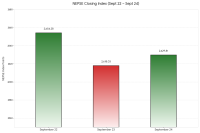
Kamalesh Kumar Agrawal, president of the Nepal Chamber of Commerce, said business representatives highlighted shrinking credit expansion, falling investor confidence, weak private investment, excess liquidity in banks, businesses operating at less than half their capacity and the prolonged decline in the stock market.
"The prime minister listened carefully to every concern and asked us for recommendations on possible solutions," said Agrawal, adding that he appeared genuinely positive towards the private sector.
Agrawal described the discussion as the first extensive interaction between the new government and the leadership of Nepal's three major private sector umbrella organisations.
"We discussed how to move the economy forward, reverse the current slowdown and rebuild business confidence," said Agrawal. According to him, Shah acknowledged that Nepal possesses abundant economic potential but has failed to translate its natural resources into productive industries, employment opportunities and sustained growth.
Business leaders said the prime minister reiterated the government's target of achieving an average annual economic growth rate of 7 percent and increasing per capita income to 3,000 US dollars within the next five years. He invited the private sector to identify policy obstacles preventing investment and expansion.
Rajesh Kumar Agrawal, former president of the Confederation of Nepalese Industries, said the organisation urged the government to improve the investment climate through legal and administrative reforms.
Among the proposals were stronger measures against illegal trade, development and operation of industrial estates under public-private partnership models, decriminalisation of business-related offences, a legal framework prioritising hearings before detention, improvements to Nepal's aviation safety standing and timely government payments to contractors and suppliers.
He also called for better quality standards for imports, restrictions on duty concessions for goods already produced domestically, rationalisation of taxes affecting businesses and stronger coordination among the federal, provincial and local governments.
"The prime minister's response was encouraging and has raised hopes in the business community," he said.
Before presenting the national budget, Shah had held region-wise consultations with members of the House of Representatives and met provincial chief ministers in early April. Those meetings were followed by a pause in wider consultations, making this week's engagements the first major outreach after the government crossed its 100-day mark.
The Prime Minister's Secretariat said Wednesday's discussion focused on improving the investment climate, removing policy and procedural barriers, facilitating industrial operations, creating jobs and increasing production. It described the private sector as an indispensable partner in Nepal's economic recovery and pledged to prioritise legal, administrative and policy reforms that support investment and enterprise. Business leaders, in turn, called for policy stability, simpler public services and regular, results-oriented dialogue with the government.
The prime minister assured participants that their recommendations would be taken seriously and that the government would work closely with the private sector to translate the proposals into concrete reforms aimed at reviving economic activity.
Wednesday’s meeting was attended by FNCCI President Shrestha, chair of the FNCCI Industry Committee Ujjwal Kumar Shrestha, past president of the Confederation of Nepalese Industries Rajesh Kumar Agrawal and its Director General Ghanashyam Ojha, president of the Nepal Chamber of Commerce (Kamalesh Kumar Agrawal and Senior Vice-President Deepak Malhotra.




 22.26°C Kathmandu