Karnali Highway remains province’s deadliest road despite millions spent on repairs
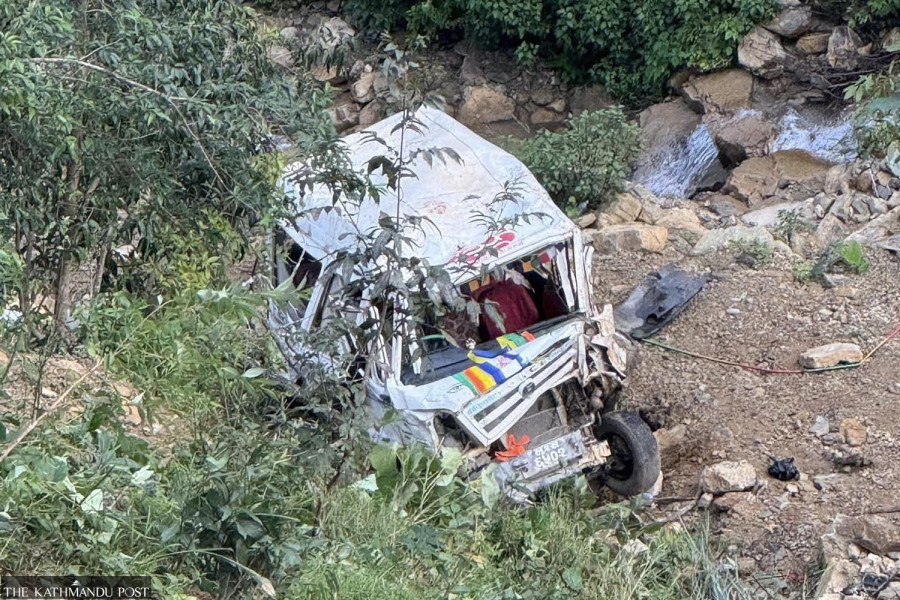
Police say the highway accounts for nearly 56 percent of road accidents in the province as poor road conditions, ageing vehicles, difficult terrain and weak traffic discipline continue to fuel fatal crashes. Post File Photo
The Karnali Highway has remained the deadliest road in the province despite years of repairs, repeated safety interventions and millions of rupees spent on maintenance. Crashes continue to claim lives at an alarming rate as poor road conditions, hazardous terrain, ageing vehicles and weak traffic discipline combine to make the highway a persistent death trap. Police data show the highway accounts for nearly 56 percent of all road accidents recorded across the province.
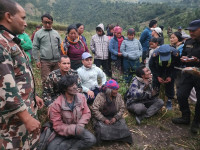
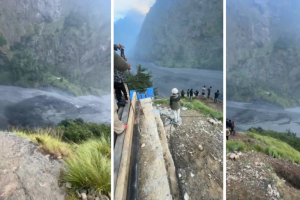
The latest tragedy came last week when a passenger minibus travelling from Surkhet to Raskot in Kalikot plunged into the Karnali river from the highway at Sangetada in Chamunda Bindrasaini Municipality-7 of Dailekh.
One person was found dead at the crash site, while the bodies of a man and a woman were later recovered from the banks of the river near Chisapani in Kailali. Authorities have yet to determine how many people were travelling in the vehicle, and the bus itself had still not been located six days after the crash.
On May 25, 2022, a bus bearing registration number Ma-1 Kha 660, travelling from Mugu to Nepalgunj, crashed at Sisnedanda in Aathabis Municipality-2 of Dailekh along the highway. Three people died at the scene, and 33 others were injured.
The two accidents are among many fatal crashes that have plagued the highway over the years.
The highway has witnessed dozens of other major accidents. On March 18, 2010, 42 people were killed in a crash at Kitu in Dailekh. Another bus crash at Bittamod in Serabada, Kalikot, on December 7, 2011, claimed 28 lives.
Police data show that nearly 56 percent of all road accidents recorded in Karnali Province occur on the highway, making it the province's deadliest road.
According to the Karnali Province Police Office, 917 people have died in accidents on the highway since the 2014-15 fiscal year. In the past three years alone, 111 people have died, and another 309 have been injured on the road.
Authorities attribute the rising number of road accidents to a combination of factors, including narrow roads and overcrowded vehicles.
Deputy Inspector General of Police Jaya Raj Sapkota, chief of Karnali Province Police, said the increasing number of accidents is driven by a combination of narrow and difficult roads, overcrowded vehicles, ageing public transport and widespread disregard for traffic rules.
“Excessive speed is also contributing to the increase in accidents,” he said. “Karnali’s challenging terrain, combined with deteriorating road conditions, makes preventing accidents extremely difficult.”
According to Sapkota, 34 people were killed in 113 accidents on the highway during the current fiscal year, compared with 31 deaths in the previous fiscal year and 46 deaths in fiscal year 2023-24. Police records show that 190 people were injured during the same three-year period.
Over the past decade, Karnali Province has recorded 4,002 road accidents, resulting in 1,637 deaths and 1,927 injuries, according to police.
Besides the Karnali Highway, the province is served by the Mid-Hill Highway, the Rapti Highway, the Karnali Corridor and the Nepalgunj-Surkhet road. However, police say accident rates on those roads remain significantly lower than on the Karnali Highway.
Superintendent of Police Mukunda Prasad Rijal, chief of the Nepal Police Highway Safety and Traffic Management Office in Surkhet, said the highway’s deteriorating condition, ageing vehicles and driver negligence remain the primary causes of crashes.
According to him, vehicle overloading, narrow and damaged roads, and speeding have further worsened the situation.
Kamal Lamsal, an assistant professor at Mid-West University, said the steady stream of serious accidents has left both passengers and drivers increasingly fearful, even as road connectivity in Karnali continues to expand.
“Accidents on the Karnali Highway are more catastrophic than those on most other roads,” he said. “Even in the latest crash, the vehicle has not been found after six days. Almost every major accident here results in heavy casualties, forcing people to travel in constant fear.”
Police identify the stretch between Dahikhola in Dailekh and Galjebazaar in Kalikot as the most dangerous section of the highway.
Over the past three years, 98 accidents have occurred along this section alone, killing 35 people.
The highest-risk locations include Dahikhola and Kitubhir in Dailekh, and Serabada, Timure, Tadibhir, Bihani and Hulmajite in Kalikot.
During the current fiscal year, seven people have died in crashes along this stretch, compared with 11 in the previous fiscal year and 17 in fiscal year 2023-24.
Concerned by the growing number of accidents, police have banned vehicles from operating on the highway at night.
Engineer Karna Bahadur KC said the numerous sharp bends along the Dailekh and Kalikot sections of the highway have significantly increased the risk of accidents.
According to him, drivers are often unable to see approaching vehicles from one bend to the next, while the absence of traffic signs at many locations further compounds the danger.
“The highway should have been built as a two-lane road from the outset,” he said. “The Nepali Army completed the project in haste, so it may not have met engineering standards. Despite later efforts, those shortcomings have never been fully corrected.”
KC said that, under engineering standards, the 232-kilometre journey from Jumla should take about six hours. Instead, travellers are often forced to spend up to 24 hours on the road.
The Karnali Highway directly connects Surkhet, Dailekh, Kalikot, Jumla and Mugu.
The road was blacktopped using Otta Seal technology in fiscal year 2019-20. With Rs1 billion in funding from the World Bank, the government blacktopped 126 kilometres from Surkhet to Khidkijhyula and another 107 kilometres from Khidkijhyula to Jumla.
However, around 80 percent of that blacktopping has peeled away.
Nearly Rs670 million has been spent on highway maintenance over the past three fiscal years.
According to the Road Division Offices in Surkhet and Jumla, Rs240 million was spent during the current fiscal year, Rs210 million in the previous fiscal year and Rs310 million in fiscal year 2023-24.
“There is a constant risk of landslides throughout the highway, and most of the maintenance budget is spent dealing with them,” said Saurabh Kumar Singh, information officer at the Road Division Office, Jumla.
“We repair one landslide one year, only for another to occur at the same location the following year. Then we are forced to spend the budget repairing the very same section again and again.”
Despite repeated maintenance spending, the highway has continued to deteriorate as resurfacing work has remained stalled for years.
Last week, the Road Division Office in Jumla terminated 16 long-delayed contracts related to the highway.
According to Singh, the cancelled projects date back to fiscal year 2017-18.
“We repeatedly issued written notices to the contractors, but they showed no interest in carrying out the work. As required under the Public Procurement Act, we terminated the contracts,” Singh said. “Following a public notice, we recently cancelled 16 contracts, including 12 in Kalikot, three in Jumla and one in Mugu.”
He said contractors had developed a long-standing practice of securing government contracts without completing the work.
Drivers say the highway remains as dangerous as ever despite the government spending hundreds of millions of rupees on repairs every year.
“There are places where the road is so narrow and the cliffs so steep that two vehicles cannot pass each other safely,” said Milan Chhetri, who regularly drives on the route. “If another vehicle approaches from the opposite direction, one has to reverse. And if a vehicle breaks down, every vehicle behind it is forced to stop there until the vehicle is repaired.”
Kamal BK, a civic activist, said the single-lane highway itself has become a major safety risk.
“A low-cost paving technology was used, and even that work was poorly executed,” he said. “People are now forced to travel through dust in the dry season and mud during the rains, while the risk of accidents remains unchanged.”
Then Prime Minister Girija Prasad Koirala laid the foundation stone for the highway in 1991.
Construction, however, was completed only 15 years later, delayed by the Maoist insurgency and chronic budget shortages.
Because the route had to be carved through solid rock, the government eventually assigned the Nepali Army to build the road. The army opened the highway’s track on April 13, 2007.
Rs1 billion safety barriers in ruins
Most of the steel safety barriers installed along the highway to reduce the severity of crashes have either been destroyed or fallen into disrepair.
The barriers were installed during blacktopping works carried out in fiscal year 2019-20 using Otta Seal technology, with support from the World Bank. Steel guardrails were erected along narrow and cliff-edge sections of the highway, while retaining walls were built along wider sections as part of efforts to improve road safety.
However, landslides and falling rocks have damaged most of the barriers, while those that remain have deteriorated significantly.
“The safety barriers helped boost drivers’ confidence and gave passengers a greater sense of security,” said Nanda Bahadur Bista, Assistant Sub-Inspector of Police and chief of the District Traffic Office in Kalikot.
“They can prevent serious consequences in accidents involving motorcycles and three-wheelers, and they also provide an added level of protection for other vehicles.”
Bikram Rokaya, who has been driving the Surkhet-Jumla route for the past 12 years, said the barriers were particularly reassuring on sections where the road runs along cliffs overlooking the Karnali river.
“Now many of those barriers are broken, and even we drivers feel nervous,” he said. “Passengers are naturally even more frightened.”
Steel barriers were installed at some of the highway’s most accident-prone locations, including Kitubhir in Dailekh; Serabada, Timure, Tadibhir, Bihani and Hulmajite in Kalikot; Kalyan in Surkhet; and Gadgadeni in Jumla.
The installations were carried out under the Road Sector Development Project at a cost of nearly Rs1 billion.
Not everyone believes the barriers have improved safety.
Khadananda Chaulagain, chairman of the Tadi Bazaar Management Committee, said the barriers have actually narrowed the roadway at several difficult sections.
According to him, pedestrians also struggle to use parts of the highway because the barriers leave little or no walking space.
“There is a risk that speeding vehicles could crush pedestrians against the barriers,” he said. “In some places, there isn’t even enough space left for people to walk.”
Chaulagain said residents travelling between Tadi and Manma Bazaar have no alternative route.
“The highway is simply too narrow for two-way traffic,” he said. “On this single-lane road, one vehicle has to reverse whenever another approaches from the opposite direction. Widening the road is also extremely difficult because it cuts through hard rock.”




 24.59°C Kathmandu