Nepal brings social media, AI advertising under new national policy
The National Advertising Policy 2026 introduces regulation for influencer marketing, sponsored content and AI-generated ads, while tightening oversight across digital platforms.
The government has issued the National Advertising Policy 2026, bringing advertising carried out through social media and digital platforms under formal regulatory oversight.
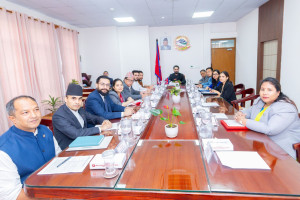
The policy was approved by a Cabinet meeting on Thursday. It places emerging technologies such as artificial intelligence, deepfakes, influencer marketing and sponsored content within the regulatory framework, aiming to address growing challenges in the advertising sector.
Under the new provisions, sponsored content and influencer marketing on social media must be clearly self-declared. The policy also encourages the use of modern technologies in advertising and emphasises capacity building of individuals and institutions working in the sector to strengthen the overall advertising market.
Clause 9.13 of the policy states that sponsored content and influencer marketing will require mandatory self-declaration, and advertising created using artificial intelligence, including deepfake content, will be regulated. The policy aims to complete the implementation of this framework within two years through coordination among federal, provincial and local governments.
Ranjit Acharya, chief at Prisma Advertising, said regulation of AI and deepfake use in advertising is necessary, but implementation and monitoring will be crucial. “At a time when celebrity and influencer identities are being misused globally, bringing this under regulation will address the massive hardships faced by our creators,” he said. “However, simply framing rules is not enough. Monitoring and enforcement will be the most difficult and important part.”
He said that while digital platforms, social media and influencer marketing have expanded significantly in recent years, this is the first time they have been formally brought under regulatory scope. The policy assigns responsibility for regulating digital advertising to the Ministry of Information and Communication, with support from the Office of the Prime Minister and Council of Ministers and the Advertising Board.
Acharya added that both the ministry and the regulator need to be digitally equipped to monitor advertising on online platforms. “Without adequate preparation and infrastructure, there is a risk that the policy will remain on paper,” he said.
Laxman Humagain, former chair of the Advertising Board, also stressed that the policy alone is not sufficient and that strong legislation will be required for implementation. “If properly enacted and enforced, Nepal’s advertising market could begin to see positive effects within two to three years,” he said. “This is the first comprehensive advertising policy in Nepal. For the first time, coordination among all three tiers of government has been ensured in regulation and monitoring.”
The government plans to ban misleading, false and legally prohibited advertisements that negatively affect consumers. The policy also seeks to balance advertising across traditional and digital media. Clause 9.15 states that the ratio of advertising between traditional and digital platforms will be determined. It also provides support for startups and small businesses, allowing them to spend a fixed amount on social media and digital advertising.
The policy further seeks to clearly separate news and advertising in media content. It aims to prevent the practice of presenting advertisements as news and vice versa, and to discourage news coverage from being influenced by whether advertising has been placed. Clause 9.8 states that such practices will be discouraged.
To protect consumers, the policy includes provisions for compensation in cases where false or misleading advertising causes harm. It states that consumers will be entitled to compensation for losses resulting from such advertisements.
Advertisements that undermine national interest or sensitivity will be strictly prohibited. This includes any content that disrespects Nepal’s flag, national anthem, or national heroes and luminaries. The policy states that advertisements undermining sovereignty, territorial integrity, independence, national unity, or religious and ethnic harmony will not be allowed.
The government also aims to strengthen the Advertising Board to ensure effective implementation of the policy. Regulation of advertising will be carried out by federal, provincial and local governments. The policy sets a target of increasing the contribution of the advertising sector to gross domestic product within five years.
To address unhealthy competition and ensure scientific rate-setting in the advertising market, the policy proposes the establishment of an integrated information system and a data bank.
A dedicated advertising fund will also be established under existing law. The fund will be financed through government grants, fees, contributions from various agencies and donor organisations, as well as revenue generated from advertising transactions.
The government concluded that a separate national policy was necessary to regulate emerging trends such as social media advertising, digital platforms, influencer marketing and AI, and to ensure participation of all levels of government and stakeholders while addressing both opportunities and challenges in the sector.
Humagain said that although regulating AI-generated and social media advertisements is a global challenge, Nepal is capable of implementing such regulation. “A monitoring system is required. The advertising fund has been proposed to finance this,” he said. “It will be managed through regulatory charges collected from the market, without creating additional financial burden on the state.”
However, advertisers have expressed some concern over the proposed advertising fund. Acharya said clarity is needed on how the fund will be financed. “If additional taxes are imposed on advertising transactions or if agencies lose benefits, the market could be discouraged,” he said. “Such costs will ultimately be passed on to consumers, making this approach less practical.”
Humagain argued that the policy should encourage advertisers and help structure the market rather than constrain it. “It should not lead to restriction or control over media,” he said. “The success of the policy will depend on coordination between the government and the Advertising Board, as well as effective implementation.”




 28.31°C Kathmandu