Mahabir Pun’s unconventional push to build Nepal’s newest ministry from the ground up
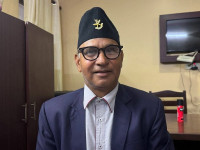
With no legal framework and only a skeleton staff, Nepal’s newest ministry is taking shape under a minister whose unconventional methods are attracting as much attention as his ambitions. Screengrab
Nepal’s newly created Ministry of Science, Technology and Innovation is still struggling to put together its basic institutional structure and legal framework. At the same time, its minister, Mahabir Pun, has once again become the centre of attention for an unconventional working style that is as unusual as it is divisive.
While ministry officials are busy establishing the organisation and preparing the legal foundation needed for its operation, Pun says his long-term goal is to transform scientific research into products and services that directly benefit society and connect innovation with the market.
According to Monika Jha, spokesperson for the ministry, the institution is currently occupied with its initial administrative setup. Like any newly established ministry, it has had to start almost from scratch, including building basic administrative and financial systems.
Only about 15 officials are currently available against an approved workforce of 24, leaving the ministry short of personnel for day-to-day operations.
“Our priority is to complete the Organisation and Management survey and get it approved by the Cabinet,” Jha said. “Once the new fiscal year begins, it will become easier to move ahead with the next phase.”
But much of the public attention has shifted from the ministry’s work to Pun’s highly unconventional approach to office life.
Pun, a social entrepreneur and founder of the National Innovation Centre, served as education minister in an earlier government. This time, he has chosen to live inside his office at Singha Durbar, occupying a room in the building that previously housed the Ministry of Youth and Sports. He sleeps there, works late into the night and regularly holds discussions on research and innovation from the same office.
On Sunday, Pun uploaded a video showing himself cooking bamboo shoots that friends had brought from his village.
“I earn enough money to buy rice for three or four days by just posting this” he wrote in the caption, referring to earnings from social media. He also used the same post to respond bluntly to people questioning and criticising his lifestyle.
His social media activity attracted even greater attention before the retirement of the ministry’s secretary, Pramila Devi Shakya Bajracharya, on Wednesday.
Instead of waiting for the government to appoint a successor through the usual administrative process, Pun posted what appeared to be a public advertisement on Facebook.
“We need an experienced, hardworking and capable secretary,” he wrote, asking whether anyone was interested in joining the ministry.
The post surprised many within Nepal’s bureaucracy, where ministry secretaries are normally transferred and appointed through Cabinet decisions rather than public expressions of interest.
As the post sparked criticism and amusement, Pun later clarified that he had only intended to encourage serving secretaries interested in the assignment to express their willingness, while stressing that any appointment would still follow existing government procedures.
On Tuesday evening, while sitting in his office, Pun again turned to Facebook to comment on the draft Civil Service Act currently under revision.
He argued that the proposed law had failed to create a dedicated “science and technology service” within Nepal’s civil service and published a list of fields that he believes should be included, such as space technology, biotechnology, artificial intelligence and robotics. He also invited public suggestions online.
Nepal has long debated the need to create a specialised information technology service within the civil service. Pun said discussions are now expanding to include a broader science and technology service.
Speaking to the Post, Pun said work on the ministry’s organisational structure has been completed, and the proposal will soon be submitted to the Cabinet for approval.
He also said the ministry has begun preparing five key pieces of legislation essential for its operation, a process he expects will take at least four months.
“Our goal is to establish innovation hubs for the public through the ministry and innovation laboratories in universities for students,” Pun said. “The biggest obstacle is that we have no legal framework. Our priority is to create the necessary laws.”
According to Pun, the ministry has identified several legislative priorities. These include the Science, Technology and Innovation Act, the Advanced Industrial Technology Promotion Act, the Chemical Substances Management Act, and amendments to the Nepal Academy of Science and Technology (NAST) Act, 1991.
“The NAST Act no longer reflects present-day realities, so we are preparing amendments,” he said. “My daily routine now begins early in the morning with meetings and discussions with different stakeholders. I spend most of my time listening to people and gathering ideas.”
Pun said the ministry wants to shift universities away from research that ends only in academic publications and instead promote applied research capable of producing commercial products and new businesses.
His plan includes establishing dedicated innovation laboratories alongside conventional academic laboratories in universities and colleges, while also encouraging private-sector innovation facilities.
He also wants to create innovation centres for people with practical ideas and technical skills who may not have formal academic qualifications, particularly those living in rural Nepal.
Although drafting the necessary legislation will take time, Pun said he hopes to leave behind a solid legal foundation for the ministry before the end of his tenure.
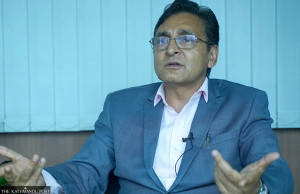
Spokesperson Jha said the ministry is aiming to do more than formulate government policy.
“Our objective is to build an entire ecosystem for science and technology,” she said.
She said research in Nepal has traditionally remained confined to academic publications with little practical impact. The ministry wants future research to produce technologies, products and services that improve people's daily lives.
Jha also believes Pun’s technical background has made communication between the minister and ministry staff easier.
“It is easier for employees to explain technical matters to a minister who understands the subject,” she said.
She added that the ministry's long-term vision includes encouraging Nepali scientists working abroad to return home while creating opportunities for talented researchers already in Nepal, reducing the pressure to migrate overseas.
Inside the ministry, however, Pun’s unconventional lifestyle has also created practical challenges.
One ministry official, speaking anonymously, said security personnel and staff have had to adjust to the unusual arrangement of having a minister permanently living inside the office.
An assistant and security staff remain with him throughout the day and night.
“If he notices even a small amount of dirt or finds ants anywhere in the ministry, he immediately takes an interest,” the official said. “That means we have to remain constantly alert.”
Some employees also admit they are struggling to keep pace with the minister’s expectations.
With the ministry still lacking a complete institutional structure and operating without several key laws, some officials say Pun is seeking rapid results before the necessary systems are fully in place.




 19.01°C Kathmandu