



 17.48°C Kathmandu

Fri, Oct 16, 2026
National
Five years on, 12 cold storage projects in Sudurpaschim remain stalled
Millions spent on facilities meant to reduce post-harvest losses, but poor planning, contractor delays and lack of electricity have left most projects unusable.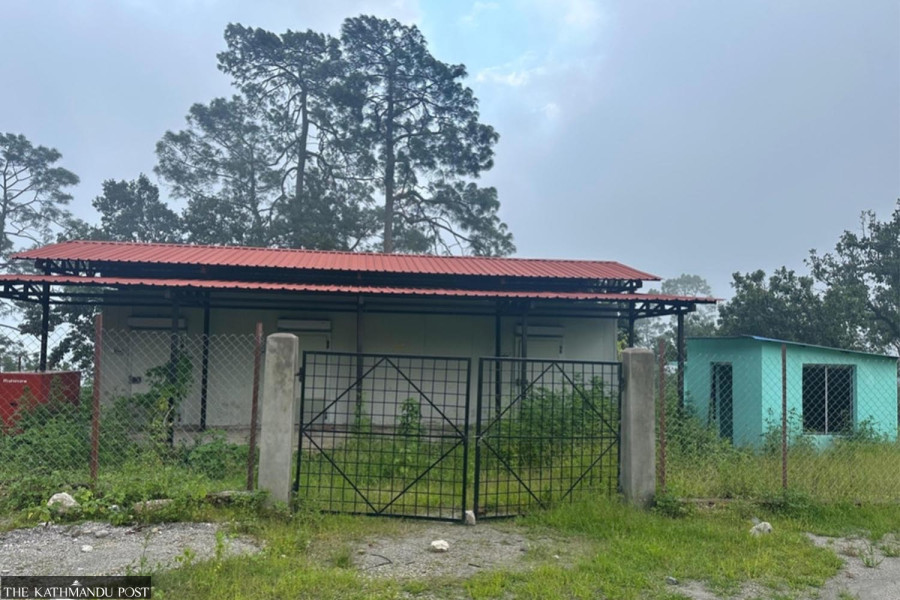
bookmark
Ranjana BC
Published at : June 11, 2026
Updated at : June 11, 2026 17:17
Kailali
Five years after the Sudurpaschim provincial government launched an ambitious programme to build cold storage facilities across the region, most of the projects remain incomplete, idle or unusable.
Of the 13 cold storage facilities announced under the provincial budget for the 2020-21 fiscal year, only one is currently operational. Several remain under construction despite repeated deadline extensions, while others have been completed but never put into use.
The projects were intended to help farmers store vegetables and fruits, reduce post-harvest losses and improve market access.
In ward 5 of Alital Rural Municipality of Dadeldhura district, a cold storage facility that was supposed to be completed within three months of construction beginning in April 2021 remains unfinished.
According to the Directorate of Agriculture Development in Dipayal, repeated deadline extensions failed to compel the contractor, LD Construction of Bardiya, to complete the project.
For local farmers, the consequences are immediate and costly.
“We were told the cold storage would make life easier for farmers,” said Lal Bahadur Dala, a potato seed producer from Alital. “Instead, we still have to transport our produce long distances and pay high storage costs elsewhere.”
This year alone, Dala said he transported 5.5 tonnes of potato seed to a cold storage facility in Pahalmanpur, Kailali, about 124 kilometres away.
The problem extends well beyond Dadeldhura.
The provincial government launched cold storage projects, with most expected to be completed within three months. Five years later, only six structures have been completed, while construction on the remaining seven remains stalled.
Even among the completed facilities, only the cold store in Martadi, Bajura district, is operational.
The projects were initially estimated to cost Rs81.5 million. Provincial authorities have already spent more than Rs52.5 million.
According to the Directorate of Agriculture Development, unfinished projects include facilities in Alital (Dadeldhura); Mahakali Municipality (Darchula); Dasharathchand Municipality (Baitadi); Dipayal Silgadhi Municipality and Jorayal Rural Municipality (Doti); Bhajani Municipality (Kailali); and Punarbas Municipality (Kanchanpur).
Construction progress varies widely. Work at the Mahakali facility in Darchula is only about 25 percent complete, while no budget has been successfully spent yet on the facility in Dipayal Silgadhi.
Among the completed facilities are cold stores in Attariya Municipality, Chure Rural Municipality, Lamkichuha Municipality, Dodhara Chandani Municipality, Sanfebagar Municipality in Achham, and Martadi Municipality in Bajura. However, all except Martadi remain non-operational.
Officials cite a shortage of skilled technicians, inadequate equipment and a lack of operational frameworks as key reasons.
“Many of these facilities were built without considering how they would actually be run,” said engineer Kosh Raj Badu of the Directorate.
Industry representatives argue that the deeper problem lies in the way the projects were selected.
Lokesh Bhatta, vice-president of the Sudurpaschim Provincial Committee of the Nepal Chamber of Commerce and a seed entrepreneur, said many facilities were built based on political influence rather than agricultural need.
“In several locations, the cold stores were built in the wrong places,” Bhatta said. “There was little consultation with agricultural experts or farmers. In some areas, production volumes are nowhere near enough to justify the storage capacity.”
He said authorities focused on building infrastructure without developing plans to increase agricultural production and establish market links.
The absence of clear operating procedures has further complicated matters. Neither provincial authorities nor local governments have established comprehensive guidelines for managing the facilities.
Disputes also persist over responsibility.
As Bhatta pointed out, neither local governments nor the provincial government have developed operating procedures for the cold storage facilities. The Sudurpaschim Ministry of Land Management, Agriculture and Cooperatives said the province has not formulated guidelines for their operation. A ministry official said that since the facilities are constructed by the provincial government and handed over to local governments, it is the responsibility of the local authorities to prepare the operating procedures.
In some cases, the facilities were rendered useless by basic infrastructure gaps.
Cold storage facilities in Chure Rural Municipality and Dodhara Chandani Municipality remain idle because three-phase electricity has yet to reach the sites.
In Dodhara Chandani, local officials admitted electricity was not available when construction began.
“During the feasibility study, the municipality assured that electricity would be extended before the cold storage was completed,” said Krishna Raj Pant, head of the municipality’s agriculture section. “Four years after construction was finished, power has still not reached the site.”
In Lamkichuha, the facility briefly operated before breaking down. It has remained closed because technicians capable of repairing the machinery are unavailable in Nepal. The municipality now plans to bring specialists from India.
Provincial authorities say they are working to expand electricity connections, train technicians and subsidise electricity bills to bring the facilities into operation.
“We are planning technical training and support for power connections,” Badu said. “We are also securing a budget to provide subsidies on electricity costs.”
Nrip Bahadur Sunar, a member of the Provincial Policy and Planning Commission, said the programme was launched without adequate preparation.
“The province was newly established at the time and lacked institutional experience,” he said. “Many projects moved forward without detailed feasibility studies. Key issues such as electricity supply, production capacity, road access and market connectivity were overlooked.”
The situation is particularly stark at the Attariya Agricultural Produce Wholesale Market in Kailali.
Construction of the large 350-ton cold storage facility there began in 2017 with funding from federal, provincial and local governments. The provincial government alone spent Rs9.2 million installing equipment.
Yet the facility has never operated.
Years of inactivity have left the building deteriorating. Water leaks through the structure, termites have damaged panels, and the second floor has developed structural weaknesses.
“Water is leaking everywhere, the panels are badly damaged, and the upper floor cannot safely handle the required load,” said Dilli Raj Joshi, chair of the market management committee. “The project was handed to contractors who lacked the necessary experience.”
Former market committee chair Nanda Lal Bhatta blamed contractors, the Agriculture Development Directorate and the provincial agriculture ministry for the failure.
“The facility was left abandoned for years while authorities looked the other way,” he said.
Officials now say a technical assessment is underway and repairs will be planned once the report is completed.
Meanwhile, farmers continue to bear the cost.
Without functioning cold storage facilities, producers across Sudurpaschim are forced to sell quickly at lower prices or watch their crops spoil. Potatoes, tomatoes, cauliflower and other vegetables frequently go to waste during peak harvest periods.
Provincial authorities have begun procedures to blacklist the contractors responsible for repeated delays. Alongside LD Construction of Bardiya—which handled the Alital and Punarbas projects—other assigned companies include Shri SH Construction of Bajura (for Sanfebagar and Martadi), Big B & Company (for Baitadi), Bhairav Shakti Nirman Sewa Pvt. Ltd. (for Dipayal), Bhumiraj Roshan Nirman Sewa (for Jorayal), G & J Nirman Sewa (for Bhajani), Chandra Bikash Yagya Laxmi Nirman Sewa (for Chure), and Anshu Nirman Sewa of Dadeldhura (for Godawari).
Officials say some companies received as many as 18 or 19 warning letters without making meaningful progress. According to engineer Badu, blacklisting procedures had been initiated earlier, but the contractors received deadline extensions following the introduction of the 14th amendment to the Public Procurement Regulations.
Contractors, however, argue that the Covid-19 pandemic and rising construction costs made completion difficult.
Smriti Sundar Sharma, owner of LD Construction, said the pandemic severely damaged the company’s finances but claimed the two projects under his responsibility would be completed by the end of the current fiscal year.
Others acknowledge both external challenges and their own shortcomings.
“There were budget delays, supply problems and some negligence on our part,” said Shiva Khadka, a contractor involved in the project in Doti district under Bhairav Shakti Nirman Sewa. “If cost adjustments are approved, we can finish the work within a month.”
For now, however, most of Sudurpaschim’s cold storage network exists largely on paper, with millions of rupees already spent and farmers still waiting for the benefits they were promised.




Most Read from National

Flood sweeps away houses, bridges in Gorkha

Torrent of black mud and rocks engulfs settlements along Budhigandaki

From blankets to handmade dolls, two foreign women bring comfort to flood survivors

British Gurkha veterans issue ultimatum to Nepal government over long-standing grievances

Budhi Gandaki flood washes away three bridges in Gorkha
Editor's Picks

Constitutional Bench caught in seniority, ‘pick and choose’ dispute

A Dom boy’s long road to becoming a doctor
From blankets to handmade dolls, two foreign women bring comfort to flood survivors

News Analysis: When institutional defence exposes institutional fault lines

It’s a bird … it’s a plane … it’s the Indian ambassador’s farewell tweets
E-PAPER | October 16, 2026

×