



 17.48°C Kathmandu

Fri, Oct 16, 2026
National
Funding crunch, neglect strains Karnali’s pioneer technical school
Founded 46 years ago to equip young people in remote mountain communities with practical skills, Karnali Technical School has produced generations of technicians and professionals.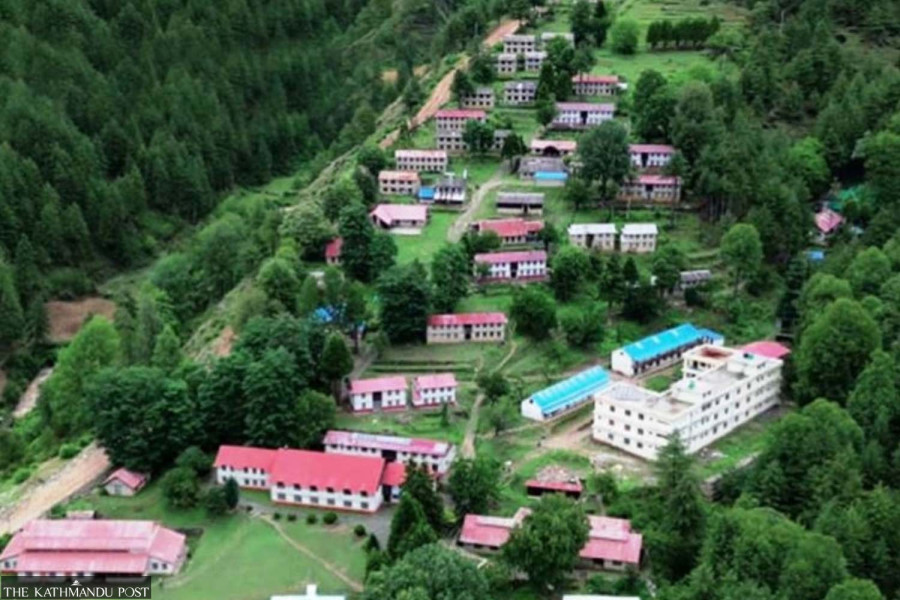
bookmark![]()
Students at a practical class in the school, pictured recently. Post Photo
Ranjana BC
Published at : June 10, 2026
Updated at : June 10, 2026 06:58
Jumla
At a time when roads were virtually non-existent in Karnali, communication was scarce, and higher education remained out of reach for most young people, a bold experiment in technical education took shape in Jumla.
Established in 1980 with the goal of providing skill-based education to youths in remote mountain districts, Karnali Technical School (KTS) has since become one of Nepal’s most significant vocational training institutions. Nearly five decades later, however, the school that helped lay the foundation for technical education in the country is grappling with a severe financial crisis.
Located on the hill of Ghughuti, around three kilometres north of Khalanga Bazar, the school occupies more than 652 ropani (33.17 hectares) of land. Surrounded by pine forests and overlooking a stream, its stone-and-lime buildings stand as reminders of an ambitious effort to bring technical education to one of Nepal’s most isolated regions.
KTS was established eight years before the creation of the Council for Technical Education and Vocational Training (CTEVT) and later became its first constituent school. For many in Karnali, the institution remains a source of pride.
Yet the school is increasingly struggling to maintain its infrastructure and operations.
Several buildings constructed in the late 1970s have deteriorated significantly. Roofs leak during the monsoon, walls have weakened and parts of the structures are vulnerable to earthquakes. A micro-hydropower project that once supplied electricity to the campus was destroyed by floods in 2022 and has yet to be restored.
According to Principal Bikal Adhikari, the school requires at least Rs2 million to repair the hydropower system alone. The institution also needs modern laboratory equipment, improved hostel facilities, additional academic buildings and proper fencing around the campus.
“Because of the difficult geography, operating costs are high and several important projects have been stalled due to budget shortages,” Adhikari said. “Since the school falls under the federal government, both local and provincial governments tend to avoid taking ownership of these issues.”
Until four years ago, the school generated its own electricity through the micro-hydropower project. The system powered classrooms, laboratories and agricultural facilities. Since its destruction, the school has relied on the national grid, where power interruptions have affected academic activities while electricity bills have added to operating expenses.
School officials estimate that between Rs2 million and Rs3 million is needed to restore the project. Despite repeated requests to federal, provincial and local authorities, they say no funding has been allocated for repairs.
Weak internet connectivity and rising operational costs have compounded the challenges.
Ramadevi Kathayat, deputy mayor of Chandannath Municipality, said the local government does not allocate funds to the institution because it falls under federal jurisdiction.
Despite the current difficulties, KTS occupies a unique place in Nepal’s educational history.
The idea for the school emerged at a time when most young people in Karnali relied primarily on agriculture and livestock farming for their livelihoods. Seeking to expand technical education in remote regions, the Ministry of Education and the international non-governmental organisation United Mission to Nepal (UMN) launched a plan to establish a vocational training institution in Karnali.
A team that included American educator Larry C Hoyle and Nepali educator Tanka Nath Sharma travelled across the region in search of a suitable location. Jumla was eventually selected, and construction began in 1978.
The school was formally inaugurated in July 1980.
When CTEVT was established in 1989, KTS became its first constituent institution, cementing its status as Nepal’s pioneering technical school.
Hoyle served as the school’s founding principal from 1980 to 1983, while Sharma later took over leadership and helped expand the institution.
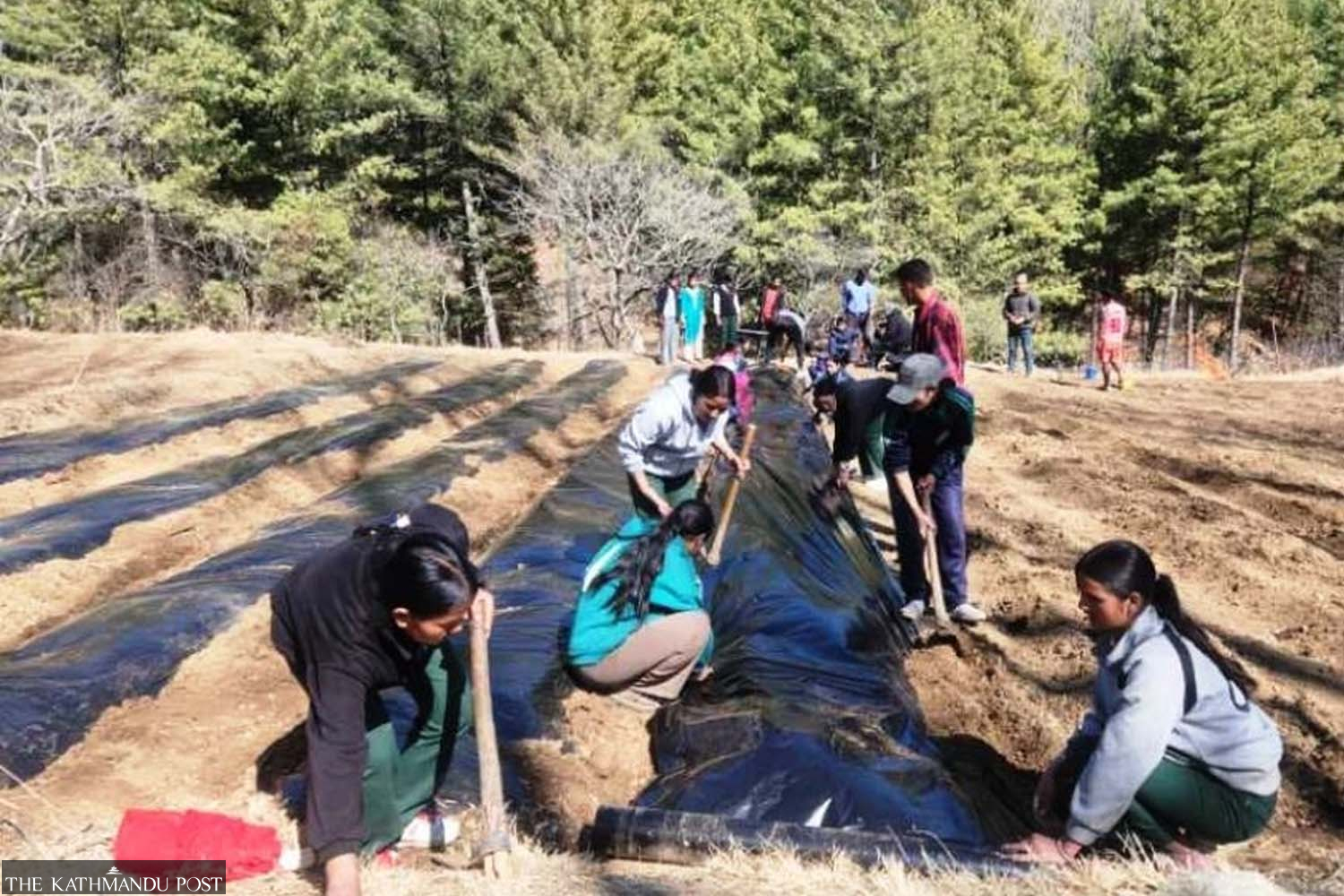
According to Nanda Chaulagain, assistant principal and a former student, the school initially offered Junior Technical Assistant (JTA) programmes in agriculture and veterinary science. Students who had completed Grade 7 were selected from villages across Karnali and enrolled in the programme.
After three years of study, students completed a 10-month on-the-job training programme.
The school covered much of the cost of accommodation, meals and learning materials.
“When I studied here, the monthly fee was only Rs25,” Chaulagain recalled. “Even to manage that amount, we sometimes had to sell firewood.”
Having joined the school as a student in 1987, Chaulagain now serves in its leadership team.
“The credit for where I am today goes entirely to this institution,” he said.
In its early years, the school enrolled only around 20 students at a time. Teacher-student ratios were exceptionally favourable, and instructors included both Nepali agricultural specialists and international volunteers from Canada and the Netherlands.
“At that time, one teacher could closely supervise just two students throughout the day,” Chaulagain said.
UMN managed the school for around 15 years before handing it over fully to the Government of Nepal in 1995. Since then, KTS has operated under CTEVT.
Today, more than 500 students from all seven provinces are enrolled at the institution.
The academic programmes have evolved considerably over the years. The school currently offers diploma-level courses in Civil Engineering, Plant Science, Forestry and Pharmacy, as well as a pre-diploma programme in civil engineering. Scholarship-supported programmes in General Medicine and Plant Science are also available.
Programmes such as CMA and ANM were offered in the past but have since been discontinued.
According to Adhikari, the school possesses substantial infrastructure, including more than 50 buildings, hostels, a library, computer and science laboratories, agricultural farms and specialised technical facilities.
“Because we already have sufficient infrastructure, KTS continues to provide quality technical education at relatively low cost,” he said.
The school currently charges around Rs70,000 for Pharmacy, Rs60,000 for Civil Engineering and Rs55,000 for Plant Science and Forestry. Students are allowed to pay in installments, and scholarship schemes support economically disadvantaged and academically strong students.
More than 150 students currently live in hostels that can accommodate over 200 people.
To attract students, the school has introduced a range of scholarship schemes. Recently, it partnered with Laxmi Sunrise Bank to provide scholarships to 25 students. In addition, CTEVT scholarships are available, while top-performing students are exempted from enrolment fees for the following academic year.
Nevertheless, Adhikari said enrolment pressure has declined in recent years as technical education programmes have expanded to community schools across the country.
Despite those challenges, he believes the institution continues to fulfil its original mission.
“KTS remains committed to producing skilled human resources and helping young people become self-reliant,” he said.
Karnali’s former provincial minister for internal affairs Naresh Bhandari said the school’s contribution extends far beyond education.
“The school is a blessing for Karnali,” he said. “It laid the foundation for technical education in the region and has produced skilled manpower that is now working across the country.”
KTS graduates can be found in agriculture, forestry, health services, construction and infrastructure development projects from remote mountain districts to Kathmandu.
Bhandari argued that the institution should now be upgraded and expanded rather than allowed to decline.
“The government should prioritise reconstruction of ageing infrastructure while ensuring quality education,” he said. “In the long term, KTS should be developed into a technical college and eventually evolve into a major centre for technical education.”


Most Read from National

Flood sweeps away houses, bridges in Gorkha

Torrent of black mud and rocks engulfs settlements along Budhigandaki

From blankets to handmade dolls, two foreign women bring comfort to flood survivors

British Gurkha veterans issue ultimatum to Nepal government over long-standing grievances

Budhi Gandaki flood washes away three bridges in Gorkha
Editor's Picks

Constitutional Bench caught in seniority, ‘pick and choose’ dispute

A Dom boy’s long road to becoming a doctor
From blankets to handmade dolls, two foreign women bring comfort to flood survivors

News Analysis: When institutional defence exposes institutional fault lines

It’s a bird … it’s a plane … it’s the Indian ambassador’s farewell tweets
E-PAPER | October 16, 2026

×