Capital spending in most ministries remains below 30 percent as fiscal year enters final stretch
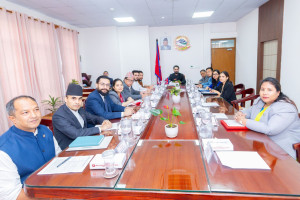
Of Rs407.88 billion allocated for development projects in the current fiscal year, only Rs124.61 billion has been spent in ten months, with delays blamed on post-protest budget freezes and structural bottlenecks. A dozen ministries have spent less than 30 percent of their allocated capital budgets. Post file photo
With about a month and a half left in the fiscal year 2025-26, capital expenditure across several ministries remains weak, highlighting persistent delays in development spending.
As of Thursday, the government had spent 30.72 per cent of its total capital budget of Rs407.88 billion. This translates to Rs124.61 billion in actual spending.
In the previous fiscal year 2024-25, capital expenditure had reached 37.72 percent.
At the time of budget formulation, there were 22 ministries, including the Office of the Prime Minister and Council of Ministers. After restructuring, the number has been reduced to 18.
Most ministries have spent less than 30 percent of their allocated capital budgets.
The worst performer is the Ministry of Federal Affairs and General Administration (now merged into the Ministry of Land Management, Cooperatives, Federal Affairs and General Administration). Of its allocated Rs756.2 million capital spending, it has used only Rs23.9 million, just 3.163 percent.
Officials said part of the low figure is due to accounting delays. The ministry said Rs660 million received from development partners, to be spent through local levels, has not yet been reflected in the system.
It also cited delays in the construction of the National Personnel Record building, where Rs87.9 million had been allocated. The project, to be implemented by the Department of Urban Development and Building Construction, has stalled due to unresolved land issues.
The Ministry of Culture, Tourism and Civil Aviation is the next lowest spender. It has used only 7.421 percent of its Rs4.8462 billion capital allocation, equivalent to Rs359.6 million.
Officials said a large portion of the budget was initially frozen. According to the ministry, around 75 percent of its allocation was blocked following the Gen Z movement and remained frozen until after the elections. Even after a gradual release, officials said there was not enough time left in the fiscal year to complete procurement and implementation.
“A significant portion was frozen at the start of the year,” said ministry spokesperson Jayanarayan Acharya. “Even though funds were later released, procurement processes alone are taking up the remaining time.”
He added that even after release, most projects would now only reach the contract stage within the fiscal year, limiting actual expenditure.
Other low-spending ministries include Youth and Sports (11.5 percent), Industry, Commerce and Supplies (11.25 percent), Labour, Employment and Social Security (11.96 percent), Ministry of Information and Communication(14.51 percent), and Ministry of Agriculture, Forests and Environment(16.33 percent).
The Ministry of Urban Development (now Infrastructure Development) has spent 21.4 percent of its Rs72.84 billion capital budget, or Rs15.59 billion.
Officials blamed budget freezes and delays in financial authority for the weak performance.
“The Rs62 billion budget was frozen, and only Rs24 billion was released in February and March,” said planning and building division chief Dilip Bhandari. “Even if allocations exist on paper, they cannot be counted as progress.”
He added that earlier restrictions on reallocating funds between projects also slowed implementation. Although some authority has now been delegated back to ministries, delays in payments and rising construction costs have affected progress.
He said contractors are also not fully mobilising due to cost pressures, further slowing execution.
Other ministries with low capital spending include then Health and Population (24.7 percent), then Agriculture and Livestock Development (24.24 per cent), then Education, Science and Technology (26.4 per cent), and then Water Supply (27.14 percent).
According to the Financial Comptroller General Office, some payments have been made through fund reallocations.
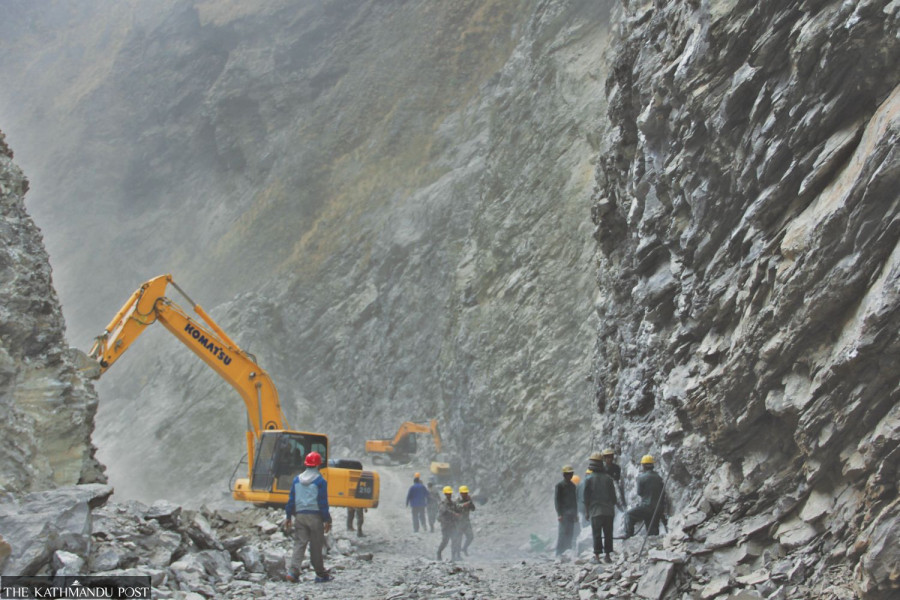
Then Ministry of Physical Infrastructure and Transport, the largest recipient of capital budget, has spent less than half of its allocation. It was allocated Rs146.28 billion and has spent Rs60.48 billion, or 41.34 per cent.
The then Ministry of Land Management, Cooperatives, and Poverty Alleviation (now merged with General Administration) recorded the highest capital spending, at 55.79 per cent. It had a capital allocation of Rs825.5 million and has spent Rs460.5 million.
Former senior officials say the persistent pattern of low capital spending reflects structural issues in budget design and execution.
Former finance joint secretary Baburam Subedi said spending delays are partly due to poor project readiness.
“When programmes are included without full project preparation, implementation naturally slows,” he said. “Road projects cannot be completed overnight. They follow processes that take time.”
He added that ministries often request larger budgets without realistic assessments of implementation capacity.
“After the budget is approved, the capacity to execute must match it,” he said.
Subedi said better prioritisation and preparation of multi-year projects could improve capital spending, while small, fragmented projects often slow execution due to repeated procurement cycles.




 23.24°C Kathmandu