A government plan launched 15 years ago to develop 10 organised and modern towns along the Mid-Hill Highway has stalled amid policy neglect, budget freezes, and weak implementation, according to local officials.
The integrated development initiative was launched with a target of settling at least 100,000 people in each town by 2033 and curbing migration from the hills. But officials say the project has become almost inactive, with no clear implementation strategy and allocated budgets remaining unspent.
The situation contradicts the government’s claims of pursuing balanced urban development under the National Urban Policy 2014 and the United Nations Sustainable Development Goals.
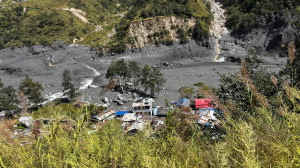
According to the Integrated Development Plan report for the New Town Project, Sanphebagar in Achham was envisioned as a major regional economic hub in Sudurpaschim’s hill region, with planned road networks, drainage systems, open spaces and modern urban facilities.
However, Rajendra Kunwar, mayor of Sanphebagar Municipality, said implementation has remained weak, and most plans are confined to paper.
“Last fiscal year, Rs60 million allocated under the new town project was frozen because the work could not move ahead,” he said. “On one hand, contractors are reluctant to work, while on the other, there are complications in the budget implementation process.”
Kunwar said no budget had been allocated for the project in the current fiscal year. He said the initiative still relies on the Town Development Act 1988 as its only legal basis, under which a committee is formed with the head of the concerned local unit as chairperson.
“Even after all these years since the project started, there is still no dedicated legal framework,” Kunwar said. “The work is continuing under the Town Development Act 1988. The government is not serious about these issues.”
Government reports also cite the 38-year-old Act as the project’s legal foundation, which local officials say has repeatedly created obstacles in land management and modern infrastructure development.
“The government introduced the concept targeting a population of 100,000 in each town,” Kunwar said. “But there has been no concrete plan or political will to achieve it. The main objective was to stop migration from the hills, but the result has been exactly the opposite.”
He said the outflow of people from hill districts to the Tarai and Kathmandu has continued due to the lack of local production and employment opportunities, leaving many villages increasingly deserted.
The project’s technical report shows that nearly 19.9 percent of Sanphebagar’s land has slopes steeper than 30 degrees, making infrastructure development highly challenging. Local officials said such terrain requires sustained investment, specialised engineering and continuous budget flow, but allocated funds have instead been reduced or frozen.
Under international standards, a new town is expected to provide education, healthcare, security, inclusion, information technology, infrastructure, online services, transparent governance, innovation, entrepreneurship, productivity and green business opportunities.
The government has also made facilities such as bus parks, recreational parks, vegetable markets, roads, drinking water systems, sports grounds, modern settlements, schools, colleges, hospitals and industrial areas mandatory components of each planned town.




 14.69°C Kathmandu