



 17.84°C Kathmandu

Sun, Oct 25, 2026
National
Nepali voters have spoken. Is the media listening?
The September uprising and its electoral aftermath have opened a window for the Nepali press to transform itself. That window won’t stay open long.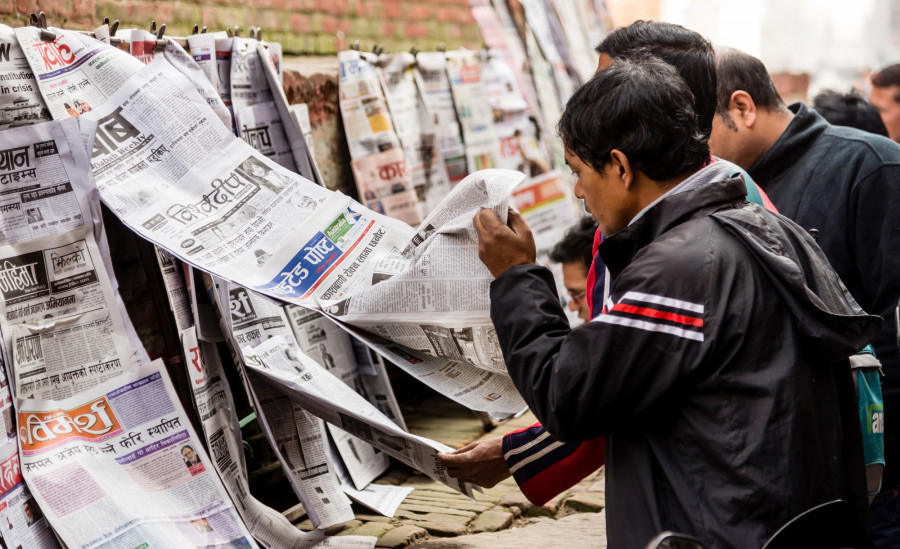
bookmark![]()
Shutterstock
Anup Kaphle
Published at : May 6, 2026
Updated at : May 7, 2026 14:02
In voting for the Rastriya Swatantra Party and giving them a thumping majority, Nepali voters did something remarkable: They didn't just change who governs, they issued clear instructions. After years of watching the same faces rotate through the same ministries while their lives remained stubbornly unchanged, citizens—led in spirit by a largely younger generation that took to the streets in September 2025—chose disruption over familiarity. They voted for accountability.
The question no one is asking loudly enough is whether Nepal’s media institutions heard that message. This election hasn’t just changed Nepal’s political landscape. It has created an opportunity for reflection and transformation for Nepali journalism, too. Whether journalism takes that opportunity, or lets it pass as it has before, is the question worth sitting with.
Elections are easy to misread. The temptation, especially for political pundits and media institutions, is to process results as a story about parties: who won, who lost, what the change means, who is positioned to lead what ministries and so on. That analysis has its place, and it dominated television, print and social media throughout the election cycle. But underneath the electoral arithmetic was something more fundamental: a citizenry expressing exhaustion with the gap between political promise and their lived reality.
The Gen Z youth who marched in September 2025 were not asking for a different party. They were asking for a different relationship between power and accountability. They wanted institutions—government, civic and media—to behave as if ordinary people's lives were the point. That is the mandate the election produced. It applies to those who won office. It also applies, with equal force, to those who cover them.
Throughout its recent history, Nepali journalism has been organised, structurally and culturally, around political parties as the primary unit of focus. A cabinet reshuffle gets more coverage than a failed infrastructure project. A party press conference shapes the news agenda more reliably than a farmer’s inability to sell his sugarcane crop, or a rape case that never got resolved, or an unemployed graduate’s calculation that emigration is his only real economic option. For too long, the Nepali media has mistaken proximity to power for accountability to the public. Even outlets that have emerged as alternatives to traditional media have stumbled: Routine of Nepal Banda, which has built a large following among younger audiences, has faced pointed criticism for coverage that reads more like advocacy for Balendra Shah than independent journalism.
No media organisation, including Kantipur, is exempt from this critique—but this is not a blanket indictment. Nepali journalism has produced real accountability work, investigations that exposed corruption, reporting that documented state failures, and journalists who have operated with integrity under considerable pressure. By regional standards, Nepal’s mainstream press compares favourably. Relative to India, where editorial independence has come under sustained institutional pressure, Nepali journalism retains meaningful plurality and a tradition of accountability reporting that cannot be dismissed.
The critique, then, is not of individuals or individual stories. It is structural—about the profession’s default posture, its organising logic, the gravitational pull that has historically oriented coverage toward parties and power rather than toward the people those parties are supposed to serve. That drift, left uncorrected, gradually became Nepali media’s identity.
The recent election results suggest that readers—particularly younger ones—no longer accept that identity as inevitable. Their trust is up for grabs in a way it hasn't been in a generation. But that window will not stay open indefinitely, and there is little in the recent history of Nepali journalism to inspire easy confidence that the profession will seize it.
Journalists must cover politicians—relentlessly, when necessary. But the organising question of how coverage is framed has to change. Not “what did this politician say?” but “what did you promise, who voted for you based on that promise, and what has actually changed in their lives?” Power is supposed to be landing on ordinary people. In a country where accountability has been chronically hard to find, journalism’s job is to follow power and report honestly on whether it delivered.
This means coverage should be organised around people and issues rather than parties. It means the farmer in Chitwan asking whether the new government’s agricultural commitments translated into anything at his cooperative. It means the young man in Dhanusa calculating whether there is an economic future here or whether the Gulf is still the answer. It means returning, six months from now, to the families in Dharan who voted for change and asking a simple, uncomfortable question: what changed?
It also means something harder to institutionalise—a different way of conducting journalism itself. Credibility is not just a function of what gets published. It is a function of relationships: with sources, with readers, with power. Journalism that is organizationally close to the parties it is supposed to hold accountable will reflect that proximity in its coverage, whether or not that is the intention. The case for independence is not merely ethical at this moment. Readers are also watching to see if the media understands what they voted for.
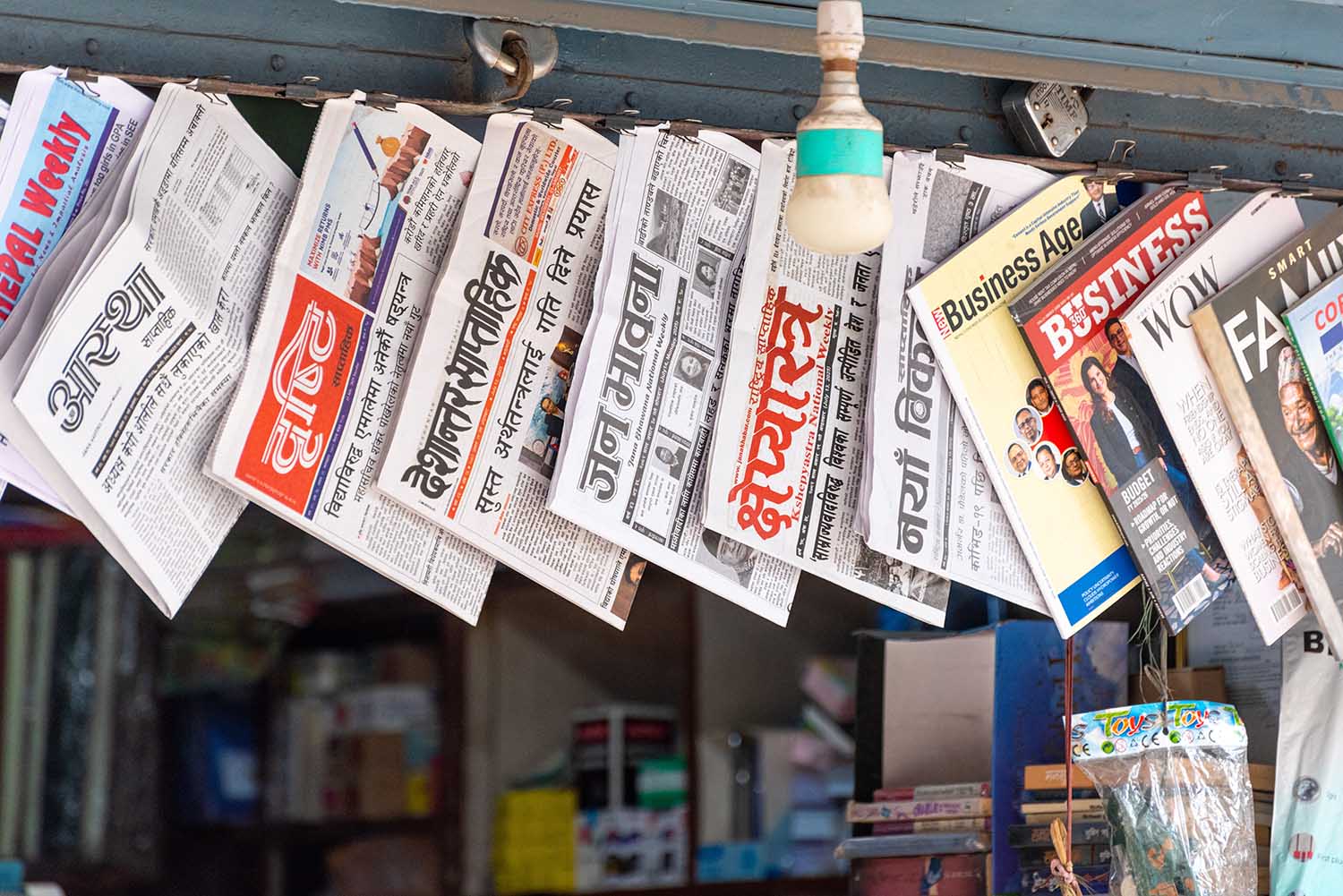
There is a more specific problem the profession has been reluctant to name. Nepali journalism has a well-documented revolving door — journalists who avoid serious scrutiny of a politician or corporate house during their reporting years, and later accept appointments, advisory roles, or positions with those same figures and institutions. It shapes coverage in advance, creating incentives to stay close and stay useful to power rather than hold it accountable. Conflict of interest, in this context, is a career logic that has become normalised, and it is one of the primary reasons public trust in the press has eroded. Any honest reckoning with Nepali journalism’s structural problems has to include this.
But the problem does not sit with journalists alone. Media ownership in Nepal is its own accountability gap. Many outlets were founded not primarily as journalistic enterprises but as instruments of influence — by politicians seeking favourable coverage, by business houses wanting protection from scrutiny, by interests that saw a media property as leverage rather than a public service. When ownership is structurally compromised, editorial independence becomes a negotiation at best and a fiction at worst. Journalists working inside such institutions are facing impossible choices: do you practice the journalism you believe is truly in public interest—or do you try to keep your jobs? This is not a crisis of individual ethics, it’s a crisis of ownership, and any serious conversation about the future of Nepali journalism has to name it directly, especially, among those with the capital to build something better.
The September protests generated civic energy that is, by nature, perishable. Movements either get absorbed into the institutions they challenged, transform those institutions, or dissipate. Nepal's own history offers the evidence: look at what became of the popular energy behind every major movement since the restoration of democracy in 1990. The young people who drove last September’s uprising are not yet captured by the patronage relationships and partisan loyalties that eventually reshape every political generation. For a brief period, journalism that speaks honestly to their experience, that treats accountability as a daily practice rather than an occasional pose, can reach them before those relationships solidify.
That offer comes with an expiration date. Political formations tend to have a gravitational pull. The new faces in power will develop their own relationships with journalists, media institutions, and the social media platforms that now shape public discourse as powerfully as any newspaper or broadcast. Old habits will find new justifications. New patronage will replace old patronage. The question is whether Nepali journalism builds something different enough, quickly enough, that it becomes genuinely load-bearing and is embedded in how the work gets done, not merely in what the profession aspires to be.
The public trust that Nepal’s major media organizations accumulated over decades was not granted because they were powerful. It was granted because, at their best, they were useful. Useful to citizens trying to understand their communities, hold their leaders accountable, and make sense of a country in constant, often disorienting motion. That original compact is what this moment is calling the profession back to.
Anup Kaphle
Anup Kaphle is the Group Editorial Director of Kantipur Media Group. He previously served as the editor-in-chief of Rest of World in New York, where he led award-winning coverage of technology's impact in the emerging markets. He has spent nearly two decades in U.S. newsrooms covering international affairs and national security, including roles at The Washington Post, BuzzFeed News and The Atlantic.



Most Read from National

Flood sweeps away houses, bridges in Gorkha

What to know about the US trial over Mamta Kafle’s disappearance

Torrent of black mud and rocks engulfs settlements along Budhigandaki

Budhi Gandaki flood washes away three bridges in Gorkha
Locals alerted each other of Budhigandaki flood an hour before official warning
Editor's Picks




E-PAPER | October 25, 2026

×