A dramatic shift in the country’s electoral landscape has dismantled many long-standing political bastions, delivering unexpected defeats to several senior leaders and established political parties across the nation. Constituencies that had long been dominated either by a single party or by the same leader for decades have seen their political equations overturned in the House of Representatives elections held on March 5.
In several provinces, voters have rejected familiar faces and political legacies, allowing new contenders—particularly from the Rastriya Swatantra Party (RSP)—to secure landslide victories. Candidates widely expected to win before the polls were held not only lost but, in many cases, lagged far behind with thumping vote margins.
Campaigning on the slogan of “change”, the RSP achieved significant success in the parliamentary polls. In many of the traditional strongholds, the RSP’s candidates have emerged victorious with overwhelming margins.
In Lumbini province, several constituencies previously regarded as communist strongholds have fallen. Among the 26 parliamentary constituencies in the province, many were won by the RSP candidates. Traditional political heavyweights from both the CPN-UML and the Nepali Congress were unseated in districts including Rupandehi, Gulmi, Palpa and Bardiya. Except for victories by coordinator Nepali Communist Party (NCP) Pushpa Kamal Dahal in Rukum East and Barshaman Pun in Rolpa, the party also lost most of its previously held constituencies.
One of the most striking defeats occurred in Rupandehi Constituency 2, where UML Vice-chairman Bishnu Paudel lost to 28-year-old RSP candidate Shulabh Kharel. Paudel had won from the constituency continuously from 2008 to 2022. However, Kharel secured 56,550 votes out of 86,303 valid ballots cast, defeating Paudel by a margin of 43,689 votes. Paudel received only 12,861 votes, ending a political run that had spanned more than a decade.
In Gulmi-2, another established leader, UML vice-chair Gokarna Bista, was defeated by RSP candidate Govinda Panthi, a former police officer. Bista had been elected from the constituency since the second Constituent Assembly election in 2013 and was widely considered assured of victory. Yet Panthi secured 16,967 votes, narrowly defeating Bista, who obtained 16,406 votes.
In neighbouring Palpa-2, a constituency where communist candidates had consistently won since 1994, Nepali Congress candidate Sandip Rana broke the streak by defeating UML’s Narayan Prasad Acharya. Rana secured 18,336 votes against Acharya’s 16,811.
A particularly symbolic political shift occurred in Dadeldhura, home district of five-time prime minister and two-time Nepali Congress president Sher Bahadur Deuba. The hill district of Sudurpaschim province was long considered a bastion of the Nepali Congress. After more than three decades of Congress dominance, the constituency delivered a surprise result when RSP candidate Tara Prasad Joshi defeated Congress contender Nain Singh Mahar. Joshi bagged 19,131 votes compared to Mahar’s 12,121.
For decades, Dadeldhura had been synonymous with the political career of Deuba, who represented the constituency repeatedly and won from there since 1991. However, the former Congress chief was denied a ticket this election, and his absence appears to have weakened the Congress grip on the constituency.
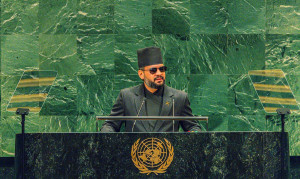
In Koshi province, another dramatic upset occurred when former prime minister and UML Chairman KP Sharma Oli was defeated by RSP senior leader Balen Shah in Jhapa-5. Shah secured 68,348 votes, while Oli managed only 18,734. Apart from a defeat in the 2008 Constituent Assembly election, Oli had largely dominated electoral politics in the region for years.
Several other influential figures in Jhapa also suffered defeat. RSP candidate Nisha Dangi was elected from Jhapa-1, the home constituency of Congress vice-president Bishwa Prakash Sharma though he did not contest the polls this time. Rastriya Prajatantra Party chair Rajendra Lingden was also defeated in Jhapa-3. UML leader and former Speaker Devraj Ghimire also lost in Jhapa-2.
The wave of political change was also visible in Morang district. In Morang-4, two-time winner Amanlal Modi of NCP lost to RSP candidate Santosh Rajbanshi. In Morang-6, Rubina Acharya defeated a candidate representing the political legacy of the Nepali Congress Shekhar Koirala. In Morang-2—the political bastion of late Congress leader Girija Prasad Koirala—RSP’s Krishna Kumar Karki defeated Congress leader Minendra Rijal, while in Morang-1, RSP candidate Yagyamani Neupane emerged victorious against both Congress and UML contenders.
In Karnali province, the Nepali Congress reclaimed ground in Jajarkot after nearly two decades. Congress candidate Khadak Bahadur Budha defeated former Maoist leader Shakti Bahadur Basnet by 2,735 votes. Budha secured 20,142 votes against Basnet’s 17,407, restoring the party’s presence in the constituency after 18 years.
A similar shift occurred in Dailekh-1, where Congress candidate Basana Thapa defeated UML’s Rabindra Raj Sharma with 12,372 votes to 11,796. The constituency had been held by UML or the former CPN (Unified Socialist) for over a decade. Similarly in Surkhet-2, RSP candidate Ramesh Kumar Sapkota won with 30,842 votes, defeating both Congress and UML contenders and ending the traditional dominance of the two major parties in the constituency.
In Madhesh province, the influence of Aam Janata Party chair Prabhu Sah in Rautahat-3 also declined sharply. Sah, who had dominated local politics for years and contested parliamentary elections five times, finished third as RSP candidate Rabindra Patel secured victory with 27,318 votes. Sah managed only 9,890 votes.
Political analysts say the collapse of long-standing strongholds reflects growing public dissatisfaction with entrenched leadership and political patronage networks. According to political analyst Devraj Pokharel, the repeated election of the same leaders from the same constituencies often creates entrenched power structures that eventually alienate voters.
“When the same person continues to win from the same constituency for a long time, a structure of dominance develops and eventually breeds corruption. Over time, anti-establishment sentiment builds among voters and such strongholds collapse when a new movement or political force emerges,” said Pokharel.
The latest election results suggest that the country’s political map is undergoing a profound transformation, as voters increasingly challenge traditional power bases and seek alternatives to long-dominant parties and leaders.
(Ghanashyam Gautam in Butwal, Arjun Shah in Dhangadhi, Parbat Portel in Biratnagar, Krishna Prasad Gautam in Surkhet, Shiva Puri in Rautahat and Deepak Pariyar in Pokhara reported the news story)




 20.85°C Kathmandu