Nepal’s political shift is making some youths rethink going abroad
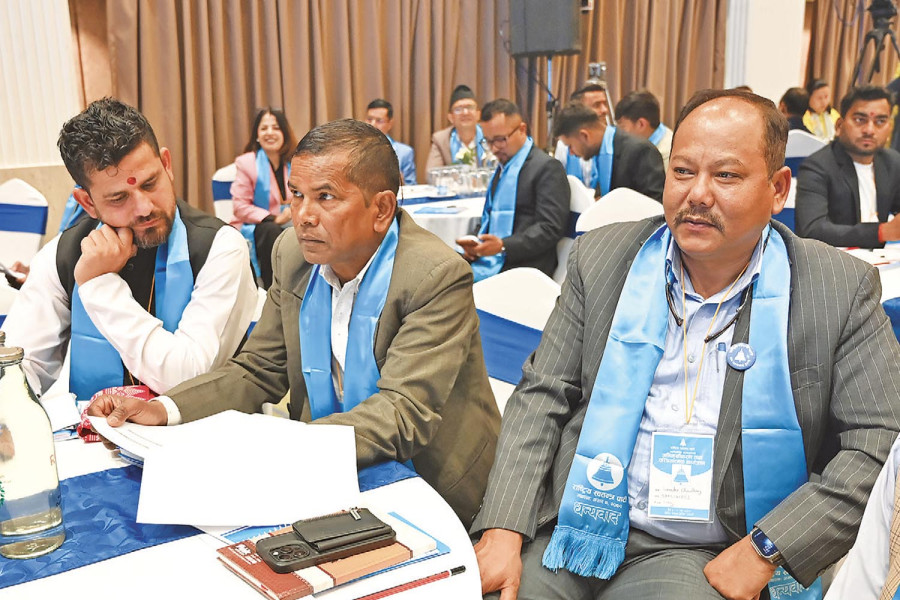
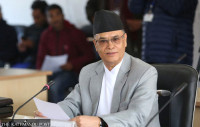
Many of them are hopeful about their future after Gen Z uprising and recent election results. Rastriya Swatantra Party’s new lamakers during an orientation on parlimentary conduct and proceedings, at a hotel in Lalitpur, earlier this week. Angad Dhakal/TKP
For years, preparing for IELTS and planning a future abroad has been almost routine for many Nepali youths. But in the weeks following the March 5 snap parliamentary elections, social media has been flooded with memes suggesting the opposite: young people joking they no longer need to leave because the country will finally develop.
Behind the humour, however, is a real shift in conversation. The rise of new political actors, including the former mayor of Kathmandu, Balen Shah, and the growing popularity of the Rastriya Swatantra Party—which secured a landslide victory and Shah is set to become prime minister—has sparked optimism among some youths who say they are reconsidering plans to go abroad, even as others remain cautious.
The election itself marked a significant moment. According to the Election Commission, 18.9 million voters were registered, with turnout around 60 percent. More than 52 percent of registered voters were aged 18 to 40—a reflection of Nepal’s youth‑heavy electorate. Notably, more than 100,000 Nepalis travelled from abroad to vote, highlighting how deeply citizens remain invested in the country’s future.
That optimism has quickly taken space online.
Instagram and TikTok reels with tens of thousands of likes capture a shared generational irony. Young Nepalis joke that just as they were about to leave school, their institutions suddenly improved with better facilities and opportunities. Now, as they think about leaving the country, Nepal too is ‘‘finally’’ beginning to develop.
The tone is both humorous and bittersweet. Some users comment that they will now go abroad ‘‘only for travel,’’ while others already living overseas push back, saying such jokes overlook the emotional cost of migration. The trend has also extended to small business owners posting reels [short video clips] about skipping plans to go abroad and instead starting ventures in Nepal, often referencing a “Balen-led government.”
What began as a joke is increasingly reflecting a real, though cautious, shift in mindset among Nepali youths, a shift that early data on study permits and students' departures seems to support. While social media captures humour and hope, the numbers suggest a more nuanced picture of how many are reconsidering plans to go abroad.
According to the Ministry of Education, 41,237 no-objection certificates (NOCs) were issued in the first three months of 2025, compared to 36,514 in the same period of 2026. Officials caution that these figures do not directly translate to the number of students leaving the country, as many applicants seek approvals for multiple destinations or reapply after changing plans.
Data from the Department of Immigration (DOI) offers a clearer measure. According to the spokesperson, Tikaram Dhakal, a total of 28,810 students left Nepal on study visas in the first three months of 2025, compared to 22,080 in the same period of 2026.
The decline cannot be directly attributed to recent political changes.
But it does align with a moment in which online sentiment and individual decisions suggest a growing willingness among some youths to pause and reconsider the long-held assumption that leaving Nepal is the only path forward. Tighter immigration rules in countries like the US under Donald Trump and similar measures elsewhere, might also be quietly influencing some, even if no one openly mentions it.
For some, that reconsideration is already personal.
Saransh Dahal, a 24-year-old civil engineer, says he recently decided to pause his plans to prepare for IELTS.
Sharing one of the trending memes online, he wrote: “Shouldn’t we all be ready to see the country being developed?’’
Like many young professionals, he had been uncertain about building a future in Nepal. But the recent political developments have made him reconsider.
He said, “The election result looks very promising and I’m very hopeful now. I want to stay in Nepal and witness the changes by contributing to it.”
For younger students, the decision is also shaped by global uncertainties.
Sauriya Budhathoki, 18, was three months into IELTS preparation when election results began coming in. As support for the Rastriya Swatantra Party grew and Balen Shah secured a thumping victory, her social media feed filled with a question she found herself asking: Do I even have to go now?
“Budhathoki also points to the uncertainty faced by Nepali youths working abroad, particularly in Iran and Dubai experiencing instability.’’
Seeing the world scenario, it’s better for youths like me to stay back,” she said.
She says the mindset among her peers is shifting.
“Just like me, my friend circle’s goal of leaving this country at any cost has changed now,” she said. “My seniors left not because they wanted to but because they had no choice. This government gives us hope that we might finally have that choice.”
Given these concerns, Budhathoki says she is willing to wait and observe.
“I’ll give the upcoming government the benefit of the doubt,” she said.
While the memes circulating online often celebrate the idea of staying back, not all young Nepalis see the situation the same way.
Karina Puri, a newly licensed lawyer, says her plans remain unchanged.
“I choose to go abroad,” she said, pointing to no opportunities in sports law. “We shouldn’t be expecting rapid changes in education institutions as the new government has just started to form.”
She said, “Most of us youths are in our early twenties and I don’t think all sector growth is possible within our twenties.” So we should not be taking risks with our careers.
For others, the moment is defined by both excitement and reflection.
Sweekriti Dangi, a 24-year-old law student, remembers standing in the streets during the Gen Z protests that preceded the political shift.
Dangi says she is noticing the change in everyday conversations among friends and classmates.
“For the first time in a long time, I see something different,’’ ” she said. “Friends who were preparing to leave Nepal are pausing their plans. Some who already left are talking about coming back.”
But she adds that meaningful reform takes time.
“Systems don’t change overnight,” she said. Real change takes process, patience, and time. Nothing meaningful in governance happens with the snap of a finger. “The hope of Nepali youths today is very high—and I wonder what happens if that hope is not met.”
Even so, she said, ‘‘There is still hope–so much hope that for a while I am also not prioritising leaving Nepal either. But hope without patience can also break hearts.”
“And right now, I really feel Nepal stands somewhere between those two possibilities.”
Aarya Chand is a reporter at The Kathmandu Post covering social issues. Before moving to the social beat, Chand was an intern covering culture and lifestyle for the Post.




 15.26°C Kathmandu