Harka Sampang’s clean image, labour-focussed campaigns, grassroots connection, and public frustration with old guard drove the party’s success, analysts say.
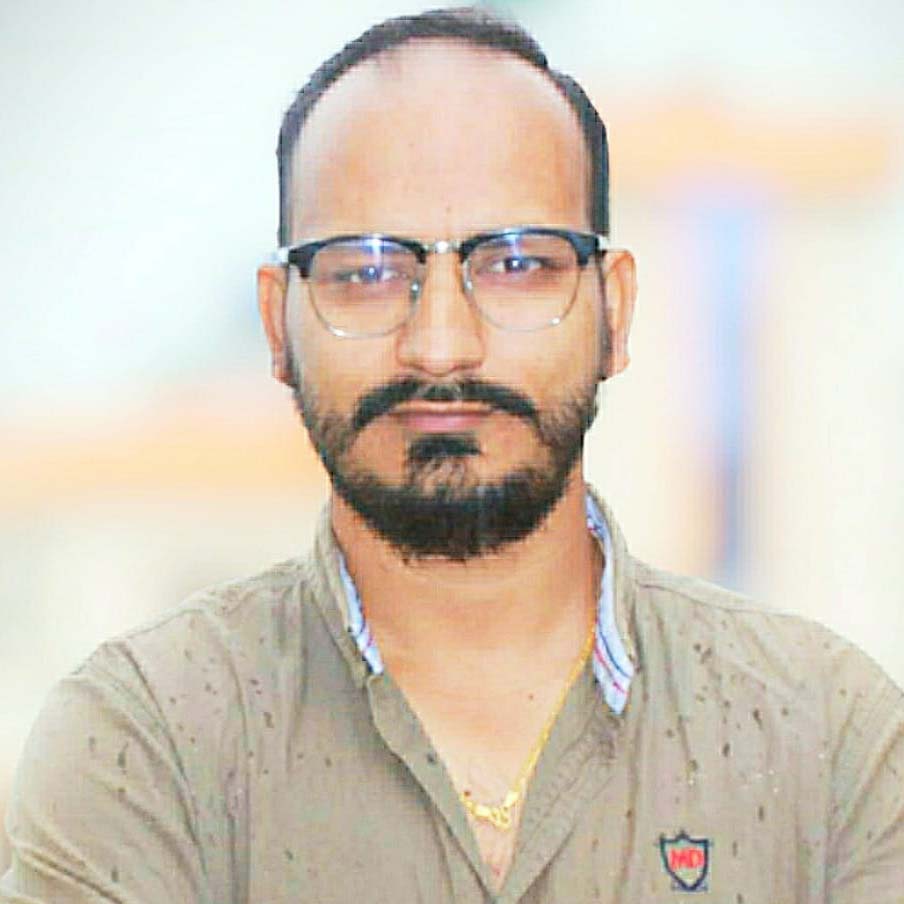
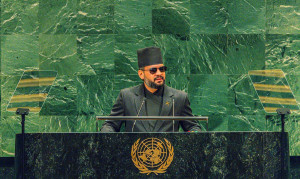
Within just four months of its formation, the Shram Sanskriti Party (SSP), led by Harka Sampang, the former mayor of Dharan Sub-metropolitan City, has emerged as the fifth largest party in the House of Representatives, securing three seats under the first-past-the-post (FPTP) system and four under proportional representation (PR) in the March 5 elections.
The election, conducted under an interim government formed in the aftermath of the anti-corruption Gen Z uprising in September, saw 68 political parties competing for 165 FPTP seats, while 64 parties contested 110 proportional representation seats. Ultimately, only six parties, including the SSP, gained national party status.
To qualify as a national party, a political force must secure at least three percent of the total PR votes and win at least one FPTP seat.
In Koshi province, where Sampang built his political base as independent mayor of Dharan until before the elections, his new party managed to secure three seats, a major achievement for a party that contested its first elections.
The Rastriya Swatantra Party (RSP), the largest party in Parliament with a total of 182 seats, emerged dominant in the province with 17 seats. The Nepali Congress and the CPN-UML, the second and the third largest parties in Parliament, won four seats each. Maoist leader Pushpa Kamal Dahal’s new party, the Nepali Communist Party, which came fourth nationwide, failed to win any seats in Koshi.
In the 2022 elections, the RSP had emerged as the fourth largest force in the House of Representatives, winning 20 out of 275 seats despite a short preparation period. At the time, its success was largely attributed to growing public frustration with traditional political parties.
A similar pattern unfolded this time. Within a few months of its formation, Sampang’s SSP rose to become the fifth largest party.
Out of 28 constituencies in Koshi Province, the party won three—Sunsari-1, Bhojpur, and Khotang—running a modest campaign centred on the idea of a “labour culture” and corruption-free politics, emphasising hands-on, community-based work such as farming, digging, and other manual tasks. In 2023, while serving as mayor, Sampang and local volunteers spent months laying a water pipe from the Kokaha river to Dharan, working side by side with the public. Political observers including Keshav Dahal cited these approaches as a key reason why Sampang’s party achieved national status in a short period.
Dahal also points out that the SSP benefited from a political vacuum in the areas where established parties failed to offer convincing leadership or agendas. In such a context, the SSP was able to position itself as a practical and people-centred alternative, he says.
He added: “The off-beat political character of Sampang, his straightforwardness with the public, his focus on labour culture, and ethnic identity helped the party to gain momentum quickly.”
Govinda Chhantyal, an activist in identity politics, describes Sampang as an “organic” leader, whose deep connection with his grassroots base earned strong public support.
The Gen Z revolt of last year had also effectively rejected the traditional parties and their leaders. When the traditional parties weakened, Sampang’s party got an opportunity to rise, Chhantyal argues.
“He speaks openly and presents himself as he is, without pretense. That authenticity resonated with his community,” Chhantyal explains. “At a time when identity-based movements and a search for alternatives were growing in eastern Nepal, many saw Sampang as a leading face.”
Chhantyal also believes the split of Kulman Ghising, the NEA chief credited with ending load-shedding and former energy minister, from the RSP less than two weeks after unification helped Sampang reinvigorate his party on an identity platform in Koshi province.
Ghising had initially launched Ujyalo Nepal Party in November and a month later merged the party with the RSP, but the unification did not last.
“I doubt Sampang’s party would have gained national status had Ghising not split from the RSP,” Chhantyal argues.
But SSP leaders dismiss such claims and attribute their success to both identity politics and Sampang’s clean image as Dharan mayor.
“Our party contested elections just two months after party registration and was only four months old at the time. Winning seven seats without a functional party organisation is something we must celebrate,” says SSP Deputy General Secretary Sameer Tamang.
Encouraged by its early success, the SSP has pledged to play the role of a strong opposition in Parliament. Tamang adds that the public has entrusted them with the role of a watchdog in the legislature and the party intends to fulfil it effectively.




 15.26°C Kathmandu