A total of 3,406 candidates, representing 68 political parties and independents, are contesting the March 5 election.
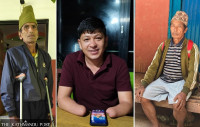
Among them are two cooperatives victims, Kushlav KC from Kathmandu-1 and Dev Kumar Shrestha from Kathmandu-10. They say they decided to contest the elections to represent the voices of hundreds of victims in parliament.
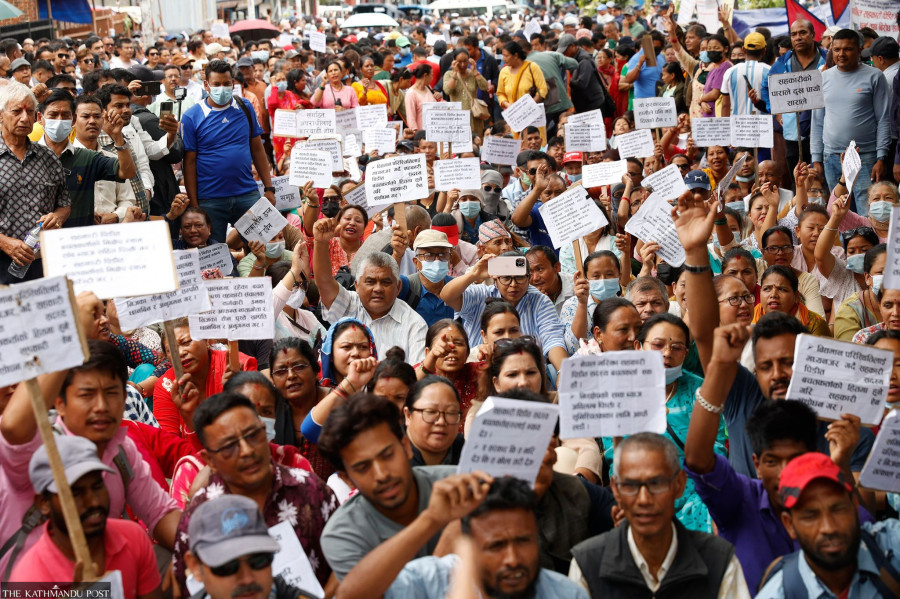
After the government repeatedly failed to implement agreements reached with the National Campaign for the Protection of Cooperatives Savers, the victims, who have been protesting for a long time, decided to enter the electoral race. KC and Shrestha have got “pressure cooker” as their election symbol.
Accusing previous governments of repeatedly failing to implement past agreements, the campaign had earlier alleged that the Sushila Karki-led interim government was not paying heed to their voices. Holding a press conference in November last year, they even warned of disrupting the election.
However, after the government’s decision to deploy the Nepali Army for election security, KC and Shrestha say they chose to contest the election with minimal preparation to press their demands through democratic competition.
Although the Cabinet three months ago decided to deploy the army for the March 5 election, the decision was implemented only on February 4.
“Until the cooperatives crisis is resolved, the country’s economy cannot function properly,” said KC. “Our representation in parliament is necessary to resolve the cooperatives problem.”
Meanwhile, Shrestha says that although his home is in Balaju, Kathmandu-9, nearly 90 percent of cooperatives victims in the Capital are scattered across various areas of Kathmandu-10.
He claims that he decided to file his candidacy specifically to address their grievances and give voice to their suffering.
The constitution of Nepal, promulgated in 2015, adopted a three-pillar economic model, acknowledging the roles of the public, private, and cooperatives sectors within a mixed economic system.
Through the participation and development of the public, private, and cooperatives sectors, sustainable economic growth was expected to be achieved. However, one of the pillars of the economy—the cooperatives—mentioned in the constitution, has been paralysed for a long time.
During election season, political parties pledge in their manifestos to resolve the cooperatives crisis. In their manifestos for this election, parties have once again outlined their own proposed measures to address the issue.
However, cooperatives victims themselves say they are not convinced by the commitments made by political parties.
According to a government estimate, around 3 million people are members of over 32,965 cooperatives operating across the country.
The government led by KP Sharma Oli, which was ousted by the September Gen Z movement, dissolved the Cooperatives Department last January and established the National Cooperatives Regulatory Authority (NCRA) to address problems in the sector.
Although a cooperatives ordinance was issued to enable the authority to function more swiftly and effectively, it has failed to deliver meaningful results for more than a year after its formation. The authority has repeatedly said that it has been unable to work effectively due to a prolonged shortage of adequate staff.
However, according to Madan Bhujel, chair of the NCRA, the authority has recently developed a new software system.
Bhujel says that, in line with Section 20(A) of the Cooperatives Act, the registration and record-keeping process is currently underway. For this purpose, cooperatives across the country that are engaged in major transactions were invited to enroll in the system.
He states that more than 9,000 cooperatives have so far completed their registration through the software. Of these, around 900 have already received certificates from the authority.
“We have been carrying out our responsibilities with a limited workforce because the government has not provided the needed staff. Of the 74 positions approved, 43 were to be deputed from the Government of Nepal. Yet only 14 officials have been assigned to the authority,” Bhujel said.
Until a new government is formed after the election, it appears we will have to continue operating the NCRA with this limited number of staff. This has also prevented us from delivering the level of work that was expected, he said.




 14.69°C Kathmandu