Cooperatives victims don’t fully trust parties to refund their lost savings
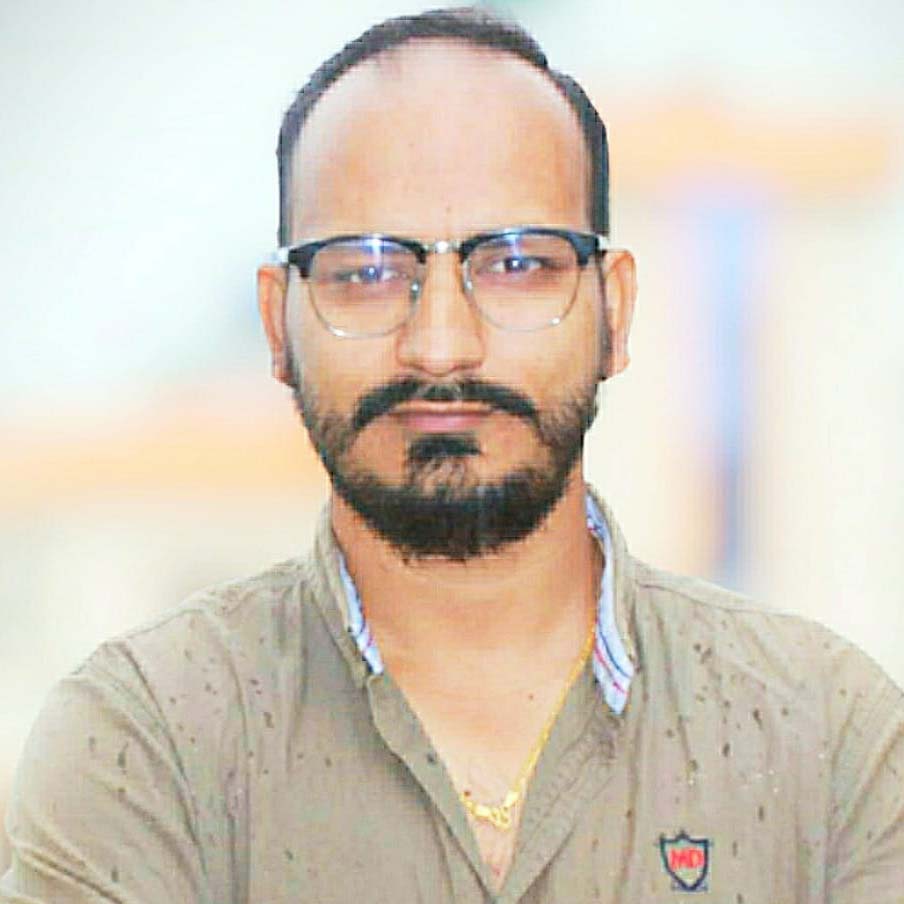
Thousands of cooperatives depositors across Nepal remain trapped in uncertainty as they fail to recover their savings. Benumaya Katuwal, a cooperative victim. Post Photo
As the election winds sway people in Jhapa, a disabled elderly woman from the eastern district remains unmoved. Benumaya Katuwal, 60, has no permanent home in the district’s constituency-5, where former mayor of Kathmandu Metropolitan City and senior Rastriya Swatantra Party leader Balendra (Balen) Shah has challenged CPN-UML chair and former prime minister KP Sharma Oli in the March 5 polls.
Katuwal, a cooperative scam victim, lived for over a decade in Kirtipur, Kathmandu, on a body that never fully supported her. A neurological illness in childhood left her physically disabled and struggling with speech. Her body might have faltered, but not her determination.
She pushed herself through immense challenges to complete not one but two postgraduate degrees—in Nepali and Sociology—from the Tribhuvan University Campus, Kirtipur. “I completed the thesis for both subjects as early as 2009,” she wrote in a Whatsapp response to the Post’s inquiry.
Yet her academic perseverance did not translate into a career. Time and again, she was turned away from jobs because of her disability. By 2009, with no other option, she began selling mobile recharge cards on the streets of Kathmandu.
From six in the morning until seven in the evening, she walked from Kirtipur to Panga, Tyanglaphant, TU Gate, Balkhu, Kuleshwar and Kalimati, carrying a bag of recharge cards. For every 1,000 rupees of sales, she made a profit of just five rupees, she shares. It was a tough job, but it kept her going until the Covid-induced lockdowns in early 2020.
Over the years, with small contributions from well-wishers mindful of her condition, Katuwal managed to save 900,000 rupees. She had expected it to be her safeguard for old age.
But the cash has vanished.
The money Katuwal entrusted to two cooperatives, Shekhardeep Cooperative in Kirtipur and Gautam Cooperative in Kuleshwar, evaporated due to embezzlement by their managers.
Gopal Tripathi, former adviser to the National Federation of Cooperative Victims, says he knows Katuwal as one of the victims. “She has been living a destitute’s life,” Tripathi adds, after her hard-earned money was embezzled by two cooperatives.
“I stayed in the university hostel until I finished my postgraduate studies. Later I moved to Kirtipur, which was a compulsion as no student is permitted to stay on in the hostel after completing their study,” Katuwal recounts. “The building I lived in also housed the Shekhardeep Cooperative. Tempted by the promise of high interest, I deposited 400,000 rupees there. That money has now disappeared.”
She further explains that the Rs500,000 she managed to save from years of selling recharge cards as well as donations from various organisations was deposited to the Gautamshree Cooperative in Kuleshwar, Kathmandu. That saving, too, has been misappropriated by the cooperative owners.
Today, Katuwal lives in Damak, renting a small room, with a supportive younger sister. Her parents died long ago, and her other siblings are busy with their own lives. She says she never had a family of her own.
For Katuwal, the loss of her savings is devastating. It is not only about the lost money, but also about the betrayal of trust and the shattering of her fragile hope for a dignified life.
Unable to speak clearly but able to communicate in writing, Katuwal did not remain silent. She filed petitions with the Ministry of Cooperatives, the Department of Cooperatives and other offices, begging for her money back. “I went to every office I found relevant, yet nowhere was my pain heard,” she shared with the Post.
“I read news articles about the election buzz across the country. However, no political party has brought forward a definite plan to address the issue faced by the cooperatives victims,” Katuwal wrote to the Post.
The RSP, in its election manifesto, proposes a special plan to protect the savings of depositors affected by troubled cooperatives and financial institutions. It pledges to establish a unified state Savings Protection Fund to safeguard depositors’ money.
The RSP manifesto makes it clear that its goal is not merely to send operators to jail but to ensure that depositors actually get their money back. Guided by the principle of ‘not just punishment, but resolution through dialogue,’ the party states that if the operators or management of any cooperative or financial institution can present a credible source of funds and a workable repayment plan, the matter could be settled legally through reconciliation rather than imprisonment.
Since Rabi Lamichhane, the RSP president, has faced legal issues related to the nationwide cooperatives scam, the party’s position on the issue is of interest to many. Lamichhane, having spent months in jail, was freed in December last year after paying a bail of Rs27.48 million. He still has cases pending in several districts related to cooperatives money embezzlement as managing director of the now defunct Gorkha Media Network.
Like the RSP, the Nepali Congress, the CPN-UML, and other parties have pledged in their election manifestos to refund small cooperatives depositors. The government in the budget has made a similar pledge. However, victims like Katuwal have little trust in such promises.
“Every political party has published their election manifesto mentioning the problems faced by the cooperatives sector, but none has taken any definite step to give justice to the victims,” Katuwal wrote. “I myself was victimised by two cooperatives, but no political party has spoken in our favour.”
The government agencies entrusted with delivering justice to her find an easy way out, citing jurisdictional issues.
Suchitra Rai, deputy registrar at the Department of Cooperatives, claimed that the constitution has declared that most of the cooperatives fall under provincial and local jurisdictions, so her department is not automatically informed about every cooperative.
However, she also agrees that the Gautamshree Cooperative in Kuleshwar and Shekhardeep do fall under her department’s purview. They are also under the jurisdiction of the problematic cooperative management committee, which currently is studying 23 such cooperatives, including Gautamshree.
On the department’s recommendation, the Ministry of Land Management, Cooperatives and Poverty Alleviation declared the cooperatives problematic on March 26, 2024 and formed a management committee in accordance with the law.
“Once the problematic cooperative management committee addresses the issues, Katuwal’s case will also be taken up,” Rai said. “We will proceed with the refund after the department identifies a method to return the savings of that cooperative’s depositors.”
Katuwal’s case is not unique. Thousands of cooperatives victims across Nepal remain trapped in uncertainty, unable to recover their savings. But hers stands out for the sheer persistence of a woman who has fought hardship at every stage of her life.
Born in Ilam, Katuwal’s life was marked by hardship from an early age. At just seven years old, she fell gravely ill. With hospitals out of reach, shamans were called in to perform rituals. The illness left lasting physical weakness.
Her longing for education began early. Watching her friends go to school, she too wanted to learn. But just before her Grade 5 exams, tragedy struck. Her mother died when she was 17. At home were three younger sisters and a baby brother, only a year old. Suddenly, she was responsible for the household, farming, cooking, and caring for her siblings.
Two years later, her father remarried, but her stepmother opposed her education. “Who will care for your brothers and sisters? If you go to school, we will not give you a single penny,” she remembers being told.
Undeterred, she borrowed money from relatives for books and admission fees and returned to school. She passed her SLC in 2002 from Shree Singhadevi School in Aamchowk, Ilam.
Still, her disability made finding work nearly impossible. After completing her Bachelor's degree from her hometown, she moved to Kirtipur, Kathmandu, to pursue her Master’s at Tribhuvan University. First in Nepali, then in Sociology, she passed but found herself again sidelined due to her disability.
Katuwal’s personal tragedy reflects a wider national crisis. Thousands of Nepalis have lost their savings to troubled cooperatives. To address this, the government formed the National Cooperatives Regulatory Authority (NCRA) through the Cooperatives Ordinance in January 2025. But even a year after its establishment, the authority has yet to make any definite move.




 14.69°C Kathmandu